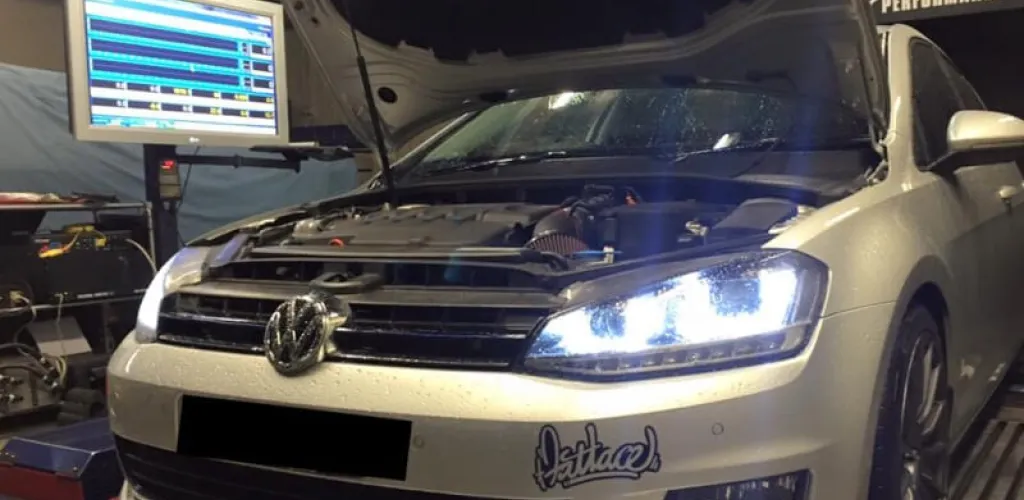
- Germany tested synthetic gasoline on VW Golf 7, showing possible ICE sustainability.
- ADAC and ZDK say synthetic fuels could sustain ICEs, challenging 2035 ban plans.
- Germany opposes full ICE ban; niches remain amid VW’s efforts and Rabla Plus in Romania.
- Synthetic gasoline is produced by electrolysis from atmospheric CO2.
Germany continues to explore alternatives to the full electrification of the car fleet, successfully testing synthetic gasoline on a Volkswagen Golf 7 1.4 TSI. The experiment conducted by ADAC and the Central Association of the German Auto Trade (ZDK) demonstrates that internal combustion engines could have a sustainable future when powered by synthetic fuels, challenging plans for a total ban on internal combustion engines by 2035.
This article examines the European context, the division among automakers, Germany’s official stance, and the potential implications for Romania and beyond, including how synthetic fuels could fit into current infrastructure and maintenance.
European Context: The Zero-Emission Transition by 2035
Currently, the European Union depends on oil from Russia and the Middle East for about 97% of its needs. The commercialization of electric vehicles could significantly reduce this dependence, offering greater energy independence and protecting the environment.
In early June, the European Parliament voted to implement a package of laws aimed at reducing CO2 emissions by up to 100% by 2035. The vote passed in the plenary with 339 votes for, 249 against, and 24 abstentions.
According to the Paris Agreement on climate, emissions must be drastically reduced to improve air quality and public health. As Vlad Radu Zamfira stated to Infoclima: “The new emission standards can accelerate the transition to electric vehicles, which in turn will require improved charging infrastructure and energy networks.”
Division among Auto Manufacturers
Advocates of rapid electrification:
- Volvo aims to switch completely to electric vehicles by 2030, five years ahead of the European deadline.
- Sweden, while targeting 2035, supports this accelerated transition.
Opponents and skeptics:
- BMW and Toyota have openly opposed these plans
- Volkswagen and Mercedes spent a long time in a wait-and-see stance before taking an official position
- Germany began to voice its reservations about this legislation
Germany Backtracks: Official Position
Germany’s Federal Minister of Finance, Christian Lindner, recently stated that there will continue to be niches for vehicles with internal combustion engines. The German government believes that a complete ban would be a grave mistake and will oppose this European legislation.
This stance comes as Volkswagen, armed with a €100 billion budget, has not managed to meet the sales targets for ID.3 and ID.4, despite a well-structured Rabla program in Germany.
Situation in Romania
In Romania, electric vehicle sales remain modest, despite:
- a subsidy of €11,500 offered to dealers through the Rabla Plus program
- the sustained efforts of importers
- the continuously developing charging infrastructure
Synthetic Gasoline – An Alternative Solution
What is Synthetic Gasoline?
Synthetic gasoline is a fuel produced by electrolysis from atmospheric carbon dioxide. ADAC and ZDK have identified this solution as viable for the 1.4 billion petrol and diesel cars in circulation worldwide.
Test on VW Golf 7 1.4 TSI
In the German experiment, a Volkswagen Golf 7 equipped with the 1.4 TSI engine was fueled with 20 liters of synthetic gasoline. The results were impressive:
- Identical performance: The engine behaved exactly as if fueled with conventional gasoline
- No detectable differences: Even automotive specialists could not observe differences in engine operation
- Total compatibility: No technical modifications to the engine were required
Advantages of Synthetic Gasoline
Identical properties:
- Synthetic gasoline has the same characteristics as traditional gasoline
- Does not require changes to the engine or fuel system
- Can be used immediately in existing vehicles
Refueling Time:
- Refueling takes a few minutes, like conventional gasoline
- Compared with 2-4 hours needed to recharge electric vehicles
- It does not require special charging infrastructure
Production Flexibility:
- According to Chemieanlagenbau Chemnitz, plants can produce:
- Synthetic gasoline
- Synthetic diesel
- Synthetic LPG
Implications for the Future
For the Existing Vehicle Fleet
Synthetic gasoline could provide a solution for the 1.4 billion internal combustion engine vehicles in operation, avoiding:
- Premature decommissioning of functioning cars
- The enormous costs of replacing the entire fleet
- The environmental impact of mass production of new vehicles
For the Auto Industry
If synthetic fuels prove economically viable, manufacturers could:
- Continue developing efficient internal combustion engines
- Invest in optimizing existing technologies
- Offer consumers diverse mobility options
For Infrastructure
Using synthetic gasoline would allow:
- The use of the existing fueling station network
- Avoiding massive investments in charging points
- A more gradual transition to sustainable solutions
Challenges and Perspectives
Although the German test demonstrates the technical viability of synthetic gasoline, important questions remain:
Production costs:
- How economically competitive will synthetic gasoline be?
- What production volumes are required for affordability?
Actual environmental impact:
- What is the full lifecycle emissions balance?
- How efficient is the production process?
Political acceptance:
- Will European lawmakers be willing to reconsider the ban plans?
- How will member states balance between different technologies?
The test conducted in Germany on the Volkswagen Golf 7 1.4 TSI shows that the future of mobility could be more nuanced than initially anticipated. Synthetic fuels offer a third path between full electrification and dependence on fossil fuels, preserving the advantages of internal combustion engines while reducing environmental impact.