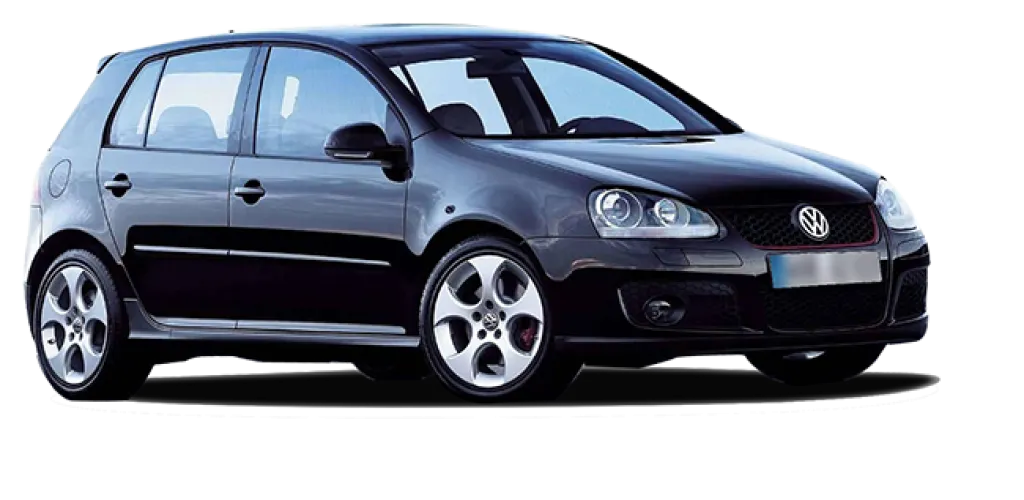

- Golf Mk5 (2003) solidified compact class with tech, quality, handling, affordability.
- Prius (launched 2000) became the first mass-produced hybrid with 1.8M+ sales.
- BMW 3 Series E46 redefined compact executive sedans with tech and performance.
- Porsche Cayenne (2002) proved an SUV can mix versatility with performance.
At the beginning of the 2000s, the automotive industry experienced revolutionary leaps. During that decade, numerous new models were launched that defined the market through their innovations and success. We will present some of the most iconic cars of the 2000s from Europe, America, and Asia, covering various segments (compact cars and hatchbacks, executive sedans, SUVs, sports cars, etc.) and analyzing their impact and popularity.
Compact Models and Hatchbacks
In the compact segment, a few models dominated the class worldwide. The Volkswagen Golf Mk5 (2003) consolidated the Golf tradition in the compact car class, offering a combination of advanced technology, superior quality, and excellent handling at affordable prices. Also in hatchbacks, the Ford Focus (generations launched in 1998 and 2004) became a global benchmark: its “New Edge” design and dynamic behavior recommended it as a reference in the segment. The Honda Civic (models from the 2000s) continued to be a global bestseller due to its reliability and efficiency; historically, the Civic remains one of the best-selling automobiles, with over 28 million units sold. Paradoxically, even in the compact segment, a revolutionary ecological model appeared: the Toyota Prius (launched in 2000 in the USA) was the first mass-produced hybrid, notable for its fuel consumption efficiency. Over 1.8 million Prius models were sold worldwide in the first decade, popularizing the concept of hybrid cars and preparing the ground for further electrification.
Executive and Performance Sedans
BMW 3 Series E46 (1998–2006) was a defining model for the compact executive sedan segment. The E46 generation introduced a completely new body, with torsional rigidity 70% higher than that of its predecessor E36, significantly improving dynamic behavior. At the same time, E46 was the first 3 Series to offer advanced technologies – Valvetronic variable valve timing, integrated electronic navigation systems, braking systems (EBD), and LED headlights, raising comfort and safety to a premium level. The sporty versions M3 (with a 3.2 l engine, 343 HP) and M3 CSL (limited edition, 360 HP, 2003) highlighted the focus on performance. By 2002, over 561,000 E46 units were sold worldwide, demonstrating the model’s popularity in all major markets. Overall, the 3 Series E46 remained in the public memory as a balanced, elegant, and performant sedan of the 2000s.
SUVs and Off-road
The year 2000 also marked the global surge of SUVs and crossovers. A symbolic example is the Porsche Cayenne (2002): upon debut, enthusiasts were skeptical about an SUV from a sports car manufacturer, but the Cayenne generated huge profits for Porsche and financed future projects. The model impressed with off-road capabilities and remarkable acceleration (Turbo versions developed over 500 HP), showing that an SUV can combine versatility with performance. Meanwhile, the Hummer H2 (2003–2009) became a cultural symbol of excess at the beginning of the decade and of ostentatious masculinity on four wheels. Although criticized for massive fuel consumption and huge dimensions, the H2 (and the smaller H3 version) captured the hearts of robust off-road vehicle fans with its design inspired by military vehicles. These models – and others like the Toyota RAV4 or Land Rover Freelander – established the SUV segment as very profitable, and the crossover trend continued with examples like the Nissan Qashqai (2007) towards the end of the decade.
Sports and Supercars
During the same period, models from the supercar and sports segments also stood out. The 2000s saw the revival of the Nissan GT-R (R35, launched in 2007), with all-wheel drive and advanced technology, earning the nickname “Godzilla.” Traditional sports car manufacturers launched new models: for example, the Lamborghini Gallardo (2003) and Ferrari 458 Italia (2009) demonstrated top performance, integrating racing technology for the road. In the American market, the Ford Mustang (2005 edition) and Dodge Challenger (2008) revived the spotlight on muscle-cars with retro design and powerful V8 engines. Although not all models of this kind were inevitably cited in top lists, they fueled the public’s enthusiasm for speed and promoted new technological solutions (turbochargers, electronic traction control systems, lightweight bodies).
Influence and Legacy
All mentioned models left a strong imprint on the automotive industry. The Ford Focus and Volkswagen Golf (fifth generation) confirmed their status as benchmarks in the compact class, setting standards for dynamics, safety, and technology. The Toyota Prius accelerated the transition to hybrid powertrains, drawing attention to efficiency and environmental protection. The BMW 3 Series E46 set reference parameters for mid-sized premium sedans, combining elegance with technical innovation. Similarly, the Porsche Cayenne showed that a sports brand can profitably reinvent its image with a successful SUV, while the Hummer H2 illustrated the controversial side of material wealth. The technical innovations – from modern turbo and diesel engines to integrated electronic systems – brought by these models influenced subsequent generations of automobiles, and their popularity among the public remained high. Therefore, the cars described above visually and technologically defined the 2000s, remaining emblems of an era of transition and innovation in automotive history.