- Hazard lights are legitimate only for faults, roadside immobilization, emergencies, hazards, or extreme weather.
- They do not legalize illegal stopping or parking; if prohibited, it’s still illegal.
- Unwritten uses like queue warning and thanks are informal and usually penalty-free.
- Stopping or standing illegally carries fines and possible vehicle removal.
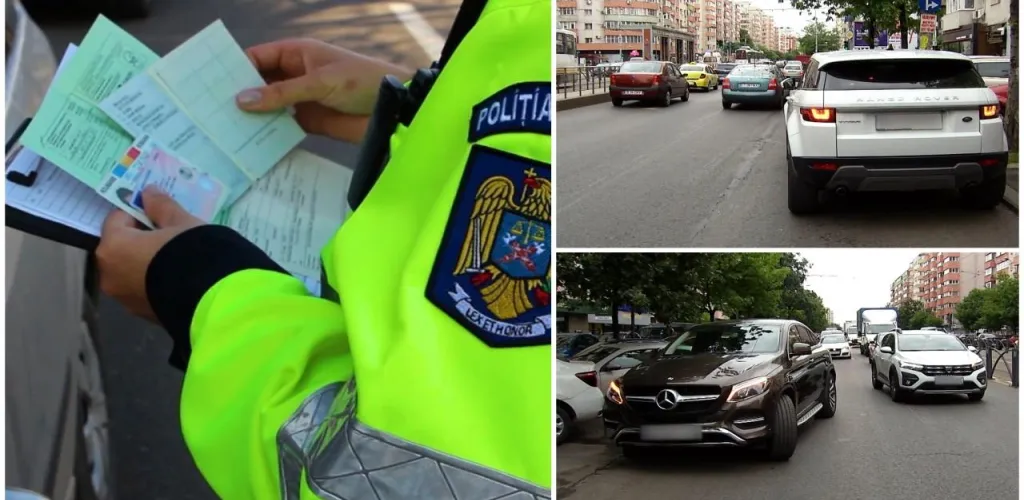
Confusion surrounding the correct use of hazard warning lights persists among Romanian drivers, regardless of driving experience. Many believe that turning on hazard lights exempts them from penalties when parking illegally or stopping in prohibited areas. This misconception can lead to substantial fines and dangerous situations on the road.
The real purpose of hazard lights
Legitimate uses
Hazard lights should be activated in the following cases:
- Mechanical faults that require moving at reduced speeds
- Vehicle immobilized at the roadside due to a breakdown
- Emergency situations that require a sudden stop on the shoulder of the road
- Warning of an obstacle or imminent danger on the road
- Driving in extreme weather conditions with reduced visibility
Tolerable but unofficial uses
There are also a few “unwritten rules” accepted by the driving community, which, while not explicitly provided for in the law, help communication between road users:
Warning near a queue - Turning on the hazards briefly when approaching a line of vehicles warns those behind to slow down preemptively.
Thanks for priority - Two to three quick flashes of the hazard lights are commonly used to thank a driver who yielded or let you merge in traffic.
These uses, although informal, contribute to traffic flow and do not incur penalties, being considered courtesy gestures.

Common abuses and legal consequences
The most widespread abuse is using hazard lights as justification for illegal parking or stopping. Many people consider it wrong to think that activating the flashing lights grants them the right to:
- Stop in the middle of the road for a “just a minute”
- Park in spaces reserved for people with disabilities
- Park on the sidewalk, crosswalks, or within the area where stopping is prohibited
- Block access to entrances to courtyards or garages
Important legal clarification
Hazard lights do not transform an illegal maneuver into a legal one. If stopping or parking is prohibited in a given location, using hazard lights changes nothing. The only moment when you can use hazard lights for an urgent stop is when you are parked in a permitted place, without disrupting traffic.
Fines and penalties applicable
Breaching the rules on stopping and standing, even with hazard lights on, carries the following consequences:
Fines for prohibited stopping
Stopping in prohibited places is penalized under the Traffic Code, regardless of whether you have the hazard lights on. Fines vary by the severity of the offense:
- Stopping in places with reduced visibility: administrative fine
- Stopping on pedestrian crossings or within their vicinity: aggravated penalty
- Stopping that obstructs traffic: possible vehicle removal
Fines for illegal standing
Standing (stopping for more than 5 minutes or with the driver absent) in prohibited locations is punished similarly, with an administrative fine and possible vehicle removal by the local police.
Fines for abusive use of hazard lights
In addition to penalties for stopping or illegal standing, unwarranted use of hazard warning lights may attract a separate fine for violation of signaling norms.
Road safety risks
Beyond legal aspects, improper use of hazard lights creates confusion in traffic and can lead to dangerous situations:
- Other drivers cannot anticipate your true intentions
- Signaling effectiveness is reduced in real emergencies
- It may mask the intention to change direction or lane
- It contributes to normalizing illegal behavior on the road
Practical recommendations
To avoid penalties and contribute to safer traffic:
- Use hazard lights only in real emergencies - when the vehicle has a technical problem or poses a danger to traffic
- Do not try to justify illegal parking - if there is no legal parking space, seek an alternative or a parking area, don’t block traffic
- Respect the meaning - hazard lights signal a problem, not a temporary convenience
- Be predictable - in traffic, predictable behavior and obeying the rules are essential for safety
- Accept responsibility - if you must stop urgently, ensure you do so in a permitted place and do not disrupt traffic
Conclusion
Hazard lights are a safety tool, not a loophole for breaking traffic rules. The decision to use them is up to each driver, but this freedom comes with the responsibility to respect their real purpose and traffic laws. No personal emergency justifies creating danger or blocking traffic. The fine for illegal parking with hazard lights on is the same as without them, with an additional consequence for the improper approach.
Photo source: observatornews.ro