- Tire pressure must meet hot-season standards to prevent blowouts.
- Avoid driving during peak heat; start trips early morning or evening.
- Heat increases fatigue; pull over at first signs and take a 30-minute break.
- Do not drive when tired or under alcohol/psychoactive substances; plan rests and alternatives.
The Giurgiu County Police Inspectorate has issued a series of important recommendations for all road users in the context of extreme temperatures recorded in Romania. These measures aim to reduce the risk of road accidents and increase safety on public roads during heatwaves.
Tire inspection and maintenance
One of the most important recommendations concerns tire pressure, which must be within the standard values for the hot season. This check is essential because at high temperatures, over long distances and at high speeds, the risk of tire blowouts increases significantly. Overheated tires can fail suddenly, endangering the lives of the vehicle occupants and other road users.
Avoid driving during the hottest parts of the day
As much as possible, authorities recommend avoiding using a car during the hottest parts of the day when temperatures reach their peak. This recommendation is especially important for older drivers, who are more vulnerable to the effects of extreme heat.
For long trips, it is suggested to start early in the morning or in the evening, when thermal values are much more reasonable and driving conditions are safer.
Driver fatigue - a major danger
Fatigue at the wheel is one of the main causes of serious accidents, which can result in severe injuries and loss of life, especially on weekends. Heat waves amplify fatigue, reducing drivers’ concentration.
Signs of fatigue behind the wheel
Indicatorii principali ai oboselii extreme includ:
- Reacții întârziate la volan
- Dificultăți de concentrare
- Căscat frecvent
- Clipit excesiv al ochilor
- Senzația de amorțeală
What to do when you feel fatigued
The fundamental recommendation is to pull over immediately as soon as you feel you can no longer concentrate sufficiently. A 30-minute break can make the difference between a safe journey and a serious accident. During these stopping moments, it is advisable to:
- Get out of the car and stretch your legs for a few minutes
- Drink cold water to stay hydrated
- Wash your face with cold water
- Do a few stretching exercises
- Rest in a shaded place
Alternatives to driving when you are tired
It is not recommended to set off on a journey when:
- you do not have enough hours of sleep
- you are not sufficiently focused
- you feel physically or mentally exhausted
In these situations, the alternatives are:
- Requesting another driver
- Using public transport (bus, metro, train)
- Calling taxi or ridesharing services
- Postponing the trip until you have recovered
Planning trips during heat waves
Advance planning of routes and identifying suitable places for rest stops are essential for a safe trip. It is recommended to:
- Check road conditions and traffic before departure
- Identify rest areas along the route
- Plan regular stops every 2 hours of driving
- Avoid peak traffic hours
Alcohol and psychoactive substances prohibition
IPJ Giurgiu emphasizes that alcohol and psychoactive substances are completely incompatible with operating motor vehicles. They represent a major risk factor for all road users and directly contribute to the occurrence of serious traffic accidents.
During heatwaves, the effects of these substances are amplified by dehydration and fatigue, creating an extremely dangerous combination.
Regular maintenance of vital systems
Regular checks and maintenance of the following systems are crucial:
Cooling system
- Check the coolant level
- Check the operation of the radiator fan
- Inspect hoses for cracks or leaks
Braking system
- Check brake fluid level
- Inspect brake pad wear
- Test braking efficiency
Lighting system
- Check all bulbs are functioning
- Adjust headlights for optimal visibility
- Clean lenses for clear light
Air conditioning system
- Check air conditioning operation
- Replace cabin air filter
- Recharging with Freon if necessary
Protection against solar glare
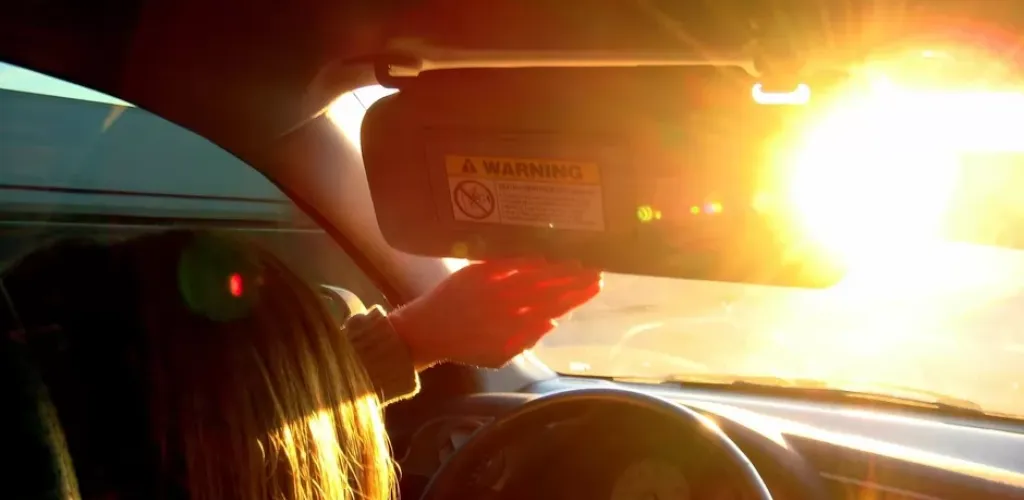
Strong sunlight can cause intense reflections that temporarily dazzle drivers. For protection:
- Use polarized sunglasses
- Keep the windshield clean, without scratches
- Use the vehicle sun visors
- Avoid driving directly toward the sun at sunrise or sunset
Safety of vulnerable passengers
Under no circumstances should they be left in the car:
- Children, even for short periods
- Pets
- Elderly people or those with medical conditions
Cabin temperatures can reach lethal levels in just a few minutes, even with cracked windows. Hyperthermia can develop very rapidly, causing irreversible damage or death.
Protective measures for passengers
- Use sun visors on the rear side windows to protect children
- Adjust the air conditioning for each occupant;
- Note that the rear of the car records higher temperatures
- Ensure proper hydration for all passengers
- Take frequent breaks to cool everyone down
Recommendations for drivers with heart problems
Drivers with known heart conditions should:
- Avoid travel at extreme temperatures
- Seek accompaniment by another person capable of driving
- Have the necessary medications at hand
- Keep the vehicle well climate-controlled
- Avoid excessive physical exertion
Traffic behavior during heat waves
Appropriate behavior in traffic during a heat wave involves:
- Driving with heightened attention
- Demonstrating patience toward other road users
- Avoiding aggressive behavior
- Yielding to pedestrians
- Maintaining a larger safety distance
- Adapting speed to traffic conditions
Aggressiveness at the wheel increases with high temperatures, and drivers must recognize that a calm, preventive attitude is essential for everyone’s safety.
Tips for pedestrians
Pedestrians should also show heightened attention during heatwaves. It is important to:
- Be aware of drivers’ increased fatigue
- Adopt a preventive approach when crossing the street
- Cross only when drivers yield clearly
- Use marked crosswalks
- Make eye contact with drivers before crossing
- Avoid crossing hastily or unexpectedly
Heatwaves affect reaction times for both drivers and pedestrians, and increased vigilance from all road users is essential to prevent accidents.
Conclusion
Following these IPJ Giurgiu recommendations can save lives and prevent serious accidents during periods of extreme temperatures. Road safety is a collective responsibility, and adapting behavior to extreme weather conditions is essential to protect all road users — drivers, passengers, and pedestrians alike.