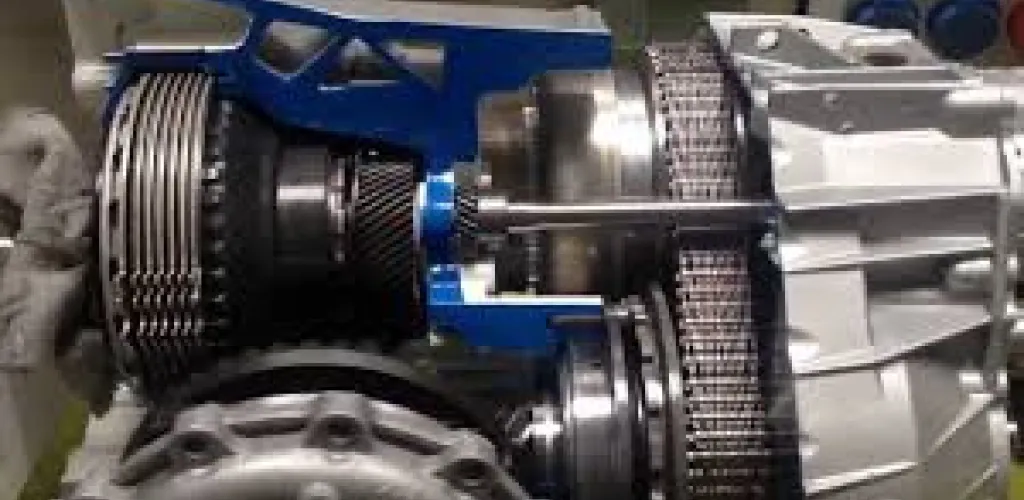

- Multitronic is Audi/LUK 1999, CVT-like with continuous gear ratios, no fixed steps.
- Uses chain drive plate and multi-disc clutch; more robust than belt CVTs.
- Oil cooling and DRP computer control optimize performance and efficiency.
- Sport and Drive modes; Manual added 2004 with downhill sensors.
In this article, we will discuss a type of automatic transmission that many of you have certainly heard of, but don’t know where the name comes from or how it operates.
We will talk about the multitronic gearbox. Those who have or wanted to buy an Audi car have certainly heard of this name, but very few know where this name comes from. No problem, that’s why we created this material, to better explain all aspects related to this type of transmission.
First of all, we need to know that the multi-triptonic transmission is based on a somewhat special operating principle; specifically, it doesn’t have gear steps. This type of gearbox was invented by Audi and Luk in 1999.
The multitronic gearbox is largely based on the operating principles of continuous (variable - CVT) transmissions. The box is automatic, but there are no defined gear steps. The ratio between the input and output shaft can vary continuously, allowing an almost infinite number of ratios.
The name Multitronic also comes from the fact that this gearbox uses a chain drive plate, a multi-disc clutch (with 6 parts or the newer version with 7 parts), and a complex electronic system to eliminate problems of the classic CVT automatic transmissions. Unlike classic CVT gearboxes, this one is much more robust because it doesn’t use a metallic belt but rather a fairly thick chain and has many more sensors to ensure its proper operation. Cooling such a box is done with oil.
As expected, this component is also controlled by a computer, specifically by the “DRP” or better said the “dynamic regulation program”. This computer plays a very important role in collecting multiple data (like the accelerator pedal pressure mode, pedal position, engine load, etc.) and controlling the box to achieve the best performance or fuel consumption.
Engineers thought of having preset programs for the gearbox. Hence, we have the option to switch the box to “Sport” mode, where it responds faster to commands and is always ready to maximize the engine’s performance. We also have the “Drive” mode, where the gearbox is calmer and aims for better fuel consumption.

In 2004, engineers further improved this gearbox. Since then, the gearbox also had a “Manual” mode where you could select a “gear” (a fictitious gear, as each gear had several ratios that you couldn’t control but were there, so the gears were somewhat fictitious).
In the same year, they also introduced sensors that could detect if the car was going downhill to provide engine braking if necessary. In “Manual” mode, the driver can switch between 6 or the newer version of 7 sequential gear ratios, or in some models, use the paddles mounted on the steering wheel.
The multitronic gearbox has several functions. Initially, it offered the possibility to choose between 6 gear ratios. After 2004, this number increased to 7 ratios, but the new car models offer 8 gear ratios. After 2004, there was also the “Manual” mode to change gears, and on some better-equipped cars, you could shift gears from the steering wheel paddles. Now, this option comes standard on almost all Audi models.
How good is the multitronic gearbox?
The multitronic gearbox is high-performing and highlights the engine’s power and torque, combining performance (in Sport mode), fuel economy, and comfort (in Drive mode). This type of gearbox is far superior to a manual one and offers many more benefits.
Unfortunately, there are a few downsides to this gearbox: firstly, they are only mounted on front-wheel-drive cars and are not compatible with Quattro (4x4) drive. Also, the initial gearboxes of this kind were quite limited for a diesel engine, with a maximum torque capacity of 310 Nm, but this was later modified, and now it withstands just over 400 Nm. Yes, it withstands a stage 1, but it operates at higher temperatures, leading to greater wear over time.
More recently, the latest multitronic boxes released by Audi have a very interesting hidden function. This function is called “Fuzzy Logic”. It memorizes the driver’s driving style. If you usually drive sportily, the gearbox will try to shift at higher revs to satisfy your need for power. If you drive calmly, the gearbox will shift much slower and smoother to ensure lower consumption and greater comfort.
How reliable are multitronic gearboxes?
Although the multitronic gearbox has many advantages (performance, comfort, consumption), it also has specific issues. Most problems occur in gearboxes with 6-plate clutches (made until 2006).
Typical symptoms include: flickering of the gear indicator (PRNDS) on the dashboard, hesitation to downshift (during strong accelerations), or the inability to select the reverse (R) mode. With the release of the next model (the one with a 7-plate clutch), most of these problems were solved, making the new gearbox much more reliable and enjoyable to drive.
Many of these defects are due to the driver’s driving style. If the driver drives aggressively, the gearbox will break down quickly. This type of gearbox is more for economical and comfortable driving, but that doesn’t mean it can’t perform. However, it’s not designed for aggressive driving. Aggressive driving costs and sometimes costs a lot.
Audi recommends changing the oil at intervals of 30,000 - 75,000 km, but many times they break down even if the oil change was done on time.
How much does it cost to maintain a multitronic gearbox?
For the multitronic gearbox, a service is usually done every 50,000 - 60,000 km and costs around 1500 lei. It’s not that much, considering you pay it once every 60,000 km. Our advice for you is to get the service done only at dealerships or service centers specializing in automatic gearboxes.
A question many people ask: after having changed many cars, including various Audi models with different gearboxes, can I tell if the gearbox service was done at the dealership or not?
How? Well, it’s simple. In Drive mode, gear changes should be very smooth without jerks or abrupt changes, and in Sport mode, the gearbox shouldn’t hesitate to shift to a lower gear during strong acceleration.
We recommend ATF oil for multitronic gearboxes. This is the oil that meets all the necessary standards for the gearbox to operate at maximum capacity.
Photo sources: youtube.com, multitronic-box.com, junkmail.co.za