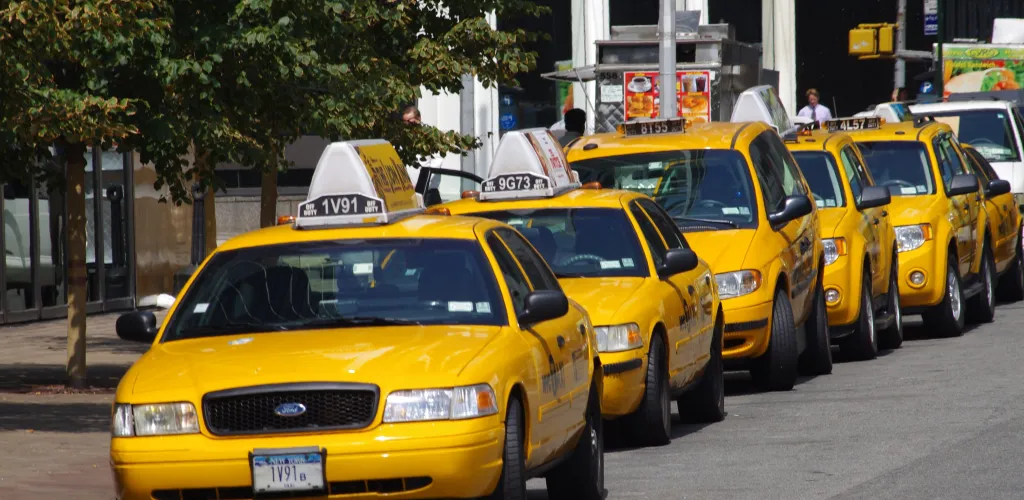
- John Hertz chose yellow in 1912 New York for visibility and advertising.
- The Yellow Cab brand in Chicago standardized yellow taxis in 1914.
- By 1925 Hertz sold Yellow Cab; yellow taxis spread globally.
- Some regions keep non-yellow colors, like UK black taxis and Germany beige.
When you spot a yellow car on the street, your first thought is probably a taxi. This association isn’t accidental; it’s the result of a brilliant marketing strategy implemented over a century ago. Why did taxi pioneers choose this particular color, and how did the tradition spread worldwide?
The tale of yellow taxis begins in 1912 and centers on a marketing-driven decision that forever reshaped the urban transport industry. Since then, yellow has become the universal taxi color, with a few notable exceptions that have their own fascinating stories.
The first yellow taxi in history
The first yellow taxi appeared in New York in 1912, the creation of a car dealer named John Hertz. He came up with an innovative idea for the urban transport market of that era.
Understanding that advertising does the most, this entrepreneur reasoned that the best marketing strategy was to make his taxis more visible on the street than those of his competitors. After several experiments with different colors, he concluded that yellow is the most striking hue, the most visible both up close and from greater distances.
This competitive strategy brought John substantial profits, but more importantly, it put him in history. The first yellow taxi had a fare of fifty cents per mile, a considerable amount for that era.
The birth of Yellow Cab
Two years later, in 1914, after the success of the first yellow taxi, a company named “Yellow Cab” appeared in Chicago, also owned by John Hertz. Here, all cars were yellow, consolidating the brand and the concept of the yellow taxi.
We can say that he was the one who invented this trend that, surprisingly, persists to this day. It is probably the most successful marketing strategy in the automotive industry, given its longevity and global adoption.

Although everything was going very well, in 1925 John sold his company with the 2,700 vehicles operating in major cities such as New York, Chicago, Philadelphia or Kansas City.
The democratization of yellow
Initially, only the Yellow Cab company had the right to use yellow cars for taxis — no one else could adopt this color. However, after the success of John Hertz’s company, United States judges decided that any other taxi firm could use the yellow color, to ensure a certain equality among firms.
From then on, almost all taxis in the U.S. became yellow, and gradually this color was adopted by taxis around the world, becoming an international standard.
Why do some taxis have other colors?
The black taxis of the United Kingdom
In the United Kingdom, taxis are black for practical economic reasons. The early British taxi firms used the Austin FX3, those classic cars we see in films, with a distinctive design reminiscent of the Chrysler PT Cruiser.

These vehicles came from the factory in black, and owners kept them that way to avoid extra painting costs. The United Kingdom is practically the only country that traditionally maintains black taxis.
Germany and beige taxis
In Germany, the official color of taxis is beige. Unlike the earlier cases, there isn’t a dramatic story or a specific reason for this choice — it’s simply the German standard.
An important aspect to note: many cars that reach Romania from Germany are beige because they were used as taxis and have very high mileage. These vehicles, once brought to our country, begin to show wear on important components due to intensive use, especially in urban traffic.
The origin of the term “taxi”
The word “taxi” has fascinating Italian roots. Francesco Tasso (1459-1517) is considered one of the founders of the first European postal service. For political reasons, all his transport means — which at the time were horse-drawn carriages — were painted yellow, considered neutral and non-offensive.
The inventor’s achievements impressed the Austrian emperor, who awarded him the title “Torre e Tasso.” Later, the name evolved into “Thurn und Taxis,” from which the modern name “taxi” derives.
Current requirements for taxi vehicles in Romania
Technical and age requirements
In Romania, vehicles designated for taxi use must meet several strict conditions:
- Maximum age: They must not be older than 5 years at registration
- Operational period: They can operate 10 years from registration, resulting in a maximum age of 15 years
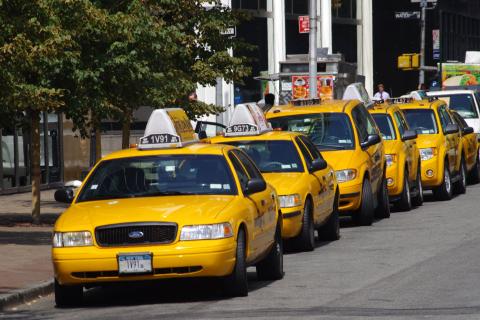
- Color: At least 70% of the vehicle’s surface must be yellow
Many taxi drivers choose not to wrap the front and rear bumpers, as these areas are the most prone to scratches and impacts, making frequent replacement uneconomical.
Local exceptions
There are Romanian cities that have adopted different colors for taxis. For example, in Brașov, taxis are predominantly white, showing local flexibility in applying the regulations.
Driver requirements and fares
Any motorist who wishes to practice taxi services must meet the following conditions:
- Minimum 2 years of driving license
- Holding a valid permit to practice taxi services
Fares vary by city, but generally hover around:
- 2.50 RON per kilometer
- 2.50 RON starting fare
- Approximately 25 RON per hour of waiting
In practice, these prices are often negotiable with the driver, depending on distance and circumstances.
Modern alternatives to traditional taxis
In recent years, several companies have emerged offering urban transport services that are not traditional taxis. These services, such as Uber, use ordinary cars with minimal markings, available through mobile apps.
Comparative advantages
The classic taxi offers:
- Immediate street availability
- No smartphone or apps required
- Easy recognition by the yellow color
Modern services offer:
- Card and online payments
- Upfront price known
- Ride tracking via app
- Driver and passenger ratings
Each transport type has its own specific advantages, and the choice depends on individual passenger preferences and needs. The yellow taxi remains, however, an iconic symbol of urban transport, with a fascinating history that continues to be written today.