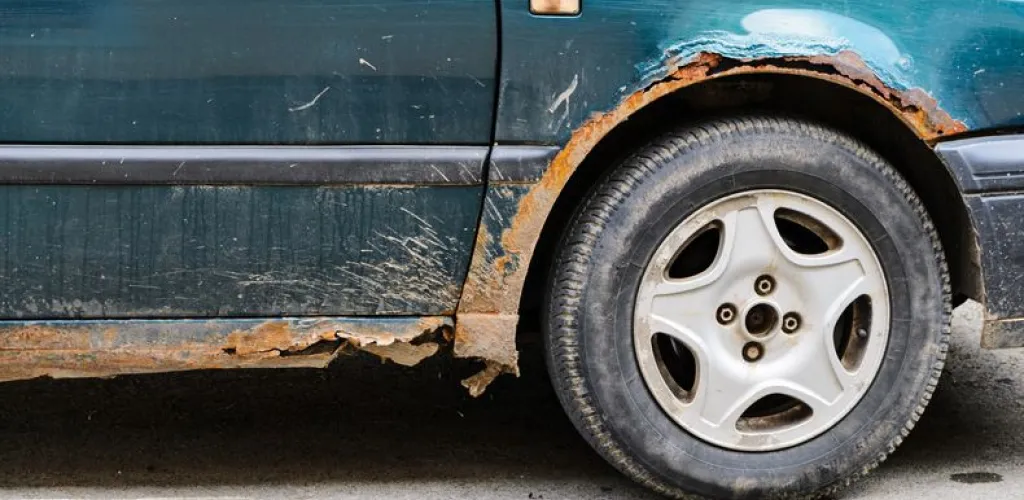
- Rust threatens structural and safety systems, with repair costs rising as it progresses.
- Oxidation starts where water and oxygen reach cracks, expands 6-7x.
- Humidity over 60%, road salts, temperature swings, and pollution accelerate corrosion.
- Rust types range from surface (50-200€) to structural (1000-5000+€).
Rust on a car’s bodywork goes beyond aesthetics—it’s a serious safety issue that can compromise the vehicle’s structural integrity. The more advanced the oxidation process, the faster repair costs rise. From a mechanical perspective, rust attacks vital metal components of the car, from the body to critical suspension and braking system parts.
Understanding the corrosion process and adopting preventive measures can save thousands of euros and, more importantly, prevent dangerous situations on the road.
What rust is and the oxidation process
Rust formation mechanism
The chemical process involves several steps:
- Initiation: Water and oxygen penetrate microcracks in the paint
- Propagation: Iron ions form hydrated oxides
- Expansion: Rust occupies a volume 6-7 times greater than the original metal
- Acceleration: Cracks widen, exposing more metal
Factors that accelerate corrosion
Environmental conditions:
- Relative humidity above 60% accelerates the process
- De-icing salts (sodium chloride) act as electrolytes
- Fluctuating temperatures create condensation
- Air pollution with sulfur compounds
Mechanical factors:
- Scratches that expose unprotected metal
- Residual stresses from manufacturing
- Welding seams with compromised protection
- Contact points between different metals
Types of rust and severity assessment
Surface rust (uniform corrosion)
Characteristics:
- Affects only the paint and primer layer
- Brown-reddish color without holes
- May be removed by light sanding
Intervention:
- Cleaning with a wire brush or fine sandpaper (P400-P600)
- Applying a zinc or zinc phosphate primer
- Repainting with the original colour
- Cost: 50-200 EUR per small area
Penetration rust (localized corrosion)
Characteristics:
- Small holes in the sheet metal (1-5 mm)
- Advanced paint exfoliation
- Local structural compromise
Intervention:
- Cutting out and replacing the affected section
- Welding and heat treatment
- Application of filler materials
- Cost: 200-1000 EUR per area
Structural rust (perforated corrosion)
Characteristics:
- Large holes, sheet metal fully perforated
- Affects safety-related elements
- Risk of structural failure
Intervention:
- Complete replacement of the component
- Checking adjacent areas for integrity
- Re-testing safety systems
- Cost: 1000-5000+ EUR
Dangers of rust for active and passive safety
Compromising passive safety
Frontal impact zone:
- Weakened frame cannot absorb impact energy
- Risk of intrusion into the cabin
- Airbags may not deploy optimally
Thresholds and pillars:
- Loss of structural rigidity
- Compromised side-impact protection
- Risk of roof collapse
Anchoring zones:
- Seat belt anchors may fail
- Seats can detach
- Child seat anchors compromised
Affecting active safety
Braking system:
- Tubes may rupture abruptly
- Loss of hydraulic pressure
- Caliper or brake lines may detach
- Stopping distance may increase by 30-50%
Suspension system:
- Worn or corroded suspension arms can break
- Damaged shock absorber mounts
- Wheel alignment can be lost
- Vehicle controllability severely affected
Steering system:
- Steering column play
- Steering arms weakened
- Loss of steering precision
Diagnosing corrosion – when to worry
Regular visual inspection
Critical zones to check:
- Sill plates – most saltiest areas
- Wheel arches – mud and moisture buildup
- Underside of doors
- Visible welding seams
- Chassis – especially around the suspension
Warning signs:
- Bubbles in the paint indicating rust beneath
- Spontaneous paint flaking
- Brownish stains spreading
- Rough-edged scratches
- Distinctive smell of rust in the cabin
Simple evaluation tests
Magnet test:
- A magnet will not stick to areas with filler material
- Indicates potential hidden repairs
Pressure test:
- Gently press suspicious areas
- Solid metal resists moderate pressure
- Corroded zones may bend or creak
Torch test:
- Shine light from inside out
- Small holes appear as bright points
Treatment methods – from DIY to professional
DIY treatment for surface rust
Equipment needed:
- Sandpapers with grits P240, P400, P600, P800
- Stainless steel wire brush
- Anti-corrosion zinc primer
- Touch-up paint in the original color
- UV protective varnish
Step-by-step process:
- Clean the area with a degreasing solvent
- Sand from P240 to P600
- Dust off with anti-static cloth
- Apply primer in thin coats
- Dry thoroughly (24-48 hours at room temperature)
- Apply paint in 3-4 thin coats
- Final clear coat for UV protection
Estimated costs:
- Sandpaper and consumables: 30-50 EUR
- Quality primer: 40-80 EUR
- Touch-up paint: 50-150 EUR
- Protective varnish: 30-60 EUR
- Total: 150-340 EUR per repair
Professional treatment for advanced rust
Process in a specialized service:
Assessment and planning:
- Ultrasonic thickness measurement
- Zone-based intervention plan
- Cost and time estimates
Vehicle preparation:
- Dismantling adjacent components
- Protecting unaffected areas
- Professional cleaning
The intervention itself:
- Cutting or grinding away affected zones
- Chemical anticorrosive treatment
- Application of professional filler materials
- MIG/MAG welding for structural repairs
Finishing:
- Leveling and final sanding
- Full paint system application
- Heat treatment (IR or furnace)
- Final quality control
Estimated costs:
- Surface rust: 200-500 EUR per m²
- Penetration rust: 500-1500 EUR per m²
- Structural rust: 1000-5000 EUR per component
Advanced prevention strategies
Proactive protection for a new vehicle
Improved factory treatments:
- Hot-dip galvanizing – 10-15 years of protection
- Electrogalvanizing – enhanced resistance
- Phosphating treatments for paint adhesion
Additional protections:
- Professional waxing with carnauba-based products
- Protective films on exposed areas
- Silicone-based anti-corrosion treatment for the chassis
Seasonal preventive maintenance
Winter preparation:
- Thorough cleaning of hidden areas
- Apply anticorrosive products to the chassis
- Inspect and repair minor scratches
- Preventive treatment of sills
Spring maintenance:
- Intensive wash to remove salts
- Thorough inspection of critical areas
- Reapplication of protective treatments
- Waxing the body for warm seasons
Summer routine:
- UV protection
- Keep surfaces clean for optimal cooling
- Periodic checks of vulnerable zones
- Apply protective products before holidays
Fall preparation:
- Preventive repair of minor defects
- Long-term protective treatments
- Check drainage systems
- Clean gullies and drainage channels
Recommended prevention products
Entry-Level category (50-150 EUR):
- Waxoyl for DIY application
- Tectyl sprays for quick protection
- Zinc-rich touch-up solutions
Premium category (150-500 EUR):
- Dinitrol for long-lasting protection
- Mike Sanders for professional applications
- Noxudol products for extreme conditions
Professional category (500+ EUR):
- Complete Body-Guard systems
- OEM-type treatments (BMW, Mercedes)
- Industrial fleet solutions
Legal and insurance considerations
ITP requirements
Reasons for rejection:
- Rust on structural elements (frame, sills)
- Affecting safety systems
- Holes in the body that reduce strength
- Corrosion of suspension or braking components
Documentation needed for repairs:
- Invoices for materials used
- Warranty on performed work
- Quality tests (for major repairs)
- Service authorization papers (for structural work)
Insurance implications
RCA – Auto Civil Liability:
- Rust on safety-critical components can void coverage
- Obligation to maintain the vehicle in proper technical condition
- Risk of exclusion from compensation in case of accident
CASCO insurance:
- Accelerated depreciation of vehicle value
- Possible exclusions for pre-existing defects
- Requirement to declare major repairs
Cost-benefit evaluation of repairs
When is repair worth it
Vehicles under 5 years:
- Almost always economically justified
- Preserve manufacturer warranty
- Maintain high resale value
Vehicles 5-10 years:
- Evaluate cost vs. market value
- Consider future maintenance costs
- Vehicle importance to the owner
Vehicles over 10 years:
- Focus on safety rather than aesthetics
- Minimal repairs to keep functionality
- Consider vehicle replacement
Return-on-investment calculation
Basic formula: ROI = (Value increase after repair − Repair cost) / Repair cost
Practical examples:
- A vehicle originally valued at €15,000 with rust reducing value to €12,000
- Repair cost: €2,000
- Value after repair: €14,500
- ROI = (€14,500 − €12,000 − €2,000) / €2,000 = 25%
Emerging technologies in corrosion prevention
Innovative materials
Advanced steels:
- Advanced High-Strength Steel (AHSS) with higher strength
- Galvalume with aluminum for superior protection
- Microalloyed steels with reduced corrosion
Surface treatments:
- Nanocoatings with hydrophobic properties
- Ceramic coatings for thermal protection
- Smart polymers that self-heal
Monitoring systems
Corrosion sensors:
- Early detection of oxidation processes
- Vehicle-integrated alerts
- AI-based prediction of intervention needs
Conclusion and final recommendations
Rust represents one of the most serious threats to your vehicle’s safety and durability. From a mechanical standpoint, the corrosion process never stops—either you prevent it with proactive measures, or you tackle it with rapid intervention.
Fundamental principles:
- Prevention costs roughly ten times less than treatment
- Early intervention can save entire components
- Ignoring the problem leads to exponential costs
- Safety must always take priority over aesthetics
Investing in anticorrosive protection and preventive maintenance not only protects your money but also guarantees road safety. Rust is not merely an aesthetic issue—it is a real threat that can compromise the vehicle’s ability to protect you in an accident.
Remember that every day of delay allows corrosion to progress. Act preventively and you will save time, money, and, most importantly, maintain the safety of you and your family on the road.