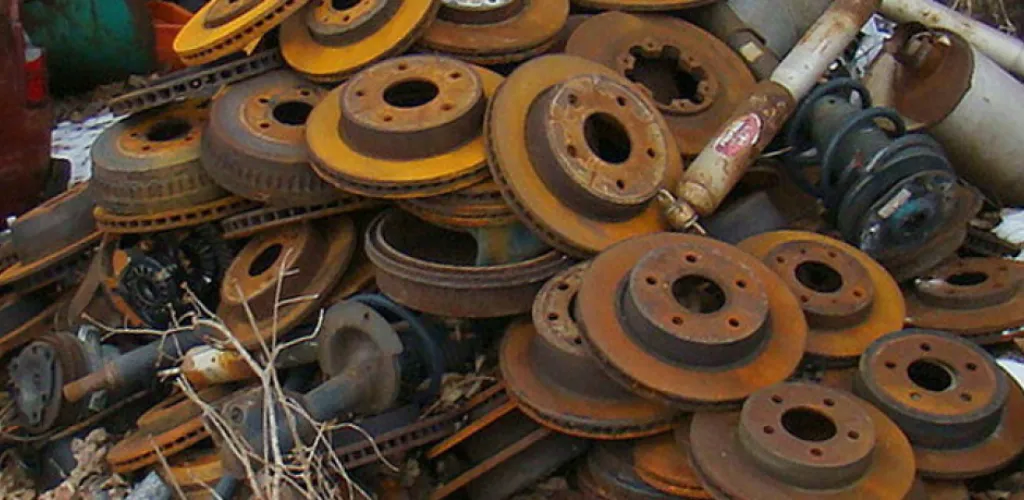
- Iron oxidation causes brake-disc rust when exposed to moisture.
- Carbon-ceramic or ceramic-coated discs resist rust.
- Store vehicles in covered areas and drive regularly.
- Road salt and humidity accelerate corrosion; coatings help.
Rust on brake discs is a common issue that every car owner faces. While a small amount of superficial rust isn’t an immediate danger, understanding its causes and prevention methods helps you keep the braking system in optimal condition. Whether you’ve noticed an orange film on the discs after a few days of rain or you’re concerned about the long-term health of braking components, it’s important to know when rust becomes a serious problem and how to manage it effectively.
This guide explains why discs rust, how to minimize exposure to moisture, and practical steps to remove rust and protect the discs through routine maintenance.
Why brake discs rust
Brake discs are essential components of the braking system, in constant contact with the external environment. They are predominantly made of cast iron or steel, which makes them prone to corrosion due to their metallic composition. When iron on the discs comes into contact with oxygen and humidity in the air, the oxidation process begins, commonly known as rust.
Auto manufacturers are aware of this vulnerability, which is why many discs come from the factory with a protective anti-corrosion coating. The problem is that this coating wears away quickly due to the continuous rubbing between brake pads and the disc surface, turning into the fine dust you see on wheels. Once the initial protection disappears, the iron is exposed and vulnerable to rust.
Factors accelerating rusting include:
- High humidity in the air
- Rainwater that pools on the discs
- Sudden temperature changes causing condensation
- Prolonged periods of vehicle standstill
- Exposure to road salt on winter roads
- Parking outdoors without protection
How to prevent brake disc rust
Discs made from alternative materials
The most effective but also most expensive solution is to install discs made from materials that do not rust. Carbon-ceramic discs eliminate rust entirely because they do not contain iron. They are mainly used on high-performance sports cars due to their exceptional resistance to high temperatures and reduced weight.
Another advanced technology is ceramic-coated discs, such as Porsche Surface Coated Brake. These discs have a cast iron base coated with tungsten carbide, an extremely hard material that provides superior protection against corrosion. Additional benefits include reduced brake noise, increased durability, and less dust production.
Controlling environmental factors
Although you cannot completely eliminate humidity from the air, you can significantly reduce the discs’ exposure to rust-accelerating factors:
- Covered storage: A dry garage protects discs from rain and reduces the rusting rate significantly
- Regular driving: Frequent use of the car keeps discs clean and prevents rust buildup
- Avoid prolonged standstill: If you know the car will be idle for a while, try to start it periodically
Protective coatings
Many auto repair shops offer services to paint components of the braking system. This method can protect parts of the discs, such as the outer edge and areas not in contact with pads. Important to note: you cannot paint the friction surface of the disc, as this would compromise braking efficiency and heat dissipation.
The paint layer provides a barrier against moisture and looks aesthetically pleasing, but it is not a complete solution for uncoated cast iron discs. The contact areas with the pads will rust anyway, regardless of how well the rest of the surfaces are protected.
When rust becomes a serious problem
Surface rust vs. advanced corrosion
A thin film of orange rust on the disc surface is normal and not a cause for concern. This superficial rust forms quickly when the car sits for a few days in damp conditions. The only visible consequence is a short squeal at the first braking that disappears after a few brake applications.
The problem becomes serious when rust:
- Penetrates deep into the disc material
- Leaves marks, dents, or visible cracks
- Spreads to pads, calipers, or lines
- Produces vibrations or persistent noises during braking
- Reduces braking efficiency
Consequences of neglecting rust
Corrosion is an active chemical process that converts iron into iron oxide, literally consuming disc material. Over time, this deterioration leads to:
Reduction in disc thickness: The surface becomes unevenly thinned, creating weak spots and zones with varying braking response.
Caliper seizure: Rust can spread to pistons and caliper guides, partially or fully seizing them.
Pad damage: An uneven surface wears pads improperly and reduces braking efficiency.
Brake line deterioration: Corrosion can spread to connections and brake lines, increasing the risk of leaks.
In advanced stages, your road safety is compromised. A corroded braking system cannot guarantee the normal stopping distance and may fail at critical moments.
How to remove rust from discs
Natural method: using the brakes
The simplest and most effective way to remove superficial rust is to use the braking system. The friction between pads and discs quickly removes the rust layer, leaving the metal surface clean and shiny.
Steps to remove rust by braking:
- Find a low-traffic road or a quiet rural road
- Accelerate to a moderate speed (50-60 km/h)
- Brake hard but controlled, without locking the wheels
- Repeat the process 5–10 times
- Visually check whether the rust has disappeared
Note: This method works only for recent superficial rust. Do not attempt to remove advanced corrosion with aggressive braking, as you may damage the discs or pads further.
Specialized chemical products
If rust persists after the natural method, you can use specialized cleaners for braking systems. These products are available at auto parts stores and are formulated to safely remove:
- Built-up brake dust
- Oils and greases
- Surface and medium rust
- Residues from pads
Application steps:
- Lift the car on a jack and remove the wheel
- Clean the area with a soft brush to remove dust
- Spray the cleaner evenly on the disc surface
- Let the product act according to the instructions (usually 5–10 minutes)
- Wipe with a clean cloth or rinse with water
- Dry completely before reassembling the wheel
For more persistent rust, you can use a fine abrasive sponge or fine steel wool, but be careful not to scratch the friction surface.
Protection after cleaning
After removing rust, apply a protective product to areas not in contact with the pads. This layer helps prevent a rapid recurrence of rust. After washing the car, dry the discs with a short drive and light braking to remove residual water.
When to replace brake discs
Even if surface rust can be removed, there are situations where discs must be replaced:
- The disc thickness is below the manufacturer’s minimum
- The surface shows cracks, even small ones
- There are deep marks or visible depressions
- The disc is warped (checked with a dial gauge)
- Braking produces constant vibrations
- The mileage has exceeded 80,000–100,000 km (depending on driving style)
Disc replacement is always done in pairs on the same axle to maintain braking balance. It is also recommended to replace the brake pads to ensure proper bedding of the system.
Conclusion
Rust on brake discs is a normal phenomenon that doesn’t need excessive worry if kept under control. Regular checks, consistent use, and proper care help prevent severe corrosion. Remember that the braking system is the most important safety component of your car – investing in its proper maintenance can save your life.