
- Evoque (2016–2023) has frequent suspension, Haldex, oil leaks, and electrical issues.
- Maintenance costs exceed €1,000 annually; major repairs can be thousands.
- Very poor reliability reputation; RepairPal 2.5/5 and near-bottom rankings.
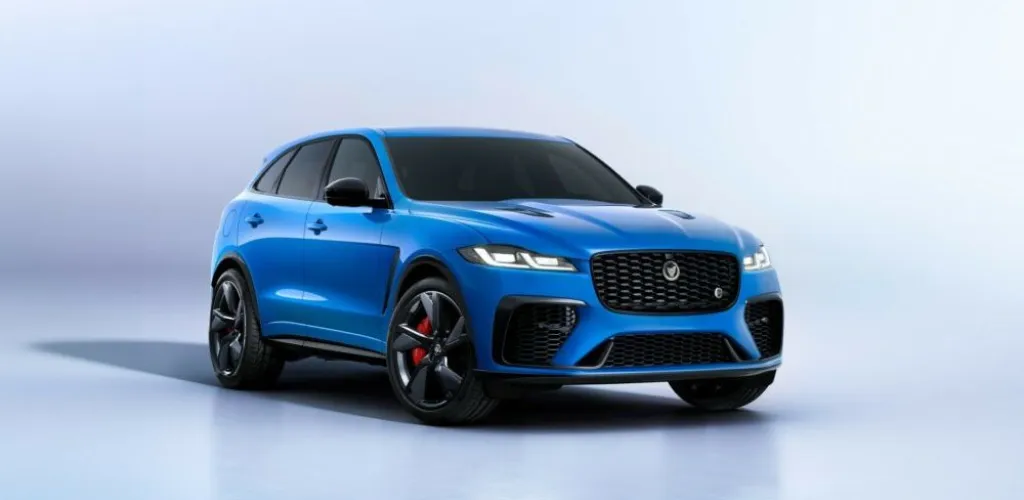
- F-Pace (2016–2023) engines suffer timing-chain wear, oil dilution, and oil-pump failures.
Land Rover Range Rover Evoque (2016–2023)
-
Engine: 2.0 turbo gasoline and diesel engines (150–240 HP) and 2.0 Ingenium diesel (163–240 HP). Frequent technical issues include premature suspension wear and drivetrain components. Wheel noises, oil leaks, and Haldex all-wheel-drive system defects are commonly reported.
-
Maintenance Costs: Maintenance is very expensive. According to RepairPal, the average annual repair/maintenance cost is 1102 USD (~1000 €) for an Evoque. For instance, routine repairs can cost a few hundred dollars (oil replacement ~240–280 USD, synchronizations, etc.), while major failures (automatic transmission, electronic parts) can cost thousands. Overall, annual maintenance exceeds 1000 €, much above the compact SUV average.
-
Reputation (ADAC, TÜV, JD Power): Evoque has a poor reliability reputation. Land Rover’s brand rating in the RepairPal study is only 2.5/5, ranking 31st out of 32 tested car brands. ADAC lists Land Rover models among the most frequently flawed; TÜV tests have recorded many defects in inspections (mainly in steering, brakes, and electrical components). It is generally considered far below average.
-
Recurring Issues: Specialists report significant suspension wear, worn Haldex blocks (service recommended at 40,000 km, otherwise traction issues arise), and erratic behavior of the automatic transmission. Examples: the automatic gearbox with harsh shifts costs ~881 £ for repairs, and the AdBlue system frequently gives false alarms (repair ~134 £). Additionally, particulate filters clog easily (cleaning ~222 £). Oil or water leaks and electronic component failures are also common.
-
Service Recalls: The model has had numerous campaigns. For example, recall R/2024/113 (June 2024) for cracked turbo oil feed line (affecting tens of thousands of vehicles). Other recent campaigns include safety software reprogramming and fuel line or seatbelt ELR replacements from 2020–2021. All warranty repairs are covered by the manufacturer but exemplify the frequency of serious technical problems.
-
Why not to buy it: Evoque is expensive to purchase and maintain with a poor reliability reputation. High costs (Range Rover parts, premium labor) and frequent problems make repairs costly. With a history of complex failures (gearboxes, electronics, suspension) and multiple recalls, Evoque is not recommended for those seeking a hassle-free SUV.
Jaguar F-Pace (2016–2023)
-
Engine: Available with Jaguar Ingenium engines (2.0 turbodiesel 180–300 HP, 2.0 gasoline turbo 250–300 HP) and a supercharged 3.0 V6 engine (340–380 HP). Ingenium diesel engines have had issues with the timing chain that can stretch and premature wear. Also reported is the risk of oil dilution (unburned fuel circulates in oil during coastal traffic) and oil pump failures. These defects can destroy the engine if not promptly addressed (repairing an oil pump can cost thousands of euros).
-
Maintenance Costs: Jaguar F-Pace has high operating costs. A CarEdge study estimates ~17,422 USD in maintenance/repair expenses for the first 10 years of life (almost 5,000 USD more than similar SUVs). In the first 5 years, ~5,519 USD is expected (approx. 1,100 USD/year). The chances of a major repair in the first 5 years are ~50%. RepairPal statistics show an average annual cost of ~1,123 USD for Jaguar. In conclusion, F-Pace repairs are frequent and expensive (e.g., replacing a catalytic converter exceeds 5,400 USD).
-
Reputation (ADAC, TÜV, JD Power): Jaguar ranks poorly in reliability: RepairPal gives it 2.5/5 and ranks 29th out of 32 tested brands. This score reflects the 14 official recall campaigns for F-Pace, as well as numerous owner complaints. JD Power and What Car? surveys highlighted issues with the electrical system and injector blocks. Therefore, Jaguar F-Pace is considered well below average in the premium SUV segment in terms of reliability.
-
Recurring Issues: Beyond the mentioned engine defects, owners report abnormal wear on the ZF automatic shifter (harsh shifts), air conditioning system, and windshield sensors. LED lights and dashboard electronic components repeatedly fail. According to Land Atelier, a frequent cause is timing chain stretch, and if startup noises appear, the shoes/hydraulic tensioner should be checked. Additionally, a defect in parking sensors or pneumatic suspension inducers can generate safe mode operation. In RepairPal statistics, there is also a risk of fuel leaks in the engine compartment (the most frequent recall).
-
Service Recalls: F-Pace has had numerous recall campaigns. For example, the PHEV version was recalled in 2023 because the thermal engine did not start when needed (the vehicle would remain in electric mode and stop when the battery was depleted). Other major recalls: R/2023/043 (incorrectly drilled oil lines in 3.0 V6, oil leak risk, only 9 vehicles affected), R/2024/207 (loosely tightened turbo screw, oil leaks, ~14,816 vehicles), and R/2023/088 (water pump belt, overheating risk, 1,535 vehicles). In total, F-Pace (2022 model) had 6 recall campaigns in the UK, including incorrect headlights, worn seatbelts, and software cleaning. These free repairs highlight numerous manufacturing issues.
-
Why not to buy it: F-Pace combines performance with very high costs and risks. Jaguar consumables are expensive (brake pads, special oils), and many common parts require early changes. Reduced reliability and repeated recall campaigns imply frequent service. With annual maintenance in the thousands of euros and costly repairs (e.g., fuel leak or chain failure can destroy the engine), F-Pace is a problematic choice for prudent buyers.
Maserati Levante (2017–2023)
-
Engine: The luxury SUV Levante typically used the 3.0L twin-turbo V6 engine (325–430 HP), and in the S/Q4/GT/Modena versions (until 2022) a 3.8L twin-turbo V8 (~550 HP). Both are powerful but known for low reliability. Many owners complain about electrical defects (damaged seat/hood wires, rearview camera issues) and the fuel system (fuel pump). Additionally, the 8-speed automatic transmission can have gradual accelerations; distribution is electronic and costly to service.
-
Maintenance Costs: Maserati maintenance is very expensive. A simple periodic service at 2 years starts at ~500$, then ~1080$ at 3 years, ~1500$ at 4 years. Although there are no TÜV/ADAC studies for Maserati, it is known that the price of parts (drilled brakes, adaptive pneumatic suspensions) and labor is premium. Examples: a Maserati Levante brake kit can exceed 2000 €, and any complex repair (turbo, transmission) costs over 3000 €.
-
Reputation (ADAC, TÜV, JD Power): Levante has consistently ranked among the least reliable luxury models. According to Motor1, “Levante and Ghibli are among the least reliable premium vehicles on the market”. In previous J.D. Power studies, Maserati Levante (and its sedan brother Ghibli) have fared very poorly in initial quality and repair costs. Moreover, Maserati’s own headquarters acknowledges that the brand’s reputation is affected by poor reliability. Other automotive journalists note that Levante has low satisfaction survey scores. Overall, Levante has a reputation as a stylish but unreliable and costly SUV to service.
-
Recurring Issues: Owners frequently report: climate control system failures, windshield sensor errors (moisture/fog detection), brake system leaks, and overheating. A typical case is crankshaft ring wear (especially on V6 versions), which can cause the car to be grounded. The infotainment system frequently “crashes”, requiring resets. Turbocharging and ignition defects have been reported among several-year-old specimens. The costs of such repairs are enormous: for example, a bi-turbo V6 turbo can cost over 5000 € in service.
-
Service Recalls: Although it is a niche product, Levante has still had significant recalls. For example, in November 2021, a global campaign (Recall 21V872) was announced for hundreds of thousands of Levante units (2021–2022 models) due to fuel sensor casing cracking and causing fuel leaks. Another recall (Sept. 2021) targeted the 2021 Levante for rear seatbelts (26V703); the locking mechanism may not work correctly. In total, Levante (along with Ghibli/Qtro) has had at least 9 major safety campaigns in recent years. The high number of recalls underscores quality issues.
-
Why not to buy it: Levante attracts with luxury and performance, but extremely high maintenance costs and a poor reliability reputation disqualify it for practical buyers. A Levante requires high annual payments for insurance, taxes, and any repair costs a lot (for example, a change of drilled brake pads reaches ~700€ just on the front). Being one of the few SUVs with Ferrari/Maserati finishes, any accident involves rare and expensive parts. Moreover, it struggles to compete with German or even American models in terms of service costs. The result: Levante is practically a luxury-expression SUV that, beneath the surface, will generate many headaches and huge service bills.
Tesla Model 3 (2017–2023)
-
Engine: Electric sedan with rear engine (1 motor or dual, between 211–450 HP). The electric drive eliminates classic consumables (oil, belts, etc.), but the battery and electronics are complex. Model 3 has Long Range versions (~550 km WLTP) and Performance, with strong accelerations (0–100 km/h under 3.5 s). Reported technical problems include defects in the regenerative braking system (reduced brake pad wear), premature tire wear due to strong torque, and errors in autonomous system software (Autopilot).
-
Maintenance Costs: Although it does not consume fuel, Model 3 can have high costs in electric service (alignments, heavy suspension). RepairPal data shows that Tesla’s (general) average annual maintenance is relatively low, but independent studies warn that unexpected repairs are frequent. An example: brake-back wedge replacement costs ~400 $; a rear sensor ~300 $. The cost of replacing the battery (guaranteed 8 years, limited) can exceed 10,000 €. The periodic maintenance announced by Tesla is lower than traditional cars, but the cost of repair parts (aluminum body, LiDAR sensors, etc.) is very high.
-
Reputation (TÜV, JD Power, What Car?): Tesla Model 3 has a mixed reputation: operating efficiency is good, but mechanical reliability is critiqued. The 2023 German TÜV study placed it last in reliability in its age group (2–3 years and 4–5 years), being top for issues with lights, brakes, and suspension. The most frequent cause: the vehicle’s heavy weight puts additional stress on brakes and suspension. Additionally, numerous significant recall issues have affected Model 3/Y. For instance, Tesla recalled over 375,000 units in the US (Model 3/Y) for steering assembly inspection, and airbag and autopilot software issues have been sanctioned in Europe. In consumer surveys (What Car?, JD Power), Tesla receives mixed notes: consumers praise the range and low operating cost but complain about frequent hardware and electronic issues.
-
Recurring Issues: Apart from the above, users report manufacturing issues: uneven body gaps, steering noises (squeak on turn), defects in UI elements (central tunnel, fallen buttons). The infotainment system is meant to be updated OTA, but has occasional bugs. A notable risk is frequent GPS signal or 4G connection losses, which can affect navigation functions and online warranty coverage.
-
Service Recalls: Tesla is involved in numerous service campaigns. In Europe, a recent example: the 2023/2024 Recall for recalibrating the steering system software, which could become too sensitive. In the US, in November 2024, 580 accidents were reported due to the power steering system, leading to recalls for steering arm inspection on ~376,000 Model 3/Y vehicles. Additionally, global recalls include airbag problems, brake center (cracks in brake cylinders), and rear seat fixation issues. Practically, Tesla invests massively in updates and retrofits, indicating that many components do not function perfectly from the factory.
-
Why not to buy it: Despite electric advantages, Model 3 comes with major risks. Multiple independent sources show that the car has an unusually high number of mechanical and electrical defects, and service hours needed are frequent (screws, belts, pins can loosen). Any out-of-warranty repair from Tesla can cost thousands of euros. Often the car requires special tools (battery wraps, special refrigerant pumps) that are not available at any service. For those interested in reliability, the conclusion is that a Tesla involves many expensive and technically uncertain repairs, making it a risky choice for daily use.
Nissan Qashqai (2014–2021, 2021–2025)
-
Engine: The Qashqai family offers 1.2/1.3 turbo gasoline engines (115–160 HP) and 1.5/1.6 dCi diesel engines (115–130 HP). The 1.5 dCi diesel engines have been particularly problematic in recent years (failed turbo, frequent DPF regeneration times). The 7-speed CVT automatic transmission (XTronic) is also contested – with wear, it may result in high/late gear changes and the risk of premature destruction. In design, Qashqai relied on common parts with Renault/Kadjar models (a potential advantage), but this has not eliminated defects: there are cases of particulate filter clogs (DPF), clogged EGR, and fire sensor issues.
-
Maintenance Costs: Generally, maintaining a Qashqai is not as high as the premium models mentioned above. However, certain technical repairs have proven costly: for example, a CVT transmission failure requires reconditioning (~2000€+) and a long service time. A severe DPF + EGR blockage may require complete exhaust removal (700–1000€). Additionally, preventive maintenance costs may increase if opting for shorter oil change intervals (some problems appear under 20,000 km).
-
Reputation (ADAC, TÜV, What Car?): According to ADAC reports, Nissan Qashqai consistently ranks below average in reliability – in 2021, it was among the top models with frequent issues (5th place in the defect report). Moreover, a German Auto Bild/TÜV analysis rated Qashqai as one of the SUVs with low reliability (along with Dacia Duster) in the 2022 report. What Car? studies report above-average issues with electrical components and older transmissions. Consequently, Qashqai’s reputation is tarnished, although it remains a bestseller by sales volume in Europe.
-
Recurring Issues: In technical documentation and forums, repeated reports include: refrigeration system failures (air conditioning compressor breaks), accelerated suspension wear on uneven roads, and power losses due to turbo or EGR issues. TCU/ECU electronics give frequent errors, requiring periodic software resets. The brake system can squeal due to uneven pad wear and disc corrosion (ineffective ABS pistol sealing leads to occasional brake lockups). Even LED headlights have reported drops in light intensity (LED driver replacement at the service). These issues imply moderate to high service expenses; although none are monumental, they add up.
-
Service Recalls: Qashqai has been subject to several relevant recall campaigns. An example is the side airbag system recall (including similar Kadjar models) in 2017, when Renault-Nissan recalled a few hundred vehicles in Romania for front seat pretensioner replacement. Additionally, in 2020-2021, several Qashqai models had reported soot problems (“dpf doesn’t regenerate properly”) and possible recall of the fuel return tube (known issues from the EURO 6 DieselGate). Some component recalls (e.g., rear parking sensor, battery terminals) have appeared in recent years, but compared to other manufacturers, there have not been major system campaigns. However, sales volume (about 3.5 million Qashqai sold throughout its lifetime) suggests that even a low defect frequency affects many users.
-
Why not to buy it: Despite its popularity, Qashqai is to be avoided if reliability is the priority. Older Euro 6 diesel engines have chronic emission and maintenance problems (EGR/DPF), and turbocharged gasoline versions have had injector and turbo recalls as in those from Renault. Although the purchase price is not excessive, the model does not excel in long-term durability – ADAC highlights high defect rates for Qashqai. Additionally, costs can quickly mount with unexpected service outings (repairing automatic CVT transmissions or faulty turbo can reach several thousand euros). It is recommended to choose more reliable competitors (Kia Sportage, VW Tiguan, Toyota Corolla Cross) if durability is valued.