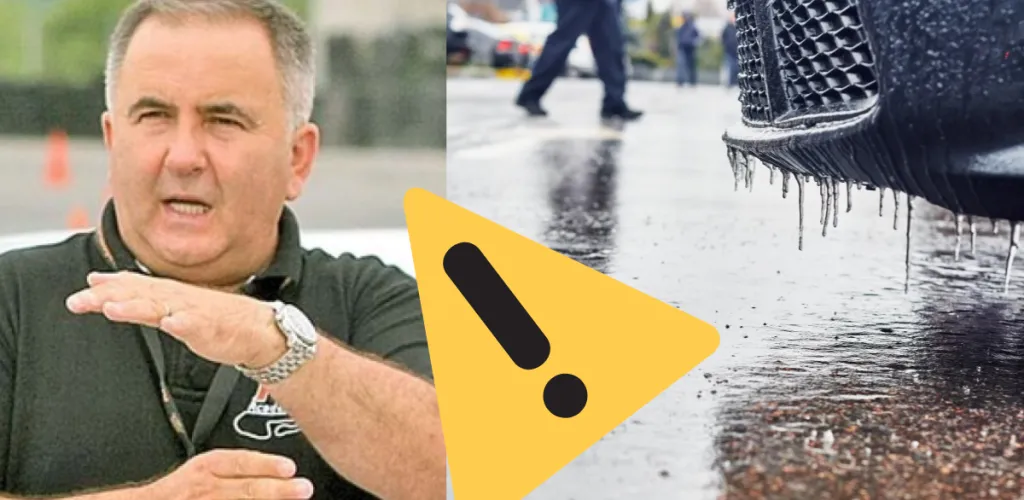
- Ice is the biggest winter hazard due to its unpredictable appearance
- The December 4 Darste Bridge crash with 17 vehicles shows ice’s severity
- Winter tires are mandatory and more effective than all-season tires
- On ice, test traction, slow down, and increase distance to stay safe
Defensive driving expert Titi Aur recently issued important warnings to all motorists about the major hazards that accompany the colder season. A former rally driver and a recognized road safety specialist, Aur stressed that proper preparation and risk awareness are essential to avoid accidents during winter.
Ice represents the greatest threat for drivers during this period, being unpredictable and extremely dangerous. The December 4 Darste Bridge accident, involving 17 vehicles due to icy conditions, clearly demonstrates the severity of this issue.
Why ice is the biggest winter hazard
According to explanations given on Radio România Actualități, Titi Aur considers ice to be “the most dangerous thing that can happen to us on the road.” The main reason is the surprise factor - black ice can appear abruptly, even on road sections that seem safe.
“Black ice, ice, is the most dangerous thing that can happen to us. Why? Because it takes me by surprise,” the expert explained. This unpredictable characteristic makes many drivers be caught unprepared, leading to a loss of control of the vehicle.
Essential recommendations for the winter season
Winter tires — mandatory beyond legal requirements
Titi Aur categorically emphasizes the necessity of mounting winter tires, declaring himself against compromises: “I have never been a fan of all-season tires.” Winter tires are not only a legal requirement but a vital safety measure that can make the difference between a safe journey and a serious accident.
The special composition of winter tires allows them to stay flexible and gripping even at low temperatures, providing superior traction on surfaces with ice or snow compared with summer tires.
Planning trips and patience on the road
The expert emphasizes the importance of correct trip planning: “you must start from this premise, that on certain routes, especially towards the mountains, but not only there, it will be more congested and, therefore, if I leave home aware that I will spend more time on the road, that is the first thing I must do.”

Respecting traffic rules and common sense in traffic is essential. Titi Aur notes that trying to gain a few meters in a queue is not worth the risk and does not bring real benefits: “you will only reach 100, 200, 300 meters ahead and you will re-enter the queue.”
Defensive driving techniques on ice
The expert offers practical tips for detecting and managing icy conditions:
Testing traction
“When I enter a bridge, I know there could be ice. This means I reduce speed, am more attentive, possibly test the grip a little,” explains Titi Aur. Testing can be done by:
- A gentle press of the brake pedal when there are no vehicles nearby
- Observing the ABS response
- Detecting tremors in the brake pedal indicating wheel lock
Adapting driving style
Once grip is detected as insufficient, the trained driver should:
- significantly reduce speed
- increase the distance to the vehicle ahead
- avoid abrupt maneuvers (acceleration, braking, turning)
- anticipate traffic situations with extra time
Forecasted weather conditions
Forecast for the first week of December indicated:
- Lower temperatures in the northeast regions
- Normal daytime values of 2-7 degrees Celsius
- Normal precipitation of 10-15 mm
- Possible higher amounts (15-30 mm) in hilly and mountainous areas
For the second week:
- Slightly higher temperatures in intra-Carpathian regions
- Slight declines in the rest of the country (1-5 degrees)
- Possible above-average rainfall in the west
Systemic problems in road education
Titi Aur identifies major deficiencies in Romania’s driver training system:
Lack of early education
“At kindergarten we don’t learn anything about traffic,” notes the expert, stressing that road education should start at very young ages to develop a preventive mindset.
Outdated curriculum at driving schools
“In the driving school curriculum you will still see questions about carburetors and nothing about what cars have since 2021, such as ABS, ESP, traction control, and emergency braking assistance.” Modern safety systems are essential for safe driving but are not adequately covered in theoretical training.
Absence of refresher training programs
“After driving school there are no further training programs,” observes Aur. This lack of ongoing education leaves drivers unprepared for complex traffic situations.
Risk awareness - the key to safety
The expert draws attention to a dangerous phenomenon — lack of risk awareness: “What many drivers lack is the ability to recognize risk and, more importantly, to acknowledge it in traffic.”
This problem is amplified by the dangerous mentality “it can’t happen to me… I have experience, I’ve been driving for years and I haven’t had problems.” This overconfidence can lead to neglect of precautionary measures and taking unnecessary risks.
Lessons from the Darste Bridge accident
The accident with 17 vehicles on the Darste Bridge on December 4 dramatically demonstrates the consequences of inadequate winter preparation. The lack of visibility combined with ice created a situation where several drivers failed to adjust their driving to weather conditions.
This event underscores the importance of:
- Reducing speed in areas with ice risk
- Maintaining increased safety distances
- Using proper lighting systems
- Avoiding unnecessary trips in extreme conditions
Solutions for improving road safety
Titi Aur proposes a systemic approach: “The only solution is for authorities to open their eyes and look in this direction.” This includes:
- Modernizing the driving school curriculum
- Introducing road safety education into the education system
- Implementing periodic refresher training programs
- Awareness campaigns about traffic risks
- Improving road infrastructure for winter conditions
Road safety in the cold season largely depends on the preparation and attitude of each motorist. Following expert recommendations like Titi Aur can prevent tragedies and make the difference between a safe journey and a road accident with serious consequences.