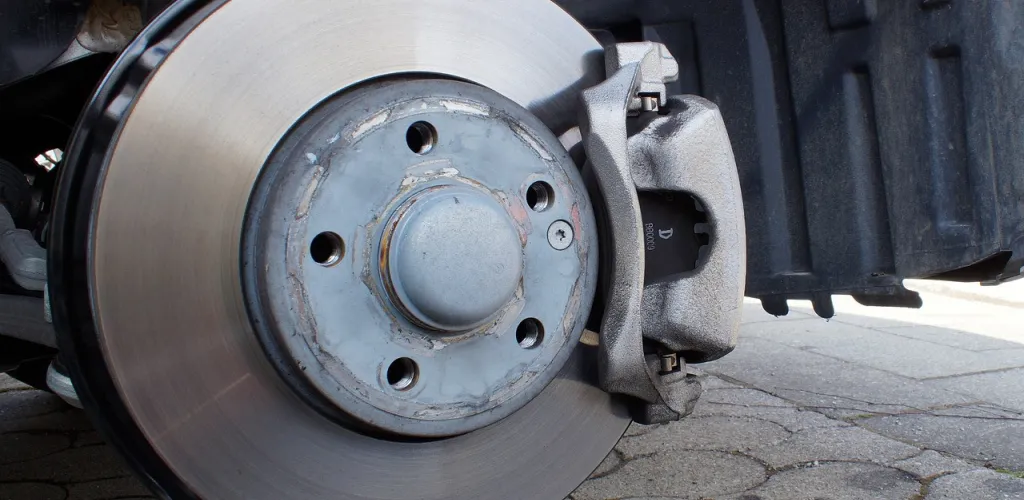
- Disc brakes dominate modern cars; pads wear and require replacement roughly every 20,000–50,000 km
- Premium pads offer consistent performance, durability, disc protection, and quieter operation
- Organic NAO pads are softer, quiet, dust-prone, and low-cost
- Three common types: organic, ceramic, and semi-metallic
Brake safety is a cornerstone of daily driving. While many drivers chase engine performance or cabin comfort, the vital importance of brake pads in daily safety is often overlooked. Choosing the right brake pad type can make the difference between effective braking and a safety-critical situation.
Most modern cars and trucks come equipped with disc brakes on all four wheels. Disc brakes have three main components: the brake disc, the caliper, and the brake pads. This configuration offers superior performance to drum brakes, being able to dissipate heat more efficiently during braking.
How brake pads work
The role of brake pads is to create friction when pressed by the caliper against the disc surface. When the brake pedal is pressed, pistons inside the calipers push the brake pads toward the disc. This force creates friction, which converts the vehicle’s kinetic energy into heat, thereby slowing or stopping the vehicle.
This process uses the pads and discs every time you brake. Wear is inevitable and natural—the friction material is gradually transferred from the pads to the discs, creating an optimized contact surface. That means you will need to replace them periodically, usually every 20,000–50,000 km, depending on driving style and component quality.
What a high-quality brake pad means
A brake pad should not only stop the car. It must also have other complex qualities that ensure a safe and comfortable driving experience. A high-quality pad should generate as little excessive heat as possible, efficiently dissipate the heat generated during braking, not produce annoying noises, and not create excessive brake dust.
In addition, quality pads should offer:
- Consistency in performance — braking power remains constant regardless of temperature
- High durability — resist premature wear
- Disc compatibility — avoid premature disc surface damage
- Predictable behavior — linear response to pedal input
I think most people choose the cheapest brake pads when replacing them. This is not ideal from a safety and long-term cost perspective. A cheap set lasting 15,000 km will be more expensive in the long run than a premium set lasting 40,000 km.

What types of brake pads exist
The most common are organic, ceramic, and semi-metallic pads. Each type has distinct characteristics and suits certain vehicle types and driving styles.
Organic brake pads
They are also known as NAO (Non-Asbestos Organic); they are not polluting and are easy to recycle. These pads are made from a blend of organic fibers, resins, and fillers, without toxic or environmentally harmful materials.
Main characteristics:
- Softer and less abrasive
- Operate quietly in normal conditions
- Produce a lot of brake dust, but this dust is less toxic
- Wear relatively quickly, especially under severe conditions
- Lower heat tolerance
- Low purchase cost
They are found on small city cars that don’t require much braking force to stop. They are ideal for urban driving with frequent but not very intense braking.

Ceramic brake pads
Ceramic pads are found on more expensive and high-performance cars. They are made from a blend of ceramic fibers, metallic powder, and binding agents, creating a very durable and efficient material.

Main advantages:
- Offer excellent and consistent braking power
- Perform very well at high temperatures (over 400°C)
- Very durable — can last 2-3 times longer than organic pads
- Produce very little brake dust
- Operate almost silently
- Do not negatively affect brake discs
Disadvantages:
- High initial cost
- Reduced performance at very low temperatures
- Not suitable for all vehicle types
These pads are recommended for drivers who cover many miles, for premium vehicles, or for those who desire superior performance and maximum comfort.
Semi-metallic brake pads
Semi-metallic pads contain between 30-70% metals (steel, copper, iron), the rest being organic materials and binding agents. This composition gives them unique performance characteristics.
Characteristics:
- Excellent braking power, especially at high temperatures
- Good durability under severe use
- Consistent performance over time
- High resistance to brake fade
- Produce more noise than the other types
- Create quite a lot of brake dust, which can be abrasive
- Can wear standard discs faster due to higher hardness
Important: If your car did not come from the factory equipped with semi-metallic pads, do not fit such pads without also changing the discs. They wear discs more quickly because they are harder due to the metal content. Standard discs are not heat-treated to withstand the extra wear.
How to choose the right brake pads
Choosing brake pads depends on several factors:
Vehicle type:
- Small city cars: organic pads
- Premium family cars: ceramic pads
- Sports and utility vehicles: semi-metallic or ceramic pads
Driving style:
- Relaxed urban driving: organic or ceramic
- Sporty, mountainous driving: ceramic or semi-metallic
- Heavy commercial use: semi-metallic
Budget:
- Limited budget: organic (noting they wear faster)
- Medium budget: ceramic (best long-term value)
- High budget: premium ceramic or specialized semi-metallic
Our recommendations
If you want to replace the brake pads now or soon, opt for the same type of pads that your car originally uses. The manufacturer chose that type to best match the vehicle characteristics, discs installed, and the braking system as a whole.
If you want to upgrade to a higher type of pad, consider also changing the discs to achieve optimum performance and avoid premature wear. Consulting a specialist is recommended to ensure you choose the right components for your specific vehicle.
Investing in high-quality brake pads is an investment in your safety and that of your passengers. Don’t economize on safety - the price difference is quickly amortized by superior durability and improved performance.
Photo sources: summitcountyvoice.com, depaula.com