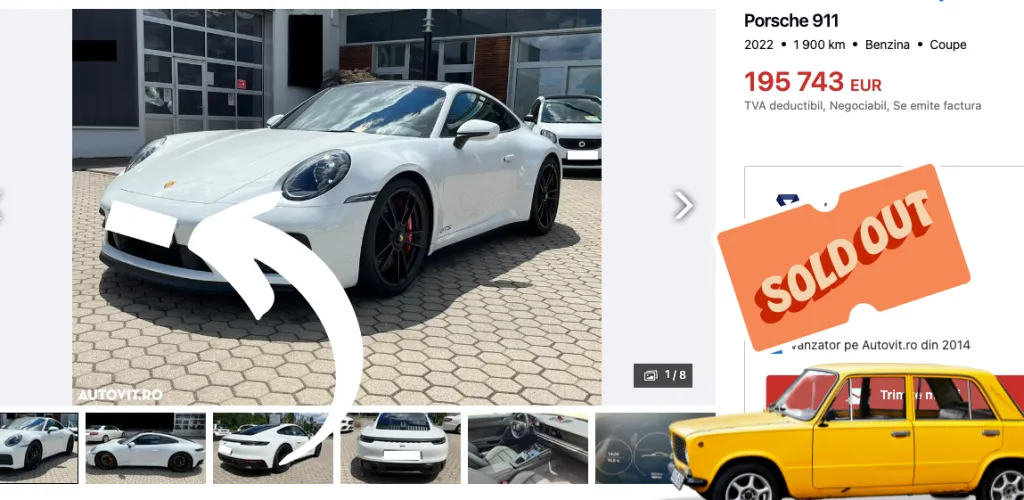
- Sellers cover plates for privacy and anonymity in many car listings.
- Company or fleet cars often hide plates to avoid discussing finances.
- Unregistered Romanian vehicles may have covered plates, signaling registration and paperwork issues.
- Professional, high-quality listings with hidden plates can be legitimate; crude hiding signals red flags.
When you browse online car listings, you have probably noticed that most sellers cover the license plates of the cars. This practice, which seems to have become almost a norm in the auto market, raises legitimate questions about the reasons behind this decision. Understanding why sellers adopt this approach can help you better evaluate the credibility of the listing and make informed decisions as a buyer.
The practice of hiding license plates is not always linked to the intention to fool buyers; it often reflects legitimate privacy concerns or particular circumstances of the sale.
Main reasons for hiding license plates
Desire for anonymity and privacy
Some people prefer not to give explanations to others about the decision to sell the car. If friends or neighbors found out that you put your vehicle up for sale, you would certainly have to answer many questions, the first being about the financial situation. For many owners, this situation can be uncomfortable and undesirable.
In the case of people with public visibility or in the business environment, anonymity may be even more important. It is easier when clients or business partners do not learn that you are selling your car and cannot come with all kinds of proposals or speculations on this topic.
Company and fleet vehicles
Company cars or those that have belonged to a company often have license plates covered, convinced that this will avoid discussions about the reason for the sale. Companies may have internal policies advising this practice to avoid speculation about the business’s financial situation.
Unregistered vehicles - a red flag
Many cars have the license plate covered because they are not yet registered in Romania. Unfortunately, this aspect can be an unpleasant surprise for the buyer who travels to see the vehicle. Unregistered vehicles can imply:
- Additional costs for registration and taxes
- Complex bureaucratic procedures
- Possible technical issues that prevent registration
- Missing or incomplete documents
How to correctly interpret this practice
Positive signals
When the license plates are covered professionally in well-made listings, with detailed descriptions and high-quality photos, the reason may simply be a privacy preference. These sellers typically:

- Provide complete descriptions of the vehicle
- Respond promptly and transparently to questions
- Accept technical verifications
- Have proper documents
Warning signals
Be mindful when plates are covered crudely (with paper, fabric) and the listing shows:
- Vague or incomplete descriptions
- Poor quality photos
- Prices that are suspiciously low
- Evasive answers to questions
- Refusal of technical verifications
Benefits of transparency for sellers
If you are not in a situation where anonymity helps, the most honest approach is to leave the license plate visible. Transparency can speed up the sale by:
- Increasing buyer trust
- Reducing questions about the vehicle’s legal status
- Attracting serious buyers who value honesty
- Avoiding wasted time with doubtful individuals
Recommendations for buyers
As a buyer, don’t let covered plates discourage you completely, but proceed with more caution and:
- Ask specific questions about the reason for covering the plates
- Request proof of registration status
- Check the documents before traveling
- Insist on a full technical inspection
- Assess the coherence between the listing and reality
In summary, covering license plates is not necessarily a negative sign, but it requires a more prudent approach from the buyer. The safest path to a successful transaction remains transparency and open communication between parties from the first contact.