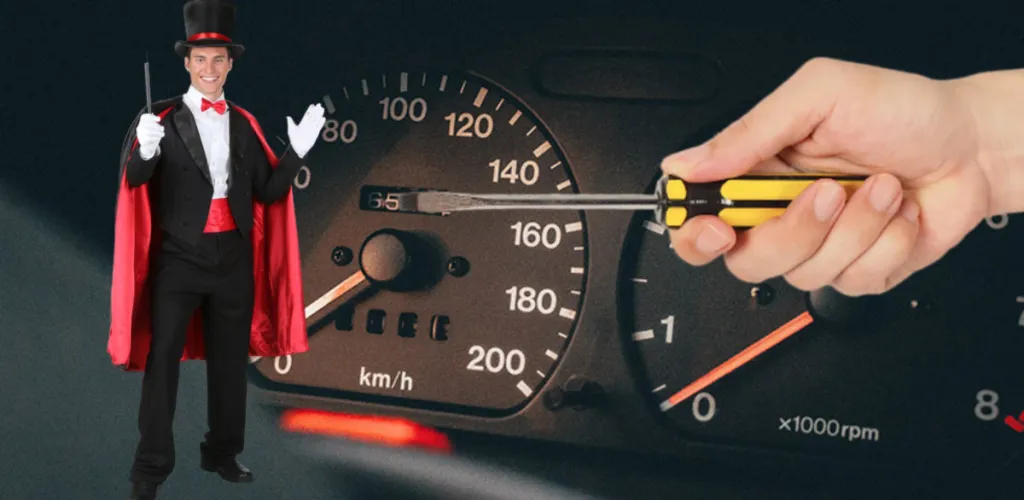
- 3.5% chance of odometer tampering within 11 years; 1.9M US vehicles affected.
- California leads with ~437k affected; Texas +15%, Florida +12%, Arizona +12%.
- Buyers lose about $4,000 and face extra maintenance and resale costs.
- Digital odometers ease tampering but detection improves; 2021 rule requires 2011+ tracking for 20 years.
Used-car markets are facing an increasingly serious problem: mileage tampering. What was once considered an isolated practice has now become a disturbing trend, confirmed by official studies. Recent data show millions of cars on the road with false odometer readings, and the financial impact on buyers reaches billions of dollars annually.
Global extent of the problem
Worrying statistics from the United States
According to a study conducted in the United States, there is about a 3.5% chance that a car’s odometer has been tampered with within the first 11 years of its life. This statistic, provided by the National Highway Traffic Safety Administration (NHTSA), reveals the true scale of the phenomenon.
Currently, according to Carfax, there are 1.9 million vehicles on the road with incorrect odometer readings. This figure has risen by 7% from last year, showing that the problem is worsening.
Geographic distribution of fraud
California, as the largest auto market in the US, records the most affected vehicles – over 437,000. However, this number has increased by only 2% from last year. More concerning is the situation in other states:
- Texas: 15% increase in mileage fraud
- Florida: 12% increase
- Arizona: 12% increase
These three states are part of the top 10 with the most affected cars and have recorded double-digit growth in the last 12 months.
Financial impact on buyers
Direct and indirect losses
Illegitimate odometer tampering can have devastating financial consequences. Buyers lose an average of $4,000 in value when purchasing a vehicle with a falsified mileage. This amount does not include:
- Unplanned maintenance costs
- Premature wear-related repairs
- Loss of resale value
- The risk of later being accused of fraud
Evolution of the problem over time
In 2002, the NHTSA reported roughly 450,000 odometer fraud cases per year, with total costs to buyers exceeding $1 billion annually. Two decades later, the problem not only persists but has diversified with digitalization.

Challenges of the digital era
Digital odometers: facilitation and detection
The digital era has brought a paradox to mileage fraud:
Facilitation of fraud:
- Digital odometers can be modified more easily with specialized software
- Modification equipment is more accessible
- The process no longer requires physical intervention on mechanical components
Improved detection:
- Multiple systems in a car store mileage information
- Auto shops capture and record more data
- Centralized databases enable cross-checks
- Electronic tracing makes hiding modifications harder
Legislative changes
In 2021, the NHTSA amended its rules on odometer reporting. Any vehicle built in or after 2011 must now be tracked for 20 years, instead of 10. This change was necessary to address the rise in odometer fraud involving older vehicles as the average age of cars on the road increases.
Buyer protection methods
Verification of official documents
Title documents:
- Verify the officially reported odometer value
- Ensure the information is clearly legible
- Compare with data from other documents
Maintenance records:
- Request the history of oil changes
- Check the consistency of mileage over time
- Look for unusual jumps in records
Physical inspection of the vehicle
For vehicles under 30,000 km:
- The tires should be original
- Interior wear should match the reported mileage
- Pedals and steering wheel should not show excessive wear
General signs of wear:
- Condition of seats and plastic components
- Wear on buttons and controls
- Overall appearance of the engine and engine bay
Vehicle history reports
NHTSA recommends obtaining a vehicle history report. Platforms such as:
- Carfax offers checks of DMV databases
- Odometer Fraud Check compares the VIN with official information
- Other platforms provide details about accidents or previous issues
All these checks are performed based on the vehicle’s unique VIN and cost modest amounts compared to the financial risks.
The situation in Romania
Local reality
Although the study illustrates the situation in the United States, Romania faces the same problem, probably to similar or even larger proportions. In our country, mileage tampering has been a common practice for years, and:
- The technological level for fraud tracking is less developed
- Penalties for such crimes are less severe
- Verification systems are more limited
- Consumer education is insufficient
Recommendations for the Romanian market
Taking these realities into account, do not buy any car without a detailed pre-purchase inspection. This verification should include:
- Professional technical inspection
- Verification of origin documents
- Consultation with an auto specialist
- Use of local verification services
- Careful analysis of maintenance history
Future prospects
Emerging prevention technologies
The auto industry constantly develops new methods to combat fraud:
- Mileage recording across multiple vehicle systems
- Cloud connectivity for data synchronization
- Blockchain for immutable records
- Artificial intelligence for anomaly detection
Consumer responsibility
Ultimately, protection against these frauds also depends on buyer vigilance. A thorough check, though it may seem costly initially, can prevent much larger financial losses and legal troubles later.
The phenomenon of mileage tampering poses a real threat to the integrity of the used-car market. Only by educating consumers, improving verification systems, and enforcing laws can this fraudulent practice be effectively fought.