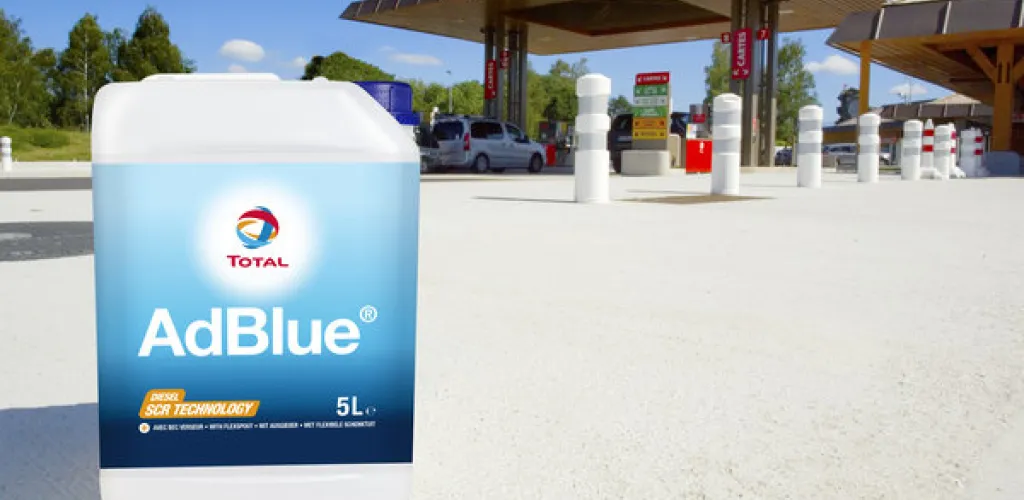
- Authentic AdBlue is 32.5% urea and 67.5% deionized water per ISO 22241.
- Substitutes or non-AdBlue liquids can damage engines irreversibly.
- ISO 22241 covers purity, concentration, pH, conductivity, and stability.
- Price varies by packaging and distribution, not chemical content.
AdBlue has become mandatory on most modern diesel cars to meet Euro 6 emission standards. Yet many drivers wonder whether all AdBlue liquids on the market are identical and if cheaper substitutes can be used. The short answer is that all authentic AdBlue products are chemically identical, but using other liquids can cause irreversible engine damage.
In this article we explain what AdBlue is and how the SCR system works, the benefits for performance and the environment, the differences between AdBlue liquids on the market, the risks of substitutes, how to identify if your car needs AdBlue, consumption and refill frequency, and maintenance tips.
What is AdBlue and how the SCR system works
AdBlue is a liquid that works with the SCR (Selective Catalytic Reduction) system of the diesel engine to actively reduce nitrogen oxide emissions. In general, most vehicles that use active emission control technologies can usually be identified by the appearance of SCR symbols or the blue color in their name.
The engine burns fuel in the combustion chamber, after which the exhaust passes through the particulate filter where AdBlue is sprayed by the onboard computer which calculates the amount of liquid needed.
A dosing control system mixes AdBlue with the exhaust gases and introduces them into the SCR catalyst. The ammonia in the urea reacts actively with nitrogen oxides in the exhaust stream and neutralizes them, forming nitrogen and water vapor, which can be released into the environment without issues because they are not harmful.
Benefits of the AdBlue system for performance and the environment
At the same time, this system reduces fuel consumption by about 5%. The AdBlue system in combination with SCR is highly efficient and manages to decompose about 90% of nitrogen oxides and reduces hydrocarbon and carbon monoxide emissions by 50-70% depending on the vehicle.
This high efficiency is possible due to the precise chemical process that transforms harmful substances into environmentally harmless components. The system operates optimally only at high temperatures, which is why it is integrated into the rear part of the exhaust system.
Is there any difference between AdBlue liquids on the market?
Although there are many AdBlue liquids on the market depending on the manufacturer, all solutions are built on the same chemical elements in the same proportions. There are international standards that verify the exact 32.5% urea and 67.5% deionized water.
International standards for AdBlue
AdBlue must comply with the ISO 22241 standard, which specifies:
- The exact concentration of 32.5% high-purity urea
- 67.5% deionized water
- Absence of metallic impurities
- pH and electrical conductivity within strict limits
- Chemical stability over time
All AdBlue-certified products meet these standards, regardless of the manufacturer brand. Price differences are more about packaging costs, distribution, and commercial margin.
Risks of using substitutes or non-compliant liquids
Any other liquid used instead of AdBlue can cause significant damage to your system. Never fill with water when you are low on liquid or use solutions that do not bear the AdBlue trademark, as these can cause substantial damage to your engine.
What happens when you use unsuitable substitutes
- Crystallization in the system: Incorrect concentrations can cause urea crystallization in pipes and injectors
- Corrosion of components: Impurities can corrode metal elements in the SCR system
- Catalyst damage: Foreign substances can poison the SCR catalyst, reducing its efficiency
- Complete system blockage: In extreme cases, the entire system can be compromised
These faults can cost thousands of euros to repair and may require replacing the entire SCR system.
How to identify if your car needs AdBlue
If your car is built in the last five years and has a diesel engine, it is most likely equipped with an AdBlue system. If you are not sure, consult your vehicle’s user manual or look for a blue filler cap indicator.
Signs of an AdBlue system
- Blue filler cap with the AdBlue symbol
- Dashboard indicator for AdBlue level
- SCR mentioned in the technical documentation
- Year of manufacture after 2015 for most models
Consumption and refill frequency of AdBlue
Normally, the AdBlue usage rate is about 1 liter per 1000 km under normal driving conditions. This can be directly influenced by engine size, driving style, and speed.
Factors that influence consumption
- Driving style: Aggressive driving increases consumption
- Route type: Urban roads typically require more AdBlue
- Ambient temperature: Cold weather can affect system efficiency
- Engine capacity: Larger engines consume proportionally more
The exact rate varies for each engine type and the size of the tank on the car, which usually ranges from 10–15 liters. Always refuel with AdBlue when the onboard computer indicates it is necessary, because the diesel engine will not start if you run out of liquid.
Tips for optimal maintenance of the AdBlue system
To avoid problems and keep the system functioning optimally:
- Fill only with certified AdBlue from trusted suppliers
- Keep a spare in the trunk for emergencies
- Do not ignore dashboard warnings
- Avoid long-term storage of the liquid under extreme temperatures
- Regularly check the level, especially before long journeys
Following these recommendations will ensure smooth SCR operation and protect your vehicle investment.