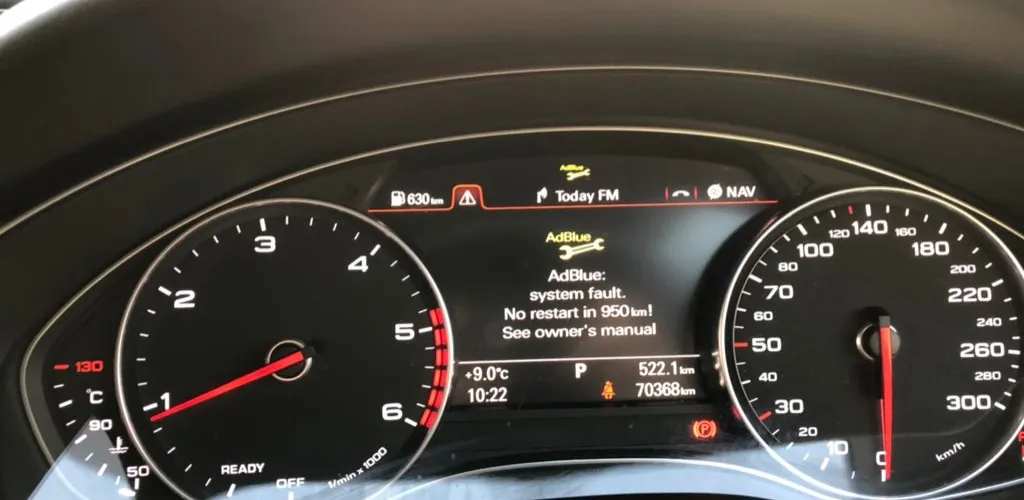
- AdBlue reduces NOx up to 90% and is essential for EURO 6 compliance.
- Typical consumption: 1 L AdBlue per ~1000 km; depends on driving and conditions.
- Warning stages lead to power loss and engine start blocked if AdBlue runs dry.
- Repair costs can reach €1,500–€3,000 for SCR damage, with other costs for DPF and sensors.
AdBlue systems have become ubiquitous on modern diesel-powered cars, mandatory for meeting EURO 6 emissions standards. These systems not only cut harmful NOx emissions by up to 90%, but also optimize fuel economy and engine performance. However, many drivers new to an AdBlue-equipped car make costly mistakes, ignoring on-dashboard indicators or refilling too late with this essential fluid.
What is AdBlue and why it is essential for the diesel engine
AdBlue is a high-purity urea solution (32.5%) dissolved in demineralized water, injected into the exhaust system to neutralize nitrogen oxides (NOx). Through the Selective Catalytic Reduction (SCR) process, AdBlue converts these harmful compounds into water vapor and harmless nitrogen.
Vital role of the system:
- Reducing NOx emissions by up to 90%
- Complying with EURO 6 standards
- Optimizing engine performance
- Improving fuel consumption by 3–5%
How many kilometers you can travel with an AdBlue fill
AdBlue consumption varies depending on several technical factors:
Standard consumption:
- 1 liter of AdBlue = approximately 1,000 km driven
- Representing about 3–5% of diesel consumption
- Variations between 0.5–2 liters per 100 km depending on usage conditions
Factors that influence consumption:
- Driving style (aggressive vs. economical)
- Route type (urban vs. extra-urban)
- Outside temperature
- Vehicle load
- Engine condition
Tank capacity and when to refill
AdBlue tanks have different capacities:
- Small cars: 7–10 liters
- SUVs and premium sedans: 12–15 liters
- Light commercial vehicles: 15–25 liters
On-board computer warnings
Modern systems alert in stages:
- First alert: At 2,400–3,000 km left (approximately 2.5–3 L)
- Second alert: At 1,000–1,200 km left (approximately 1 L)
- Final warning: At 200–500 km left
- Engine block: At 0 km / next start
What happens when you drive with the AdBlue light on
Warning stages
First level (yellow light):
- Car operates normally
- Displays the remaining distance to refill
- Recommend refilling within the next 500–1,000 km
Second level (orange/red light):
- Progressive power limitation
- Performance reduced by 25–50%
- Remaining distance below 200 km
Critical level:
- Engine start is blocked
- Refilling and system reset required
- Risk of damaging components
Consequences of running out of AdBlue
Impact on the system
A lack of AdBlue does not mechanically damage the engine, but the ECU blocks starting to:
- Comply with emissions regulations
- Protect the exhaust system
- Avoid SCR component damage
Repair costs
Direct damages:
- SCR system damaged: €1,500–€3,000
- DPF filter affected: €1,500–€2,500
- AdBlue sensors faulty: €300–€800
- ECU reset: €150–€300
Vehicles operating in “emergency mode”
Some models allow starting without AdBlue, but with severe restrictions:
- Power reduced to 50–60% of normal
- Maximum speed limited to 20–50 km/h
- Higher fuel consumption
- Emissions above legal limits
Correct AdBlue refilling
When to fill
Manufacturers recommend:
- Fill when the tank drops below 2 liters
- Top up to maximum capacity
- Avoid frequent partial refills
- Periodically check the level
AdBlue fluid quality
Quality requirements:
- ISO 22241 standard
- Exact concentration of 32.5% urea
- Absence of metallic impurities
- Storage temperature between -5°C and +25°C
Where to buy AdBlue:
- Major petrol stations (Shell, Petrom, Rompetrol)
- Authorized auto services
- Auto parts stores
- Online from certified suppliers
Precautions and practical recommendations
What not to do ever
- Do not put water into the AdBlue tank (repair cost: €2,000–€4,000)
- Do not use expired or low-quality AdBlue
- Do not ignore on-board computer warnings
- Do not delay refilling until the limit
Tips for long trips
- Plan refueling before long journeys
- Keep a spare 5–10 liter container in the boot
- Check AdBlue availability at destination
- Monitor consumption to estimate range
Storage and handling
Optimal conditions:
- Temperature between -11°C and +30°C
- Avoid direct sunlight
- Hermetically sealed containers
- Keep away from heat sources
Common problems and solutions
AdBlue freezing
At temperatures below -11°C, AdBlue crystallizes:
- Solution: Natural warming of the tank
- Prevention: Keep the car in a garage during freezing
- Attention: Do not forcibly heat the tank
Common system errors
Level sensor fault:
- Symptoms: Incorrect level display
- Solution: Sensor replacement (€300–€600)
Clogged injection system:
- Causes: Poor-quality AdBlue, improper storage
- Solution: System cleaning (€500–€1,200)
Following these recommendations will help you avoid costly repairs and enjoy all the benefits of the AdBlue system. Refill on time, use only high-quality fluid, and continuously monitor the level for a trouble-free driving experience.