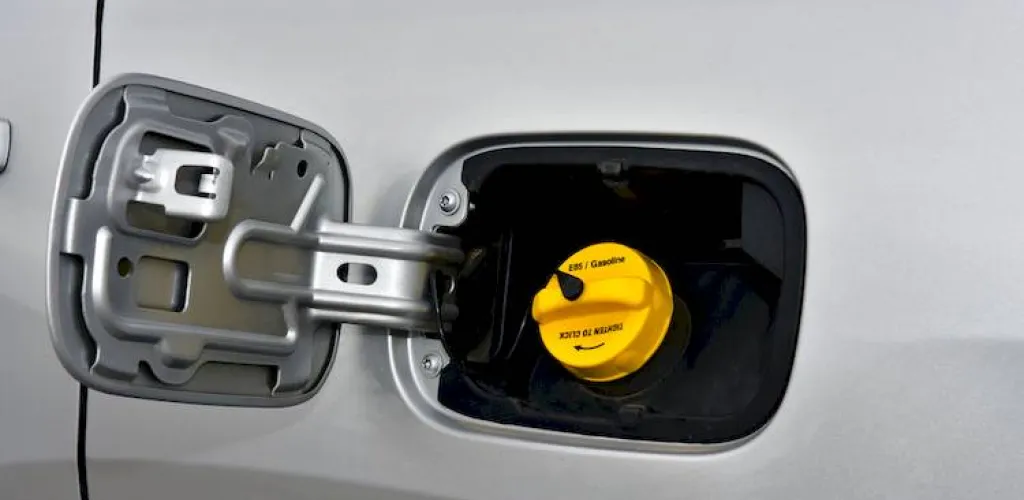
- Central locking faults can jam the fuel hatch, preventing refueling.
- Key-based caps wear, accumulate debris, corrode, or have broken return springs.
- Threaded caps block from corrosion, dirt, over-tightening, or freezing.
- Start with lubrication (WD-40, cleaner, graphite); then electrical checks and emergency unlock.
A blocked fuel cap can turn a routine trip to the gas station into a major problem that prevents you from using the car. Unlike other minor faults that still allow you to drive, a blocked fuel cap makes refueling impossible and, consequently, the use of the vehicle.
This issue can arise from a variety of reasons—ranging from wear in the locking systems to mechanical jams—and requires a methodical approach to resolve it quickly and effectively.
Main causes of a blocked fuel cap
Central locking systems
On most modern cars, the fuel cap is behind a hatch that coordinates with the central locking system. When the vehicle is locked, this hatch automatically locks via an electronically controlled mechanism.
Common problems:
- Failure of the electric actuator that controls unlocking
- Corrosion of electrical contacts due to moisture
- Mechanical binding of the lock mechanism with a spring and shaft
- Wear in the wiring to the actuator
Key-locked fuel caps
Older vehicles or certain premium models still use key-based locking to secure access to the fuel.
Specific problems:
- Wear of the locking cylinder after years of use
- Accumulation of dirt and debris in the locking mechanism
- Corrosion of internal metal components
- Breakage of return springs inside the lock
Conventional threaded caps
Even simple screw caps can present unlocking issues, especially after long periods of non-use.

Causes of blockage:
- Corrosion of threads due to moisture and road salt
- Accumulation of residues and dirt in the cap thread
- Slight deformation of the threads due to over-tightening
- Water freezing in the thread area (winter)
Effective methods to unlock the fuel cap
Approach the problem gradually, starting with the least invasive methods and progressing to more drastic solutions only if necessary.
Lubrication with specialized sprays
This is the first and safest method to try, regardless of the locking system type.
Recommended products:

- WD-40 for penetrating and lubricating
- Contact Cleaner for cleaning electrical contacts
- Graphite-based sprays for keyed locks
Correct technique:
- Apply the product generously to all visible contact points
- Let it act for at least 15–20 minutes
- Activate the unlocking system several times (button, key)
- Repeat the process if necessary
Electrical system check (for centralized-lock caps)
Before forcing the mechanisms, verify whether the issue is electrical.
Diagnostic steps:
- Check the operation of other locks (doors, trunk)
- Test with the spare key
- Inspect the fuses responsible for the locking system
- Check the battery of the remote key (if applicable)
Emergency manual unlock
Most modern vehicles are equipped with an emergency manual unlock system for the fuel cap.
Locating the system:
- Refer to the owner’s manual for the exact location
- Usually it is located in the trunk, near the spare wheel
- It may be a cable, lever, or an emergency button
Operating procedure:
- Identify the emergency unlock mechanism
- Pull the cable or activate the lever according to the instructions
- Try to open the hatch while keeping the system engaged
Advanced methods for difficult situations
When standard methods fail, more technical approaches may be required.
For key-locked systems:
- Use the spare key, which may have different wear
- Apply gentle taps with a rubber mallet during key rotation
- Try turning the key in both directions with short movements
For defective electrical systems:
- Check the voltage at the actuator with a multimeter
- Clean contacts with isopropyl alcohol
- Apply direct power to the actuator (only for experienced technicians)
Preventing future problems
To avoid repeated issues, adopt regular preventive measures.
Periodic maintenance
Recommended maintenance schedule:
- Lubricate the mechanism every 6 months
- Clean the fuel cap area during car washes
- Test the system operation monthly
- Check the condition of the wiring annually
Early warning signs
Watch for these symptoms:
- Slow or intermittent opening of the hatch
- Unusual noises when activating the system
- Need to press the unlock button multiple times
- Partial blockage that resolves with repeated attempts
When to call a specialist
Some situations require intervention by a qualified automotive technician to avoid damaging the system.
Situations requiring professional assistance:
- Complete failure of the electric actuator
- Damage to the main electrical wiring
- Need to replace the entire locking assembly
- Recurring problems that are not resolved by standard methods
Approximate costs:
- Replacing the actuator: 150-400 RON (plus labor)
- Wiring repair: 100-250 RON
- Full hatch replacement: 200-600 RON
A blocked fuel cap does not have to become a major problem if addressed correctly and in time. Most cases can be resolved with a little patience and the right tools, and preventive measures can significantly reduce the risk of recurrence.