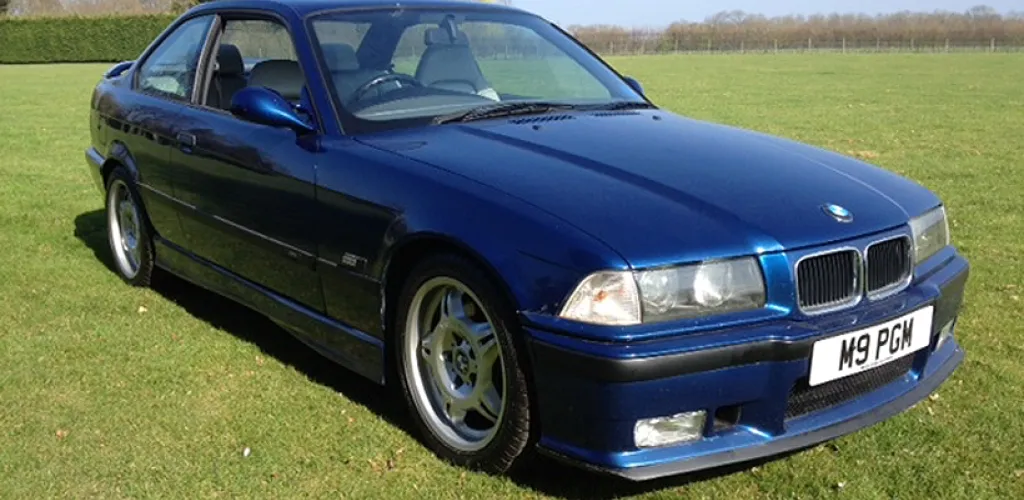
- E36 (1990–2000) introduced hatchback, first six-speed manual (M3), and multi-link rear suspension.
- Owners praise sporty handling and classic design.
- Common issues include brittle plastic parts, VANOS oil leaks, clutch wear, sensors.
- Plastic components affected include hoses, expansion tanks, water pumps, intake manifolds.
BMW E36 represents the third generation of the 3 Series, produced between 1990 and 2000, and enjoys a solid reputation among fans of the Bavarian brand. This generation marked several milestones for the 3 Series: the first hatchback body style, the first six-speed manual transmission (on the M3 from 1996), and the first multi-link rear suspension. If you are considering buying an E36, this guide provides a complete perspective on the advantages and drawbacks of this classic generation.
Initial models were four-door sedans, followed by coupes, convertibles, wagons, and hatchbacks in the subsequent years. The E36 was the first 3 Series offered with a hatchback body style and the first to feature a five-speed automatic transmission and a four-cylinder diesel engine. The rear multi-link suspension represented a significant upgrade over previous generations.
BMW E36 owner opinions
DailyDriven has gathered direct testimonies from owners to offer a real-world view of the ownership experience.
Why they chose the BMW E36 320i (150 HP)
Moldoveanu Stefan states: “As they say, everything starts with a dream. Sixteen years ago I rode this model for the first time. After all this time, I managed to afford one as well. Dreams do come true.”
Andrei Avel explains: “Being a brand enthusiast, I wanted a car with sporty handling, leaning toward the classic category, necessarily two-door and rear-wheel drive. Unfortunately, being a car still maligned and generally poorly maintained in Romania, it took longer to find one that satisfied me technically.”
Selejean Dan adds: “I chose to buy an E36 coupe because it is the last classic model BMW built, and to me it feels better than all the plastics produced after it, plus the immense driving pleasure you get behind the wheel.”
Experience with the BMW E36 328i (193 HP)
Andrei Manolache reveals: “Because it was the model I had wanted since I was a kid after seeing the first Fast & Furious movie and it appeared for a few seconds in a few shots.”

Cătălin Irimia notes: “I chose this model because I wanted a convertible with classic lines, as straight as possible, a decent engine with reliability, considering it’s a 1990s car with relatively low levels of electronics.”
Common issues on the BMW E36
After exhaustive research of numerous reviews and real experiences, we identified the main recurring problems:
Plastic components
- Gaskets and hoses: Rubber and plastic parts degrade over time due to engine heat.
- Expansion tanks: Plastic thermostat housings become brittle and prone to cracking.
- Water pumps: Plastic impellers fail frequently.
- Intake manifolds: The plastic material degrades over time.
The VANOS system
The introduction of the VANOS system on later models improved performance but also brought additional issues with oil leaks.
Other common issues
- Clutch: Premature wear, especially on high-mileage cars
- Sensors: Camshaft and other engine sensors
- Radiator: Issues with the cooling system
- Rust: Inevitable at this age, particularly on sills and wheel arches
Engines available for the BMW E36
4-cylinder gasoline engines
The initial engines came from the previous generation: BMW M40 SOHC and BMW M42 DOHC. In 1993, the M40 was replaced by the BMW M43 SOHC, and the M42 by the BMW M44 DOHC in 1996.
6-cylinder engines
The E36 debuted with the new BMW M50 DOHC engine. In 1993, the M50TU variants added a single VANOS for improved torque. In 1995, the BMW M52 replaced the M50TU.
Complete list of engines
Gasoline engines:
- 316i - M40B16, 4 cylinders: 98 CP, 141 Nm
- 318i - M40B18, 4 cylinders: 111 CP, 162 Nm
- 320i - M50B20, 6 cylinders: 148 CP, 190 Nm
- 323i - M52B25, 6 cylinders: 168 CP, 245 Nm
- 325i - M50B25, 6 cylinders: 189 CP, 245 Nm
- M3 - S50B30, 6 cylinders: 282 CP, 320 Nm
- M3 - S50B32, 6 cylinders: 316 CP, 350 Nm
Diesel engines:
- 318tds - M41D17, 4 cylinders: 89 CP, 190 Nm
- 325td - M51D25TUUL, 6 cylinders: 114 CP, 230 Nm
- 325tds - M51D25TUOL, 6 cylinders: 141 CP, 280 Nm
Driving experience and fuel consumption
The E36 was designed to be more refined than its predecessor, the legendary E30. With a shorter steering ratio, the E36 handles even better than an E30 in terms of maneuverability.
Road behavior
Moldoveanu Stefan: “It’s not for everyone. It lacks ABS, and ASC. I’m used to it, so I don’t have major issues. It’s agile, and given its size it’s reasonably well.”]
Adrian Alexandru: “It’s maneuverable but still powerful and not suited for beginners.”
Dendea Cosmin: “For long journeys it’s what you need, especially on the highway; it’s very stable, helped by the suspension and the relatively low ride height.”
Fuel consumption
Fuel consumption varies significantly with driving style:
For the BMW 320i (150 CP):
- City: 11-14 L/100km (normal driving) up to 25 L/100km (sport driving)
- Highway: 7-8 L/100km
For the BMW 328i (193 CP):
- Mixed: 10-15 L/100km
- Highway: 9 L/100km
Reliability of the BMW E36
When buying a car this age, reliability becomes the primary selection criterion.
Recommended engines
- M42 or M44 for 4-cylinder models
- M50 for 6-cylinder models
- Avoid M40 on the 318i — prefer later models with M43
Real reliability experiences
Rusu Alexandru (328i): “I replaced the expansion tank; mostly parts are easy to swap, nothing major or serious happened to me. I also changed a few sensors, nothing major like the clutch or gearbox.”
Leotescu Andrei: “I haven’t encountered a more reliable car. Mechanically I haven’t had problems with the car. I’ve only replaced consumables.”
Moldoveanu Stefan (320i with 576,000 km): “Clutch failed, and not due to me. A few sensors around the engine and two injectors. It has 576,000 km, real; it was due.”
Used car prices
The E36 market in Romania shows a wide price range:
- BMW E36 318tds (1996, 316,000 km): ~€950
- BMW E36 Cabrio 2.0 (1995, 120,000 km): ~€1,500
- Good-condition models: from €2,000 and up

Buying tips
Essential checks
Moldoveanu Stefan recommends: “Don’t ask about fuel consumption; judge by what you can afford. Watch for rust, sills, rocker panels, and floor pans. The suspension, if it’s a sport setup, and any plastic parts inside will creak.”
Andrei Avel adds: “Make sure they can cover repairs and maintenance. Pay attention first to rust and how straight the body is, second to the integrity of the electrical system.”
Critical checks
- Rust: Sills, fenders, rocker panels
- Body integrity: Straight panel gaps, no accidents
- Documentation: Ensure clean paperwork
- Engine choice: Avoid 1.6 and 1.8; prefer 2.0 and up
- Cooling system: Check that the coolant isn’t boiling
- Suspension: No welds or suspicious repairs
- Pedal box: Check structural integrity
Dendea Cosmin cautions: “Be very careful with the car’s paperwork; many aren’t in order. A decent E36 nowadays starts from €2,000 up.”
The BMW E36 remains an excellent choice for enthusiasts seeking a characterful car, rear-wheel drive, and an authentic driving experience. With proper maintenance and the right model selection, it can deliver many years of driving enjoyment.