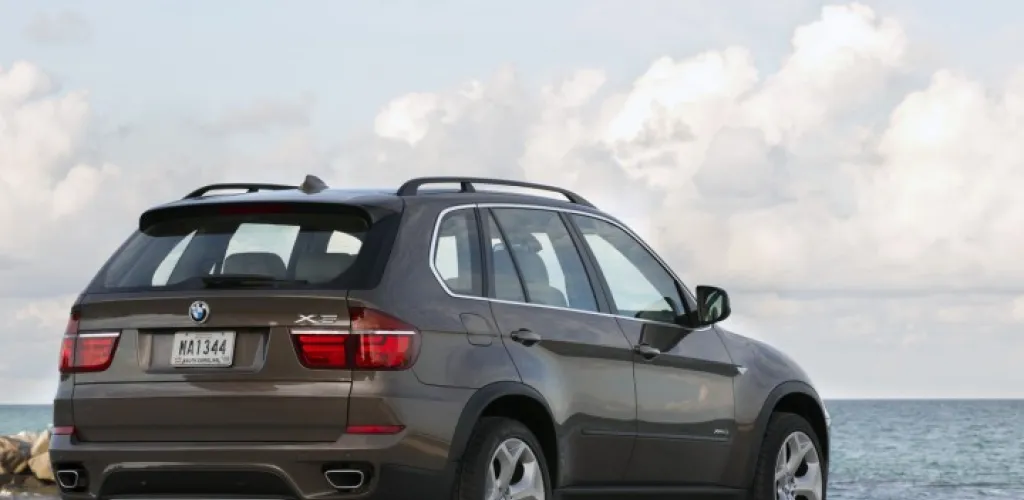
- Evolutionary second-gen X5 E70 introduced iDrive, seven-seat option, and SAV positioning.
- Produced mainly in Spartanburg, with Kaliningrad assembly; armored variants in Toluca.
- Performance variants included M50d diesel and X5 M with 555 hp.
- Common issues: gearbox, DPF, injectors, intake; HPFP failures affected 2007-2010 petrol engines.
The BMW X5 E70 represents the second generation of the Bavarian SUV, launched in 2006 as a major evolution over its predecessor, the E53. This generation brought numerous technological improvements and set the standards for the premium SUV class, blending the comfort of a luxury sedan with off-road capabilities and BMW’s characteristic driving dynamics.
Since 1999, when the first generation E53 debuted, the BMW X5 revolutionized the premium SUV concept, being the first vehicle of this type in BMW’s lineup and introducing advanced systems such as xDrive all-wheel drive. The second generation, E70, raised the bar by implementing iDrive as standard equipment and offering the option of a third row of seats for seven passengers.
Evolution and market positioning
BMW positioned the X5 as a Sports Activity Vehicle (SAV) rather than a traditional SUV, highlighting its sporty capabilities and on-road agility despite its imposing size. This differentiating approach paid off, with the X5 E70 becoming the third best-selling BMW model in 2011, after the 3 Series and the 5 Series.
Production of the E70 model takes place at the BMW factory in Spartanburg, South Carolina, with additional assembly operations in Kaliningrad, Russia. Armored versions are modified in Mexico, at the Toluca plant.
Performance variants
In 2009, BMW launched the M50d variant with a diesel engine and later the X5 M with the first V8 biturbo engine in the M Power lineup. The X5 M develops 555 hp and 680 Nm, equipped with the M Dynamic Performance Control system for exceptional handling.
Owner opinions
DailyDriven has collected real owner experiences to provide an authentic perspective on this model.
Reasons for choosing an X5 E70:
Adi Pascale explains his choice for a BMW X5 40d (306 hp) xDrive: “I chose the BMW X5 because it is a family car that offers safety, comfort, generous boot space, and all of this on a chassis with a sporty pedigree.”

Gorgan Florin, owner of a BMW X5 3.0d (235 hp), recalls: “Having the opportunity to test it against the competition, I decided it was the right car for a young guy who wants an SUV with a hint of sportiness.”
Common problems BMW X5 E70
Based on owner reviews from Romania and abroad, the most frequent faults involve:
- Gearbox - gearbox radiator issues and the need to change the gearbox oil
- DPF - clogged particulate filter, especially in urban use
- Injectors - particularly on diesel engines
- Intake manifold - faults with the intake throttle bodies
Model-year specific issues
Between 2007-2010, there were reports of high-pressure fuel pump failures on petrol engines. Symptoms include reduced performance, unusual noises, and the Engine Malfunction light. About 130,000 vehicles were affected, with around 40,000 requiring a pump replacement.
Available engines
The X5 E70 engine lineup covers a wide range for different usages:

Gasoline engines:
- xDrive30i (N52B30): 268 hp, 315 Nm
- xDrive35i (N55B30): 302 hp, 400 Nm
- xDrive50i (N63B44): 400 hp, 610 Nm
- M (S63B44): 547 hp, 680 Nm
Diesel engines:
- xDrive30d (M57TU2D30): 282 hp, 580 Nm
- xDrive40d (N57): 302 hp, 600 Nm
- M50d (N57): 376 hp, 740 Nm
Driving experience and fuel economy
Owners describe the X5 E70 as offering a calm and practical interior, with a commanding presence on the road. The wide range of engines, including the highly regarded xDrive30d, and the option of seven seats make it extremely versatile.
Urban driving behavior
Mihai Mangalagiu shares: “In the city it drives very well, but don’t use Auto Hold because it can break and repairs are expensive. On long trips it drives very well, I haven’t had any issues.”
Adi Pascale adds: “It has Auto-Hold, which eases frequent stops at traffic lights and offers excellent visibility. Outside the city it is the most comfortable car I’ve driven. It has exceptional road grip. You don’t feel the hours or hundreds of kilometers passing.”
Cesa Gabriel confirms: “In the city it’s very easy. Large mirrors, 360 cameras and sensors make it feel like a very small car and easy to maneuver anywhere. On long journeys it becomes a true pleasure to drive.”
Real-world fuel consumption
Owner-reported fuel consumptions vary with driving style and traffic:
- Adi Pascale: “10.2 L/100 km mixed, averaged over 60,000 km. In the city 12-14 L/100 km, depending on traffic; on highways 6-8 L/100 km.”
- Cristian Doru: “Urban 12-16 and extra-urban 8-10.”
- Gorgan Florin: “Highway 8.5-9 L/100 km; city 11-12 L/100 km.”
Reliability and maintenance costs
Owner experiences with reliability are mixed, reflecting the vehicle’s technical complexity.
Issues encountered
Adi Pascale details the major repairs performed: “Over time I replaced: rear air springs (the rubber aged and developed porosity causing air leaks), tires, gearbox radiator, gearbox oil, timing belt + intake gallery.”
Cesa Gabriel reports: “One right rear air bag, front bushings, steering rack rebuild (1000 lei) at an authorized service.”
Sensitive components
Viorel Marinescu warns: “The car hasn’t been well looked after and I’ve been replacing consumables (bushings, torsion bar, CV joints), I’ve also had some issues with the particulate filter and some injector problems. Cream-colored leather is hard to maintain.”
Used prices on the market
In the Romanian market, prices for BMW X5 E70 vary notably by year, engine and mileage:
- BMW X5 xDrive48i (2009), 166,000 km: €18,900
- BMW X5 xDrive30d (2012), 219,000 km: €14,000
These prices reflect natural depreciation and still-high demand for this model.
Tips for buyers
Experienced owners offer valuable guidance for those considering an X5 E70:
Essential technical checks
Florin Gorgan recommends: “Watch the electrical system and the engine code; avoid the N47, as it can be problematic.”
Cesa Gabriel adds important considerations: “Expect higher costs and don’t chase low fuel consumption as it soon clogs. Take it to authorized and brand-specialized service shops. Be mindful of the mileage—some units are prone to odometer tampering. A full service history is essential, as the electronic one is easy to falsify.”
Financial considerations
Before purchase, you should factor in:
- High maintenance and parts costs
- The need for specialized service centers
- Higher urban fuel consumption
- A complete vehicle history check
Conclusion
The BMW X5 E70 remains an excellent choice for those seeking a premium SUV with authentic sporty capabilities. While maintenance costs can be high and some components are prone to faults, owner satisfaction and the vehicle’s dynamic qualities justify the investment for fans of the Bavarian brand.
For a successful purchase, thorough inspections, a solid service history, and proper budgeting for future maintenance are crucial.