- Stay calm, assess traffic and surroundings to choose a safe stop.
- Use hazard lights and hand signals to alert others and show intent.
- Steer to the right shoulder using inertia, braking gently if possible.
- After stopping, engage handbrake, turn off engine, keep hazards on, stay inside.
Unexpected car breakdown on the road is one of the most stressful situations a driver can face. Whether you are on a busy highway, a mountain road with limited visibility, or in the city, a mechanical failure can jeopardize not only your safety but also that of other road users.
Knowing the correct safety measures and the steps to follow can make the difference between a temporary inconvenience and a serious accident. In this comprehensive guide, you will learn how to react effectively when your vehicle breaks down, how to bring your vehicle to a safe area, and what basic checks you can perform to diagnose the problem.
Critical first steps: safety above all
Stay calm and assess the situation
When you realize your car is having issues, your first impulse may be panic. However, staying calm is essential for making correct decisions. Quickly assess the surroundings: traffic, weather conditions, road topography, and the space available to maneuver.
If you are on a highway with heavy traffic, on a mountain road with dangerous curves, or in a low-visibility area, the absolute priority is to find the safest possible spot to stop, even if it isn’t perfect.
Use signaling correctly
As soon as you notice the breakdown, turn on the hazard lights to alert other drivers about the problem. These flashing orange lights are the first warning signal you can give to traffic around you.
Complementarily, use hand signaling to indicate your intention to leave the roadway toward the right. This dual communication—light and gesture—increases the chances that other road users understand the situation and can pass you safely.
Safety maneuver: reaching the shoulder
Using inertia to move the vehicle
Even if the engine has stalled completely, the car will still have inertia that can allow you to reach the shoulder. Keep the steering wheel firmly in your hands and guide the vehicle to the right, trying to take advantage of any slight slope that can help.

If the brakes are functioning, use them moderately to control speed, but avoid abrupt braking that could cause loss of control or surprise vehicles behind you.
Choosing the stopping location
The ideal stopping place is the right shoulder, as far from active traffic as possible. If you are on a highway, try to reach as close as possible to an exit or a space with ample room for interventions.
Avoid stopping:
- Immediately after curves where visibility is reduced
- On bridges or in tunnels
- In sections with very heavy traffic
- In areas with very limited space to open doors
Safety measures after stopping
Proper positioning inside the vehicle
Once stopped, engage the handbrake, turn off the engine, and leave the hazard lights on. Stay in the vehicle as long as possible—the interior offers a barrier from nearby traffic.
If someone stops to help, communicate through the slightly open window, without exiting the vehicle. Ask the person to call emergency services if you have no signal on your phone.
Calling emergency services
Call 112 immediately to inform the police about the situation, then contact road assistance. Provide precise information about:
- Exact location (kilometer marker on the highway, street name in the city)
- Nature of the problem (if known)
- Safety conditions (if you are blocking traffic)
- Number of people in the vehicle
When and how to leave the vehicle
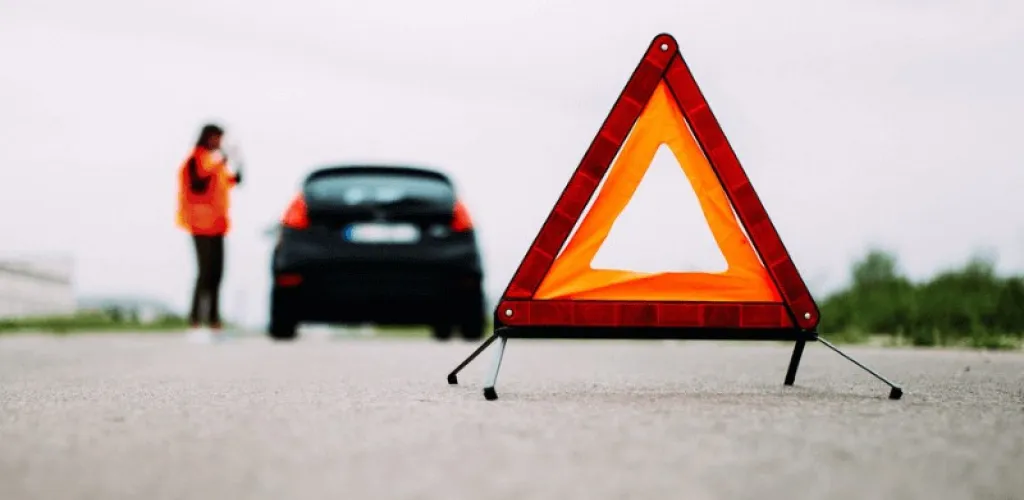
If it is absolutely necessary to exit the car (to place the reflective triangle or because the situation becomes dangerous), do so only from the side opposite to traffic. Open the door on the right side and move toward the rear of the vehicle, but never stand in the roadway.

Moving the vehicle to safety
Manual pushing of the vehicle
In certain situations, it may be necessary to manually move the vehicle to a safer position. This operation requires at least 2-3 people and must be carried out with great care.
Correct procedure:
- One person stays at the wheel to control the direction
- Others position themselves behind the vehicle to push
- A clear communication system is established (verbal signals or gestures)
- The person at the wheel releases the handbrake and keeps their foot on the brake pedal
- The push is performed gradually and controllably
Special precautions for sloped terrain
On sloped ground, pushing becomes significantly more difficult and dangerous. If the car is on a downward slope, inertia can cause the vehicle to accelerate uncontrollably. In this case, the person at the wheel must be ready to brake immediately at the first signal.
On an uphill slope, more force and coordination will be required. Do not attempt this maneuver if you do not have enough people to perform it safely.

Diagnosing common problems
Checking the electrical system
The electrical system is often the cause of sudden failures. Most electrical problems are visible and can be remedied quickly if you have basic knowledge.
Inspecting the battery and connections
Before any manipulation, ensure the engine is off and the key is removed from the ignition. Open the hood carefully – if the car has run recently, the engine will be hot.
Visual checks:
- Battery terminals for corrosion (white or green deposits)
- Tightening of cables at the terminals
- Physical condition of the cables (cracks, damage to outer insulation)
- Electrolyte level in the battery (if visible)

Reconnecting battery cables
If you find loose cables, reconnecting should be done in a specific order for safety:
- Connect the negative terminal first (marked with -, usually with a black cable)
- Tighten the connection firmly with a suitable wrench
- Connect the positive terminal afterward (marked with +, usually red)
- Recheck both connections for a secure fit

Checking the fuse system
The fuse panel is usually under the hood, in a labeled plastic box. Some vehicles also have a secondary panel inside the cabin, under the dash on the driver’s side.
Identifying blown fuses
Modern fuses come in two main types:
Cylindrical fuses (glassy type):
- Show a visible metal wire through the transparent glass
- When blown, the wire is broken and burn marks may be visible
- Interior becomes dark due to soot
Flat fuses (mini/micro type):
- Made of colorfully opaque plastic
- Have two metal blades visible on the top
- When blown, one blade is visibly broken
Replacing fuses
For removing fuses, many vehicles have a special tweezers in the fuse panel. If not, use ordinary tweezers or needle-nose pliers.
Replacement procedure:
- Identify the blown fuse by comparing with the diagram on the cover of the panel
- Note the amperage (the number inscribed on the fuse)
- Carefully extract the blown fuse
- Insert a new fuse with the same amperage
- Check the fit securely in the holder
Checking the ignition system
If the engine starts but runs irregularly (unusual noises, vibrations, inconsistent RPM), the problem may lie in the ignition system.
Inspecting the spark plugs and connections
Locating the spark plugs: Spark plugs are connected to the distributor by thick black cables, usually located on the top of the engine. The number of spark plugs corresponds to the number of cylinders.
Checking the connections:
- Carefully disconnect the connectors from the spark plugs (pull the boot, not the cable)
- Check the cleanliness of the connection – remove dirt with a dry cloth
- Visually inspect the condition of the cables for cracks or damage
- Reconnect the boots firmly, ensuring a complete seating
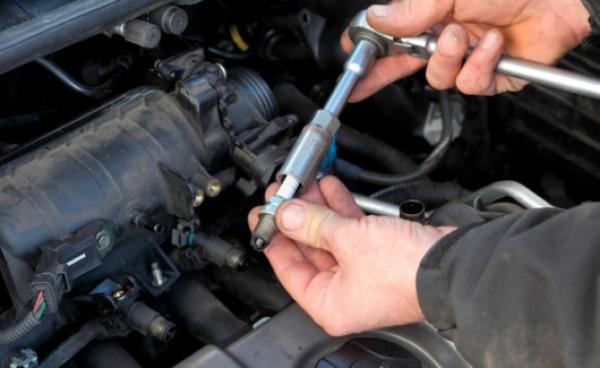
Testing engine operation
After completing the checks and minor repairs, try starting the engine:
- Ensure all connections are reassembled correctly
- Verify you haven’t left tools or objects in the engine bay
- Close the hood before starting
- Start the engine and listen for anomalies
- If the engine starts and runs normally, carefully test its operation on the move
When to call professional help
Limits of emergency repairs
The checks and repairs described are only for minor and obvious problems. For most complex mechanical faults – engine, transmission, suspension, or braking system issues – professional intervention is required.
Do not attempt complex repairs on the roadside:
- Replacing major engine components
- Repairs to the braking system
- Complex transmission problems
- Advanced electronic faults
Importance of professional assistance
A qualified mechanic has access to:
- Specialized diagnostic equipment
- Original or compatible replacement parts
- In-depth technical knowledge about your specific model
- Safe working conditions in an authorized workshop
Additionally, many roadside repairs can be temporary and dangerous in the long term, requiring verification at an authorized service center.
Preventive measures for the future
Preventive maintenance
Most breakdowns can be avoided with regular maintenance:
- Regular battery and electrical connection checks
- Proactive replacement of old fuses
- Spark plug checks according to the service schedule
- Checking fluid levels (oil, coolant, brake fluid)
Recommended emergency equipment
To be prepared for unexpected situations, keep in your car:
- Spare fuse set
- Basic tool kit (wrenches, screwdrivers, pliers)
- Jump cables
- Flashlight and spare batteries
- Reflective triangle
- Reflective vest
Remember that your safety and that of other road users is more important than any repair. When facing a breakdown on the road, your priority is to reach a safe place and call for professional help. Knowing these basic procedures can save your life and help you manage a stressful situation effectively.