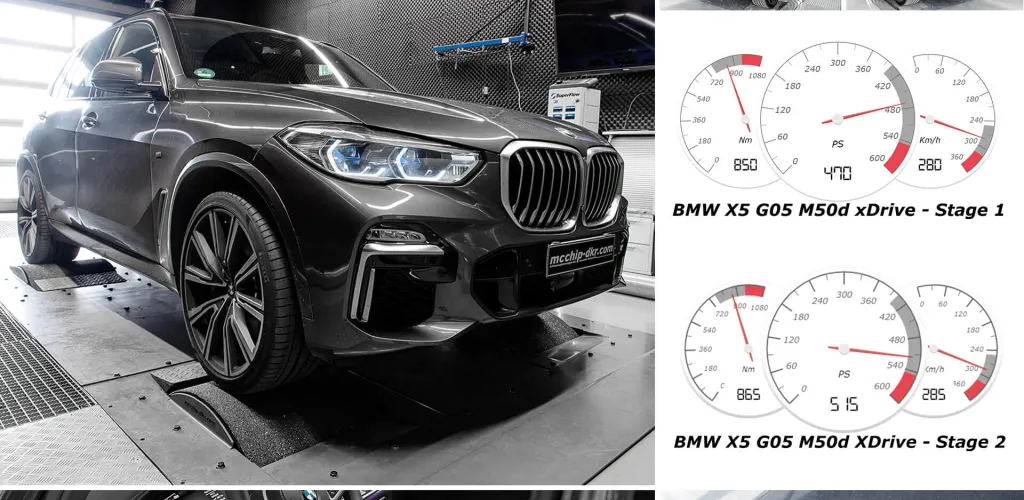
- Chip tuning remaps ECU software to boost power, efficiency, or emissions.
- Process includes backing up maps, applying optimized settings, and validation testing.
- OBD2 remapping is fast and reversible; bench tuning removes the ECU.
- Remapping sessions typically last 1–3 hours, with final verification.
Chip tuning, or remapping the ECU, is a process that has become increasingly popular among car owners in Romania. This technique allows optimizing the software in the engine control unit to achieve higher performance—more power, lower fuel consumption, or cleaner emissions. Many people wonder whether this practice is legal in Romania and what implications it may have.
Chip tuning refers to the process of modifying or optimizing the software in the electronic control unit (ECU) of a car to achieve higher performance, whether it’s more power, cleaner emissions, or better fuel economy.
What is the ECU and how does it work?
Electronic control units are a relatively recent addition to cars, appearing in the late 1970s. As technology advanced, so did automotive electronics.
The ECU (engine control unit) in modern cars, along with advanced engine technology, makes it possible to control many aspects of the engine’s operation:
- Ignition timing – the exact moment when the spark occurs
- Fuel injection – the precise amount of fuel injected
- Air/fuel mixture – the optimal ratio for combustion
- Turbo boost timing – for forced-induction engines
- Throttle/acceleration monitoring – response to driver input
- Temperature control – maintaining thermal parameters
- Airflow – managing intake
- Turbo pressure – boost control
- RPM limits (rev limiter) – engine protection
- Exhaust system (EGR) – exhaust gas recirculation
Sensors feed data about these components to the ECU, which processes the information and uses it to keep the engine running within optimal parameters.
How does the remapping process work?
Certainly, we do not modify the hardware of your car. All settings are stored as maps in the ECU. The process consists of:
- Connecting equipment to the car’s ECU via the OBD port or directly
- Reading the maps already stored on it (full backup)
- Analyzing existing parameters and identifying areas for optimization
- Applying software to find the optimal settings
- Testing and validating the new parameters
- Reprogramming the ECU with the new optimized maps
- Final verification and functional test
The entire remapping process lasts around 1-3 hours, depending on the ECU’s complexity and the type of optimization requested.
Types of chip tuning
Remapping via diagnostic port (OBD)
The most common method to update the ECU uses the standard OBD2 diagnostic port. This process is simpler, faster, and non-invasive.
Advantages:
- Rapid process (30-60 minutes)
- No ECU removal required
- Minimal risk of damage
- Easily reversible
- Lower cost
- Maintains hardware warranty
Direct ECU tuning (Bench/Boot)
In some cases, chip tuning is done directly on the engine control unit, requiring its removal.
When it is necessary:

- ECUs with advanced protection
- Very new vehicles with encryption
- ECU recovery for damaged units
- Very advanced optimizations
- Vehicles with an OBD port that is blocked
Plug-in modules (Tuning box)
External devices that connect to the car’s system to modify signals sent to the ECU.
Characteristics:
- Fully reversible installation
- Does not modify the original software
- More affordable
- Optimization limits
- Performance is generally lower than full remapping
Hybrid chip tuning
A combination of ECU remapping and external modules for specific optimizations (e.g., AdBlue delete, EGR off).
Is chip tuning legal in Romania?
Yes, vehicle remapping is fully legal and there is no law prohibiting it. However, there are important considerations:
The current legal framework
Romanian legislation does not prohibit ECU software modification but imposes certain conditions:
- Compliance with current Euro emission standards
- Keeping within safety parameters set by the manufacturer
- Declaring major modifications to the RAR (if they exceed 20% of the original power)
- Informing the insurance company for substantial modifications
Important legal aspects
- Each remapping should stay within the manufacturer’s acceptable safety zones
- Do not exceed the mechanical components’ safety limits
- Compliance with emissions norms at ITP (ITP test)
- Informing the insurer may be necessary for major modifications
- ITP impact if emissions limits are exceeded
Recommendations for legality
- Keep the original remapping backup
- Use professional services with a warranty
- Respect Euro emission limits
- Inform the insurer for substantial modifications
- Maintain technical documentation of the modifications
Benefits of chip tuning
Improved performance
- Power gain of approximately 15-40% depending on the engine
- Torque increase for better acceleration (10-35%)
- Better throttle response
- Safer overtakes thanks to additional power
- Turbo lag reduction on boosted engines
- Altitude performance improvement
Fuel efficiency
- Fuel economy improvement of 5-20% with moderate driving
- Optimized air/fuel mixture for maximum efficiency
- Improved thermal efficiency with optimized parameters
- More efficient fuel use at low revs
- Lower CO2 emissions through better combustion
Adaptation to modifications
If there are changes to the engine, intake, or exhaust, remapping is essential to:
- Fully realize performance gains
- Maintain correct air/fuel ratio
- Avoid driveability issues
- Optimize for new components
- Prevent engine wear
Other benefits
- Removal of artificial limits imposed by the manufacturer
- Customization of engine behavior to your driving style
- Improved throttle response
- Reduced smoke on diesel engines (through optimization)
- Increased resale value of the vehicle
Can I perform ECU tuning by myself?
Not recommended at all! Chip tuning or ECU tuning requires:
Specialized equipment required
- Professional programming interfaces (Kess, Ktag, Autotuner) – cost 5,000-15,000 EUR
- Specialized software (WinOLS, ECM Titanium) – licenses 2,000-5,000 EUR/year
- Cables and adapters specific to each ECU type – 500-2,000 EUR
- Dyno meter for testing results – 50,000+ EUR
- Safety equipment for backup and recovery
- BDM/JTAG interfaces for protected ECUs
Advanced technical knowledge
- Interpreting ECU maps – years of experience required
- Understanding engine operation and auxiliary systems
- Knowledge of mechanical limits of components
- Experience in advanced auto diagnostics
- Understanding emissions standards and tests
- Electronics and communication protocols
Risks of DIY remapping
- ECU damage (replacement costs 1,000-5,000+ EUR)
- Engine damage from incorrect settings (10,000+ EUR in repairs)
- Warranty voided
- Long-term driveability problems
- Potential ITP failure
- Insurance complications in case of an accident
- Complete ECU brick (irreversible)
Which cars can be remapped?
Compatible vehicles
Diesel engines:
- Best results ( +25-40% power )
- Notably reduced fuel consumption
- All brands: VW, BMW, Mercedes, Audi, Ford, etc.
- Range: 2000–present
Turbo petrol engines:
- Excellent results ( +20-35% power )
- Substantial torque improvements
- Premium brands with standout results
Naturally aspirated petrol engines:
- Moderate gains ( +5-15% power )
- Focus on efficiency and responsiveness
- Limitations due to natural aspiration
Hybrid vehicles:
- Specific restrictions for the hybrid system
- Requires specialized experience
- Results vary by architecture
Vehicles with limitations
- Very old cars (pre-2000) – non-programmable ECUs
- Some ECUs with advanced encryption (new BMW F-series, Mercedes W205/W213)
- Vehicles with active anti-tuning systems
- Engines with pre-existing mechanical problems
- Satellite-protected systems (some premium models)
Important considerations for owners
For turbo engines
- Use high-octane gasoline (95+ for petrol, Euro 5+ for diesel)
- Monitor engine temperature more closely
- Periodically check turbo pressure and related systems
- Watch for knock/detonation signs
- Respect warm-up time (2-3 minutes)
- Avoid extreme revs when the engine is cold
Post-tuning maintenance
Maintenance changes:
- More frequent oil changes (every 7,500–10,000 km instead of 15,000)
- Periodic cooling system and intercooler checks
- Sensor monitoring for optimal operation
- Use higher quality fuels
- Check air filter more often (every 10,000 km)
- Inspect exhaust system for blockages
- Annual injection system check
Post-tuning warning signs
Watch for:
- Excessive black smoke (rich mixture)
- Unexpected power loss
- High engine temperatures
- Unusual oil consumption
- Unusual engine noises (detonation, metallic)
- Persistent ECU error codes
- Unstable idle or stalling
When is remapping necessary?
After hardware changes
Turbo system changes:
- Turbo replacement or upgrade
- Intercooler modification for lower temps
- Exhaust upgrades (downpipe, cat-back)
Intake system changes:
- Intake upgrades (sport filter, intake)
- Replacing MAF with a higher-capacity unit
- Throttle body upgrade
Injection system changes:
- Injectors upgrade for extra power
- Higher-pressure fuel pump
- Fuel rail modification
For pure optimization
- Improve performance without physical changes
- Reduce fuel consumption via map optimization
- Adaptation to alternative fuels (E85, LPG)
- Personalize engine response to driving style
- Correct factory deficiencies
Addressing specific problems
- Correct factory fault codes (detonation, turbo lag)
- Adapting to local conditions (altitude, climate)
- Tuning for driving style (economic vs sport)
- Removing speed limiter where legal
- Disabling problematic systems (DPF, EGR, AdBlue)
Steps for a successful remap
Vehicle preparation
Mandatory technical checks:
- General engine condition check via diagnostic
- Oil and filter change if due
- Clean intake and intercooler
- Compression test for high-mileage engines (100,000+ km)
- Check cooling system and thermostat
- Inspect exhaust system for blockages
Choosing the type of remap
Stage 1 – Software optimization:
- No hardware changes
- Gains: 15-30% power
- Cost: 800-1,500 RON
- Time: 1-2 hours
Stage 2 – Minor changes:
- Sport filter, sport exhaust
- Gains: 20-35% power
- Cost: 1,200-2,000 RON + hardware
- Time: 2-4 hours
Stage 3 – Major changes:
- Turbo upgrade, injectors, etc.
- Gains: 35%+ power
- Cost: 2,000+ RON + expensive hardware
- Time: 4+ hours
Eco tuning:
- Focus on fuel economy
- Gains: 5-20% economy
- Cost: 700-1,200 RON
- Results in reduced consumption
Process of professional remapping
- Complete diagnostic of the vehicle with a car tester
- Backup of the original software (permanent copy)
- Dyno testing for baseline measurements (if available)
- Applying customized optimized software
- Final verification and calibration of all parameters
- Test drive and fine-tuning for final optimization
- Documentation of results and issuance of certificates
Costs and financial considerations
Typical costs in Romania (2024)
Basic services:
- Stage 1 OBD: 800-1,500 RON
- Stage 1 Bench: 1,000-2,000 RON
- Stage 2: 1,200-2,500 RON
- Eco tuning: 700-1,200 RON
- DPF/EGR delete: 500-1,000 RON extra
- AdBlue delete: 600-1,200 RON
Premium services:
- Remap with dyno measurements: +300-500 RON
- Custom tuning: +500-1,000 RON
- Extended warranty: +200-400 RON
- Home service: +200-300 RON
Factors that influence price
- ECU complexity (Bosch, Continental, Siemens)
- Type of remap (OBD vs Bench vs BDM)
- Vehicle make and model (premium vs mainstream)
- Additional options (deleteables, limiter)
- Service reputation and experience
- Warranty and post-sale support
- Geographic location (Bucharest vs outside)
ROI (Return on Investment)
Long-term financial benefits:
- Fuel economy savings: 200-500 RON/month (at 2,000 km/month)
- Performance increase: added vehicle value of 2,000-5,000 RON
- Driver satisfaction: improved driving experience
- Reduced wear: more efficient engine operation, lower stresses
- Payback period: 6-12 months through fuel savings
How to choose a trusted service?
Essential selection criteria
Experience and expertise:
- Industry experience (minimum 5+ years)
- Brand/model specialization for your vehicle
- Remapped vehicle portfolio (over 1,000 cars)
- Certifications and training from equipment manufacturers
- Participation in specialization courses
Equipment and technology:
- Original professional equipment (not clones or cheap gear)
- Licensed software (WinOLS, ECM Titanium)
- Professional programming interfaces (Kess, Ktag, Autotuner)
- Dyno meter for measurements (optional but recommended)
- Backup and recovery gear
Transparency and professionalism:
- Authentic reviews and client recommendations
- Warranty on services (minimum 12 months)
- Transparent pricing and services
- Complete process documentation
- Post-sale support and guidance
Important questions to ask
About services:
- What warranty do you offer on remapping?
- Do you have experience with my make/model?
- Do you keep a backup of the original software?
- What equipment do you use (specific models)?
- Can I see examples of remapped cars with similar setups?
About the process:
- How long does the remapping take?
- Do you take measurements before and after?
- How do you test the results?
- What is included in the price (consultation, warranty, support)?
- Is there a way to revert to original?
About support:
- Do you offer post-remap support?
- What happens if problems arise?
- Do you provide free software updates?
- Do you have an ongoing maintenance program?
- Do you collaborate with other auto service workshops for additional work?
Red flags (alarm signs)
Avoid shops that:
- Price far below market (sub 500 RON for Stage 1)
- Promise unrealistic power gains (+50% on naturally aspirated engines)
- Offer no warranty or very short warranty (under 6 months)
- Use unknown or clone equipment
- Refuse to show previous examples or certifications
- Pressure for unnecessary additional services
- Have no fixed address or operate underground
- Do not keep a backup of the original software
Long-term maintenance
Recommended maintenance schedule
Every 5,000 km:
- Check engine oil level and quality
- Visual inspection of the intake system
- Check turbo pressure (if applicable)
- Visual check of the intercooler
- Check the air filter
Every 10,000 km:
- Change oil and oil filter (mandatory)
- Check/replace air filter if needed
- Test cooling system and verify fluid levels
- Diagnostic scan for error codes
- Check the fuel injection system
Every 20,000 km:
- Full exhaust system inspection
- Test performance sensors (MAF, MAP, etc.)
- Inspect and clean the injection system
- Re-evaluate tuning parameters
- Inspect the turbo system
Annually:
- Full service check at the remapping center
- Software updates if available
- Additional optimization if needed
- Performance measurements for monitoring
- Warranty and documentation review
Monitoring performance
Key indicators to monitor:
- Fuel consumption (unexpected increases indicate a problem)
- Engine operating temperature
- Turbo pressure on boosted engines
- Exhaust gas quality (color, density)
- Start-up behavior and idle stability
- Acceleration response and felt power
Contact us for professional services
For a professional and safe ECU remapping, you can reach us at 0790.449.291, where Alexandru will be happy to assist with ECU tuning. Or you can click the “Resoftări auto” button or simply click here
What we include in our services
Consultation and evaluation:
- Free consultation to choose the optimal remap type
- Comprehensive diagnostic before remapping with professional equipment
- Assessment of the vehicle’s technical state
- Personalized recommendations based on needs
Remapping process:
- Full backup of the original software (permanent)
- Remapping with original equipment (Kess, Autotuner)
- Customized software for your vehicle
- On-road testing after remap for validation
- Fine-tuning if necessary
Warranties and support:
- Extended warranty on all services (12-24 months)
- 24/7 technical support post-remap
- Option to revert to original settings at any time
- Free software updates for clients
- Maintenance and optimization guidance
Why choose our services?
Experience and expertise:
- Over 10 years of automotive experience
- More than 5000 remapped vehicles with success
- Specialization across all European and Asian brands
- Certified technicians with ongoing training
Equipment and technology:
- Modern professional equipment (Kess V3, Autotuner)
- Original licensed software (WinOLS, ECM Titanium)
- Accurate dyno measurements for precise tuning
- In-house lab for software development
Quality and safety:
- Measurable and guaranteed results
- Lifetime warranty on installed software
- Permanent backup of the original software
- Respect for engine safety limits
Services and pricing:
- Competitive and transparent pricing
- Complete packages tailored to needs
- Post-sale support included
- On-site services in Bucharest and surrounding areas
For more information about our chip tuning and ECU remapping services, please contact us or visit our dedicated page on professional auto tuning.
Important: Always choose a certified specialist for your car’s chip tuning. Experience and professional equipment make the difference between a successful remap and one that can cause costly engine damage. Investing in a professional service pays off quickly through superior results and long-term safety.