
- Romania requires child car seats from birth to 135 cm or age 12
- Correct installation is essential; improper mounting increases risk
- ISOFIX provides rigid connection and faster installation, but limited vehicle compatibility
- R129 i-Size classifies by height and requires lateral impact testing
Child safety in the car is an absolute priority for any responsible parent.
In Romania, the use of child car seats is mandatory from birth until a height of 135 cm or the age of 12, according to current legislation.
Choosing and correctly installing a child car seat is not only a legal obligation but also a vital safety measure. A seat that is mounted incorrectly can become a danger instead of protection, which is why it is essential to understand all technical aspects and strictly follow the installation instructions.
Selection criteria for the ideal child car seat
Before purchasing a child car seat, you should carefully evaluate several crucial factors that will influence both safety and your child’s comfort.
Quality of materials and construction represents the first aspect to assess. Look for seats made from impact-resistant materials, with a sturdy metal frame and breathable upholstery that does not irritate the child’s skin.
Vehicle compatibility is essential – most manufacturers provide detailed lists of compatible makes and models. Check the seat dimensions against the space available in the car and ensure the mounting systems are compatible.
Long-term comfort should not be neglected, especially for long trips. Look for seats with ergonomic padding, multiple adjustability options, and adequate ventilation.
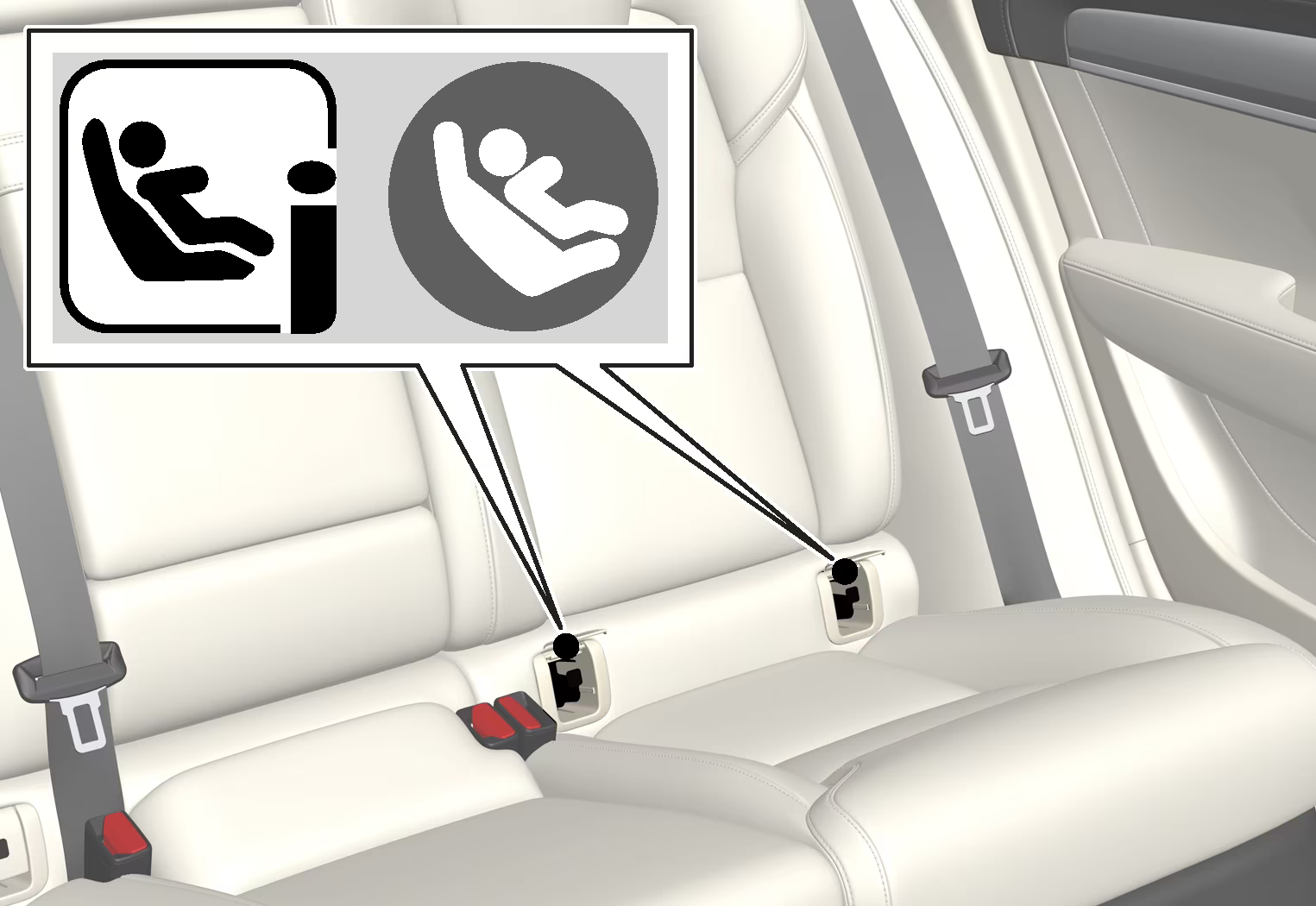
ISOFIX system: advantages and disadvantages
Seats equipped with ISOFIX use two rigid metal connectors placed behind the seat that fasten to welded metal bars directly on the vehicle’s body. This system provides a rigid and secure connection between seat and vehicle.

Advantages of the ISOFIX system:
- Increased safety through direct connection to the body
- Maximum stability during impact
- Faster and safer installation
- Reduced risk of incorrect mounting
Disadvantages of the ISOFIX system:
- Direct transmission of road vibrations to the seat
- Reduced comfort on rough roads
- More noticeable acceleration and braking effects
- Limited compatibility – not all vehicles have ISOFIX points
You can find more details about how this system works in our dedicated ISOFIX guide.
Our recommendation: Choose an ISOFIX seat if your car is equipped with this system and you prioritize safety over travel comfort.

i-Size regulation: the new generation of safety
The i-Size system represents the latest European regulation designed to improve safety standards for child car seats. This standard serves as an addition to the R129 regulation, gradually replacing the older R44 standard.
Difference between R44 and R129
Old regulation R44 (valid until September 1, 2024):
- Classification by weight groups
- Less rigorous safety tests
- Installation possible by belt or ISOFIX
New regulation R129:
- Classification by height instead of weight
- Additional mandatory tests, including lateral impact
- Rear-facing positioning mandatory up to 15 months or 76 cm in height
- ISOFIX-only mounting (no belt mounting)
Distinctive features of i-Size seats
NOTE: Not all R129 seats are i-Size! To be certified i-Size, a seat must meet additional criteria:
- Standardized dimensions: Maximum width of 44 cm to fit perfectly in i-Size certified vehicles
- Identification label: Yellow label with the inscription “i-Size”
- Universal compatibility: Mounted in any vehicle equipped with i-Size anchors
- Higher safety standards: Stricter tests for frontal, side and rear impact
Essential safety rules before installation
Following these rules can make the difference between life and death in an emergency:
- Study the manual carefully – each seat has unique installation specifications
- Avoid improvisations – installation done by intuition endangers your child’s life
- Check compatibility – do not force the installation of an incompatible seat
- Preserve the integrity of the belts – never modify or cut them
- Mind disassembly/reassembly – follow the correct sequence of operations
- Do not install rear-facing with an active airbag – on the front passenger seat
- Position front-facing seats correctly – with the car seat fully slid back
- Prefer the rear bench seat – the safest position for children
Installation guide for seats secured with a belt
Installing seats using a belt requires careful attention to detail to ensure a correct and secure fit.
Identifying the color system
Manufacturers use a standardized color system to facilitate installation:
- Blue: for rear-facing mounting (facing the direction of travel)
- Red: for front-facing mounting (facing the direction of travel)
Installation steps
- Position the seat on the rear bench in the desired position
- Thread the belt through the indicated points, respecting the color code
- Avoid belt twisting – it must be perfectly taut
- Test stability by pressing hard on the seat
- Check belt tension – there should be no excessive play
- Check the buckle position – it should be accessible but not overly long
Warning: If the buckle belt is too long, flexible, or too short, you may need to change seats for optimal compatibility.
Installing seats with the ISOFIX system
ISOFIX seats offer a simpler and safer installation process, significantly reducing the risk of incorrect mounting.
Main components of the ISOFIX system
Main connectors: Two rigid metal arms that attach to the vehicle’s ISOFIX anchors
Anti-rotation system: May be:
- Support leg – rests on the vehicle floor
- Top Tether – attaches to a fixed point behind the seat
Step-by-step installation process
- Locate the ISOFIX points in the vehicle (usually marked with labels)
- Align the connectors with the mounting points
- Push the seat until you hear the locking click
- Check visual indicators – they should turn from red to green
- Install the anti-rotation system according to the instructions
- Test stability by moving the seat in all directions
[ISOFIX car seats] offer greater safety due to the direct connection to the vehicle’s chassis, eliminating the risk of slipping or turning during an impact.
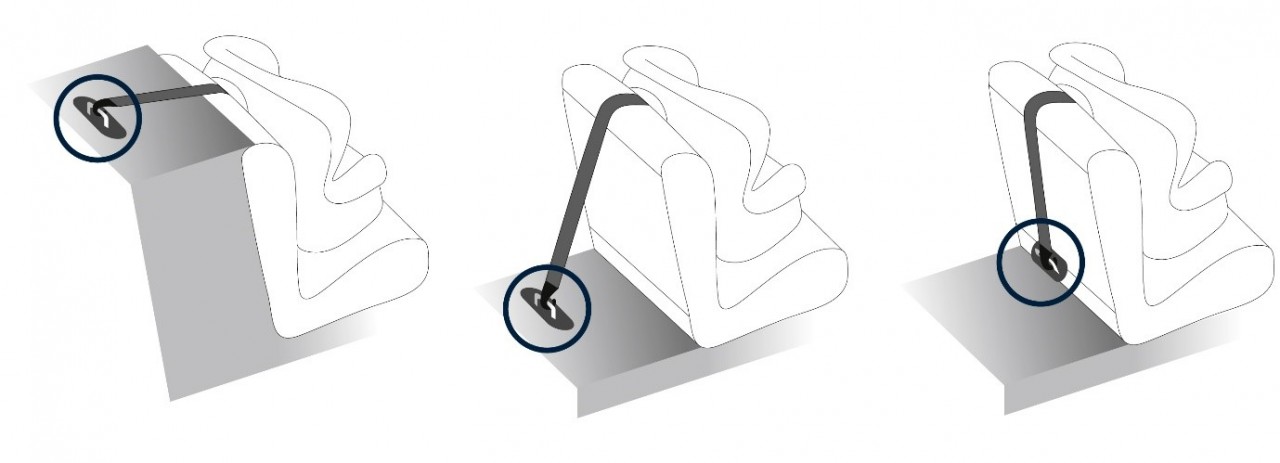
Installing the Top Tether
The Top Tether belt is a crucial element for the optimal safety of ISOFIX seats, preventing excessive rotation during a frontal impact.
Locating the anchor point:
- Check your vehicle’s manual for the exact location
- Vehicles manufactured after 2012 usually have this standard anchor point
- It may be located on the rear bench, on the trunk floor, or on the ceiling
Installation steps:
- Identify the Top Tether point marked with its symbol (anchor)
- Thread the belt through the seat back if necessary
- Connect the hook to the anchor point
- Tighten the belt eliminating any slack
- Check tension – the belt should be firm but not overly taut
Note: Do not improvise anchor points if your vehicle does not have Top Tether. In this case, consult a specialist or consider a seat with a support leg.
Final checks and maintenance
After installation, perform periodic checks to maintain optimal safety:
Monthly check:
- Check the tension of all anchoring elements
- Visually inspect connectors for wear or damage
- Test visual indicators (if present)
Post-accident check:
- Replace the seat even after a minor accident
- Check the integrity of all components
- Consult the manufacturer for specific recommendations
General maintenance:
- Regularly clean the upholstery according to the instructions
- Avoid exposure to extreme temperatures
- Keep the manual for future reference
Photo sources: gracobaby.com, volvo.com