- DSG stands for Direct Shift Gearbox, a dual-clutch system in one housing.
- Two separate gearboxes with their own clutches preselect gears for faster shifts.
- One clutch handles odd gears, the other even and reverse, enabling near-instant shifts.
- No torque converter means reduced losses and more direct power transfer.
Gearboxes are an essential component of any car, and in recent years technology has evolved significantly in this field.
Most drivers are familiar with manual transmissions and traditional automatics, but there is a newer technology quickly gaining ground: the DSG (Direct Shift Gearbox). This dual-clutch transmission combines the efficiency of a manual with the comfort of an automatic, delivering extremely fast and smooth gear changes.
What DSG stands for and how it is built
The acronym DSG stands for Direct Shift Gearbox and describes a gearbox with direct gear shifting, equipped with a dual clutch. Unlike traditional automatics that use a torque converter, the DSG uses two separate clutches to perform gear changes.
From a construction point of view, a DSG consists of two distinct gearboxes mounted in a single housing. Each gearbox is connected to the engine via its own driveshaft and its own clutch. The entire system is hydraulically controlled with the help of a sophisticated mechatronic module that coordinates the components for fast and smooth changes.
One clutch handles the odd gears (1, 3, 5, 7), while the other handles the even gears (2, 4, 6) and reverse. This configuration allows preparing the next gear while the car is moving in the current gear.
How dual-clutch technology works
The principle is ingenious and efficient. While driving, one of the two gearboxes is engaged and transmits power to the wheels, while the other is already preparing the next gear. When the electronic control unit determines it’s time to shift, the system decouples the active clutch and couples the other one, thus achieving an almost instantaneous transition between gears.
The Transmission Control Unit (TCU) plays a crucial role. It constantly receives data from engine sensors:

- Engine rpm (RPM)
- Vehicle speed
- Throttle position
- Engine and transmission temperature
- Driver’s style
- Road incline
Based on these data, the transmission control unit precisely anticipates which gear will be required next and preloads it. The result is a gear change in approximately 4–8 hundredths of a second, imperceptible to passengers and much faster than even the most skilled driver on a manual gearbox.
Differences from traditional automatics
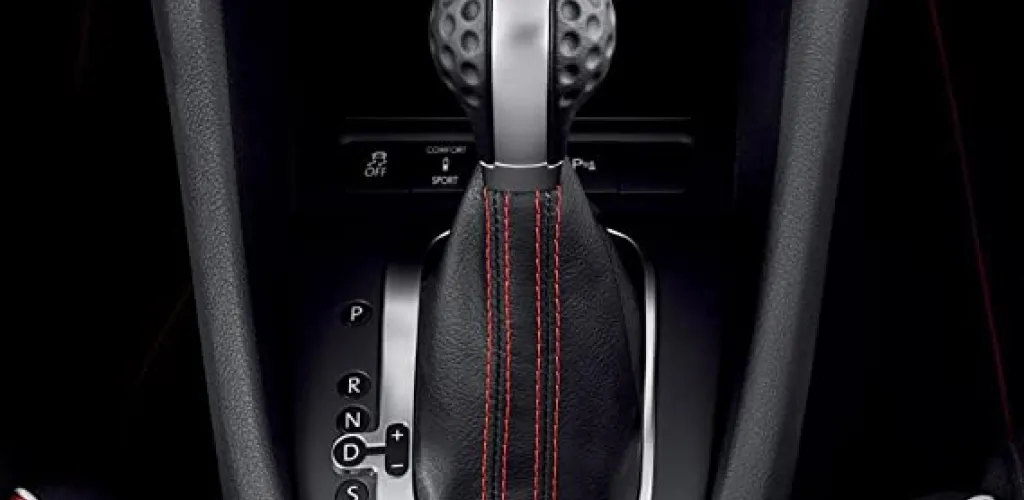
While at the driver’s seat a DSG may feel like a traditional automatic—both have P, R, N, D and sometimes S—the technical differences are substantial.
Clutch system
A traditional automatic uses a torque converter to transfer power from the engine to the transmission. This converter uses a viscous hydraulic fluid that allows slip between the input and output components, creating a smooth transition between gears, but sacrificing efficiency.
In contrast, the DSG uses dry or wet clutches (depending on the model), electronically actuated. This eliminates power losses associated with the torque converter and ensures a more direct power transfer.
Efficiency and consumption
Thanks to using clutches instead of a torque converter, DSG transmissions are generally 10–15% more efficient than traditional automatics. Power losses through friction and heat are much smaller, which translates into reduced fuel consumption and lower emissions.
The weight of a DSG is also lighter than that of a traditional automatic, contributing to better vehicle dynamics and slightly improved fuel economy.
Responsiveness and dynamics
The ultra-fast gear changes of the DSG make acceleration more linear and punchy. There are no delays or power gaps between gears, as can occur with some older automatics—especially those with fewer gears.
Types of DSG gearboxes and configurations
There are several DSG variants on the market, each tailored to different engine types and performance requirements.
DSG with 6 speeds
This is the initial model, developed for engines up to approximately 350 Nm of torque. It uses dry (DQ250) or wet (DQ500) clutches, depending on the application. The dry-clutch version is more compact and lighter, but durability is lower under heavy use.
DSG with 7 speeds
The seven-speed variant (DQ200/DQ381/DQ500) was developed to offer a wider range of gear ratios, improving efficiency and comfort. This configuration is suitable for mid- to high-power engines.
DSG with 8 speeds
The newest iterations of the technology include eight gears, offering an even wider range of ratios. This allows keeping the engine in its optimal rpm zone for a longer period, maximizing efficiency and reducing consumption.
Differences between generations
When looking for information about DSG, you’ll encounter terms like “DSG 1” or “DSG 2.” These refer to different generations of the technology, with progressive improvements in reliability, efficiency and comfort.
The second generation (DSG 2) brought significant improvements to the control software, faster response to commands, and increased durability of mechanical components. The mechatronic system was refreshed to manage temperature and hydraulic pressure more efficiently.
Usage and features
From the driver’s perspective, daily use of a DSG is identical to that of a traditional automatic. The shift selector offers standard positions:
- P (Park): For parking, mechanically locks the transmission
- R (Reverse): Reverse
- N (Neutral): Neutral
- D (Drive): Normal driving, automatic
- S (Sport): Sport mode, with higher rpm shifts
Manual mode
A significant advantage of DSG transmissions is the ability to switch to manual mode, which provides direct control over gear shifts without having to manage the clutch. This is achieved by:
Selector movement: On most models, move the shifter to a side position (usually marked with “+/-” or “M”). From here, push up to upshift and down to downshift.
Paddle shifters: Many modern DSG-equipped vehicles have paddles mounted behind the steering wheel. The right paddle upshifts, the left downshifts. This system enables very rapid gear changes without taking your hands off the wheel.
Even in manual mode, the electronic control unit will intervene if it detects situations that could affect the engine or transmission. For example, it will upshift if rpm becomes too high or downshift if speed drops too much.
Advantages of the DSG transmission
Superior performance
Shifts in 4–8 hundredths of a second are far faster than any driver can achieve on a manual gearbox. This translates into better acceleration and shorter 0–100 km/h times. For sports or performance cars, the DSG becomes a real competitive advantage.
Increased comfort
Shifts are so fast and smooth that they are almost imperceptible. There are no jolts or roughness typical of older automatics or clunky shifts in traffic. City driving becomes much more relaxed, without having to constantly operate the clutch and gear lever.
Fuel efficiency
DSG gearboxes offer fuel consumption comparable to or even better than manual counterparts, thanks to:
- Optimal gear selection for each situation
- Lower power losses due to friction
- The ability to cruise in the efficient rpm range at steady speeds
- Lower weight compared to traditional automatics
Versatility
The ability to switch between automatic and manual modes offers maximum flexibility. You can let the gearbox handle urban traffic shifts, but take control on winding roads or when you want a sportier drive.
Reliability and durability
Contrary to some myths circulated online, modern DSG gearboxes are extremely reliable when properly maintained. The early generations did have some issues, especially the DQ200 with dry clutches on small engines, but these have been addressed in later generations.
Historical issues
- Premature clutch wear: On early models, particularly those with dry clutches used heavily in dense urban traffic, there were cases of accelerated wear. Manufacturers addressed the issue by improving materials and control algorithms.
- Mechatronic module problems: The electro-hydraulic unit that controls the transmission can fail, usually due to overheating or wear of the valves. Symptoms include sudden shifts, shuddering or inability to engage certain gears.
- Noisy bearings: Over time, gearbox bearings can develop play or wear, manifesting as noise or vibration. This is a common issue in many mechanical transmissions and not exclusive to DSG.
- Vibrations at low speeds: Some models show light vibrations at low speeds or starting, due to how the clutches manage engagement. This is often normal operation, not a fault.
Maintenance and service
To keep a DSG in optimal condition:
- Change the oil and filter at the intervals recommended by the manufacturer (usually 60,000–80,000 km)
- Periodically check the fluid level (where applicable)
- Avoid aggressive driving when the transmission is cold
- Do not keep your foot on the brake for long in traffic; shift to N when stationary
- Perform adaptation resets after an oil change at an authorized service center
A well-maintained DSG can easily exceed 300,000–400,000 km, as evidenced by numerous taxis and commercial vehicles that use this technology.
Cost and accessibility
The DSG is usually offered as an option when buying a new vehicle, with an additional cost versus the manual variant. The price varies depending on:
- The car manufacturer
- The vehicle model
- Engine size
- The type of DSG (6, 7 or 8 speeds)
- Dry or wet clutches
For mainstream brands such as Volkswagen, Skoda, Seat or Audi, the extra cost for a new DSG gearbox is typically between 1,500–2,500 euros. For premium or performance brands, this cost can rise significantly.
In the case of used vehicles, the presence of a DSG can influence the price, but the difference is often amortized over time due to increased efficiency and lower operating costs.
Market trends and the future
In recent years, demand for automatics has risen steadily, at the expense of manuals. This trend is driven by:
- Dense urban traffic: Daily driving in congested conditions becomes tiring with a manual
- Advanced technology: Modern automatic systems are as efficient as manuals
- Increased comfort: Younger generations prefer more comfortable solutions
- Preparation for electrification: Hybrid and electric vehicles use almost exclusively automatics or gear reductions
The DSG sits well in this transition, offering the advantages of an automatic with the performance and efficiency of a manual. Many plug-in hybrids use DSG to manage the combined power of the internal combustion engine and electric motor.
As the automotive industry moves toward electrification, DSG technology will evolve as well. Some electric and hybrid models already use two-speed gearboxes based on similar principles, optimized for the specific characteristics of electric motors.
Conclusion
The DSG gearbox represents a significant evolution in automotive transmission technology, blending the best of both worlds: the efficiency and control of a manual with the comfort and ease of use of an automatic. Ultra-fast shifts, reduced consumption and versatility make DSG an excellent choice for most drivers.
Reliability has improved considerably compared to the early generations, and with proper maintenance, a DSG can offer hundreds of thousands of kilometers of trouble-free operation. For those who spend a lot of time in traffic or want a more relaxed driving experience without sacrificing performance, the DSG is an investment worth considering.