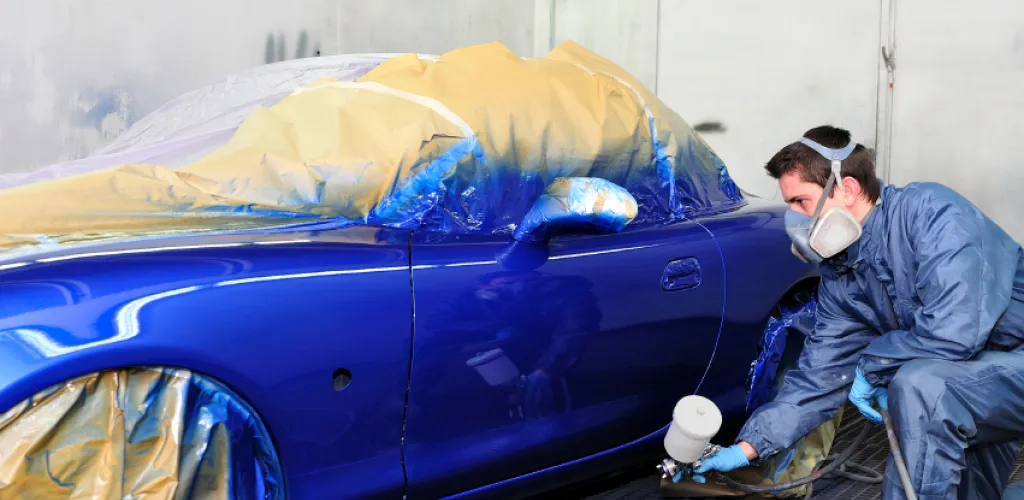
- Full car painting is a costly process that transforms the look.
- Prep includes sanding, degreasing, masking, and filler to smooth imperfections.
- Base coats use acrylic enamel with controlled oven drying for curing.
- Drying times vary; DIY painting is possible with proper thinning and spray technique.
Changing the color of a car through full painting is a significant investment that can completely transform its appearance. This complex procedure requires precise technique, specialized equipment, and a deep understanding of the chemical and mechanical processes involved. Additionally, choosing between painting and wrapping can be a difficult decision, given the advantages and disadvantages of each method.
To make the best decision and achieve professional results, it is essential to know all technical aspects of painting, the real costs involved, and understand the differences between traditional painting and modern alternatives.
The technical process of car painting
Body preparation
The first step in painting the car is preparing the vehicle, which consists of sanding and degreasing with a special detergent. This step is crucial for optimal paint adhesion. Any trace of grease, wax, or other contaminants can compromise the final result.
Next, a filler is applied in a layer to cover cracks on the body, at a temperature of about 20 degrees Celsius, within a 15-30 minute window. Then, a kilogram of filler is applied, a process that lasts about an hour. The filler is essential to even out the surface and cover minor imperfections in the sheet metal.
Applying base coats
After applying the filler, it is sanded and corrected with filler where necessary, then final degreasing. During these operations, it is advisable to apply masking tape with paper on the glass or trims to protect them.
The next step is the actual application of the acrylic enamel, a process that lasts between 45 and 60 minutes. Here we must also consider oven drying, at 60-70°C, in an estimated time of 45-60 minutes. Controlled temperature is essential for proper polymerization of the paint.
Drying and time required
If you decide to paint the car yourself, it is good to know that the car can dry in open air at 20°C. One tip: don’t forget to watch out for dust, which can affect the paint during drying. Under favorable conditions, drying takes about 6 hours.
For a new car in very good condition, painting takes around 4-5 days, while an older vehicle can take 7-10 days. The duration of painting also depends on the car’s condition and the complexity of the paint job. It’s important to know that the car can be driven immediately if it is oven-dried. If it is air-dried, you will have to wait a day before driving.
How to paint your own car
Preparing the paint and application
If for any reason you choose not to have your car painted in a shop, you can do it yourself if you follow a few essential steps. Mix the paint with thinner using the ratios and amounts recommended on the paint can. Maintaining proper proportions is crucial for the correct consistency of the paint.
Apply the top coat by spraying, maintaining an optimal distance of 15-20 cm from the surface. The application time for each coat on each panel will be between 10 minutes and 1 hour, to allow the paint to dry before repainting.

Applying multiple coats
Apply 3-4 coats and let dry per the instructions. Each coat must be uniform and free of runs. Before applying the last coat, remove any powder residues using 2000 grit wet-and-dry sandpaper, then wipe with a clean cloth.
Repeat the last two steps, with the clear coat. The clear coat provides the protection needed against UV rays and environmental factors. Remove the masking film while the clear coat is still wet. Be careful that the tape or paper does not stick to the wet paint.
Finishing and quality control
Let the clear coat dry according to the recommended time. Inspect the freshly painted areas for imperfections. If such areas appear, rub the areas with 2000 grit wet-and-dry sandpaper, then repaint the affected area.
The paint should be finished with circular motions using a buffer, taking care not to damage the paint, avoiding prolonged focus on a single spot. The final polishing process gives the shine and uniformity desired.
Painting vs wrapping: detailed comparison
Advantages of traditional painting
Painting the body has proven to be a durable, competitive solution and does not present many application problems. A major advantage of paint is its increased durability, lasting until the next repaint. The painted car will have a more pleasing appearance and will not give the impression of a wrapped car hiding visible defects.
Quality acrylic paint can last between 8-15 years, depending on usage and maintenance. Painting also adds resale value to the vehicle, being perceived as a permanent and professional modification.

Disadvantages of painting
Paint is more sensitive when it comes to scratches or impacts. These mechanical interactions remove paint layers and lead to oxidation of the metal and rust. Another disadvantage is the cost, which is significantly higher compared to wrapping due to the complex technological process.
Painting also requires a professional workshop and a controlled working environment. The paint is quite demanding, meaning you must take extra care of your car, using special solutions and regular treatments.
Advantages of wrapping
Let’s move on to wrapping. Wrapping has emerged relatively recently, so there is still an active debate about this procedure. The major advantage of wrapping is its dual role in protection and coverage of the car body surfaces.
Wrapping is a process that requires the surface (the body) to be cleaned of impurities, rust and grease. The process is reversible, allowing a return to the original color without affecting the factory paint.

Practical advantages of wrapping
Wrapping is performed with special tools and solutions to promote application and extend the life of the films. Another advantage of wrapping is the price, relatively lower compared to traditional painting. Wrapping provides additional protection for the paint against scratches and impacts.
Modern films can be applied to complex surfaces, allowing visual effects impossible to achieve with traditional painting, such as matte finishes, carbon fiber, or chrome.
Limitations of wrapping
A drawback of wrapping is the limited lifespan of the vinyl, directly proportional to the quality of the film. For example, a cheap product may last 1 year, while a high-quality film can stay on the car up to 5 years.
Wrapping can also present issues with bubbles, edge lifting, and sensitivity to extreme temperatures.
When to choose one or the other
When choosing between the two, it depends on personal preference and long-term goals. In general, choose wrapping when you want your car to be unique, but the manufacturer does not offer the car in your desired color, or that color cannot be achieved with paint.
Painting is recommended for permanent modifications, when you want to keep the new color for many years and add value to the vehicle.
Costs of full painting
Prices for professional painting
In terms of price, a full painting will cost between 2,200 and 5,000 lei, with about 1,000 lei extra for SUVs. The price difference depends on the quality of the paint used, the complexity of the job, and the reputation of the workshop.
If you paint individual elements, prices vary from 250 to 500 lei per piece. This option is useful for repairing damaged areas or changing the color of specific elements.
Comparison with wrapping costs
Wrapping prices are lower, between 1,200 and 2,000 lei for a full wrap, but there are premium wraps that can exceed traditional painting. High-quality films, such as matte finishes or special effects, can reach prices similar to painting.
Factors influencing cost
The final cost depends on several factors:
- Condition of the body and need for repairs
- Type and quality of the paint chosen
- Color complexity (metallic, pearlescent, etc.)
- Vehicle size
- Workshop quality standards
In conclusion, the choice between painting and wrapping depends on available budget, desired durability, and personal goals. Both methods have their advantages and can yield excellent results when performed professionally.