- Mandatory HU and AU inspections under TÜV standards.
- Yellow-band plates are Germany-only and penalized if used abroad.
- Zoll numbers are 30-day red-striped plates; right stripe shows expiry date.
- Essential documents: Fahrzeugschein and Fahrzeugbrief; ensure authenticity for Romanian registration.
The German car market remains one of the most attractive options for Romanians looking to buy a quality used vehicle. However, importing a car to the country requires knowledge of specific procedures, including obtaining Zoll numbers (transit plates). These temporary plates, marked with a red stripe, are essential for legal circulation from Germany to Romania.
This guide explains the prerequisites, required documents, and step-by-step process to obtain Zoll numbers in Germany, along with practical tips to avoid delays at the registry offices and during border crossings.
Preliminary conditions for obtaining transit numbers
Technical inspection - The first mandatory step
Before you can obtain Zoll numbers, any vehicle must have a current periodic technical inspection in line with German standards. In Germany, this means:
- HU (Hauptuntersuchung) – general vehicle inspection
- AU (Abgasuntersuchung/Abgassonderuntersuchung) – emissions and exhaust tests
These inspections must be performed according to TÜV standards and be valid. Avoid vehicles offered for sale without a valid inspection, as for these vehicles only temporary plates with a yellow side stripe can be issued, which are valid exclusively on German territory.
Attention to yellow-band numbers
Temporary license plates with a yellow band can be used exclusively in Germany. Attempting to enter with these plates into Hungary or Romania can lead to severe penalties, including imprisonment. This is a crucial aspect that many buyers neglect.
Zoll numbers: characteristics and validity
Design and distinctive elements
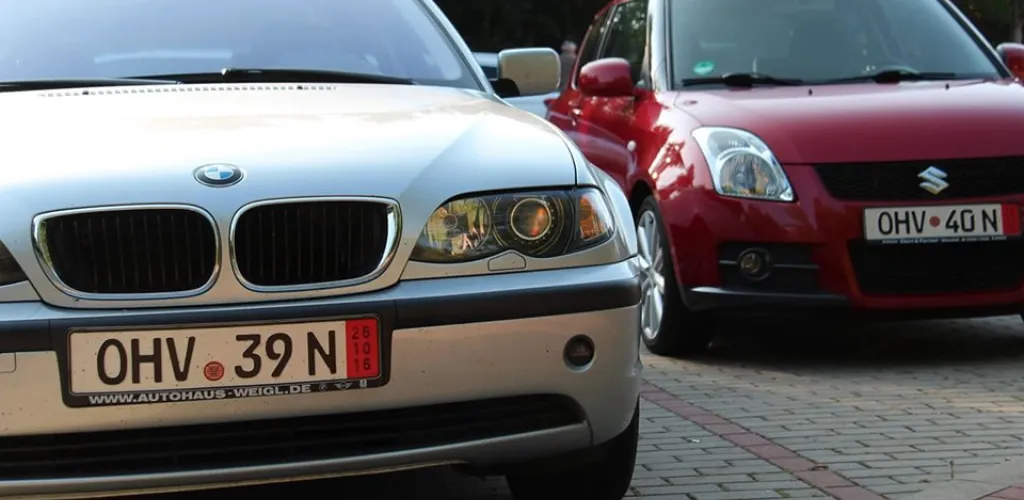
Zoll numbers (transit plates or red plates) have a standard validity of 30 days and are distinguished by a red stripe on the side. The plate structure contains important information:
Left side:

- 1-3 letters representing the German district where the plates were issued
- Example: OHV = Oberhavel district
Center:
- Randomly assigned digits and a letter
- If several people obtain consecutive numbers at the same desk, they will receive successive combinations
Right red stripe (the most important element):
- Top digit = expiry day
- Middle digit = expiry month
- Bottom digit = expiry year
With these numbers, you can travel legally in Europe until the stated expiry date.
Documents required at purchase
Whether you buy from a private seller or an autohaus (dealer), you must receive the following mandatory documents:
Small registration certificate (Fahrzeugschein)
The document equivalent to the Romanian talon, containing technical data about the vehicle and information about the owner.
Large registration certificate (Fahrzeugbrief)
The vehicle’s identity document, the most important paper. Pay maximum attention to obtaining this document, because there are many cases of cars imported from Germany that cannot be registered in Romania due to missing or problematic paperwork. Verify authenticity and ensure that all data matches the vehicle.
Sales contract (Kaufvertrag)
The official document certifying the transfer of ownership. It should contain complete details of both parties, a thorough description of the vehicle, the price, and the terms of sale.
Procedure to obtain Zoll numbers
Option 1: Through the autohaus
The simplest method is to request assistance from dealership staff. They know the procedure in detail and can help for around €50. This option saves valuable time and reduces the risk of errors in the process.
Option 2: Do it yourself at KFZ-Zulassungsstelle
If you prefer to handle the steps yourself, follow these:
Step 1: Preparation and planning of the visit
Visit one of the KFZ-Zulassungsstelle offices in the area. Important tips:
- Check public opening hours in advance
- Arrive well before opening time, especially on Fridays when hours are shorter
- Hours can vary by region and day
Step 2: Documents required at the counter
Upon arrival, take a number and prepare the following documents:
- Valid identity card or passport
- Driving license
- Small registration certificate (Fahrzeugschein)
- Large registration certificate (Fahrzeugbrief)
- Signed sales contract
- Proof of valid ITP (HU/AU)
Step 3: Verification and payment of fees
After a clerk reviews the documents and approves the application, you will pay the fee set by the respective region. The cost should not exceed €70 and varies by district.
You will receive an official document with the alphanumeric combination that will appear on your transit plates.
Step 4: Plate fabrication at Autoschilder
With the document in hand, go to an Autoschilder workshop (usually nearby, across the street). Key points:
- Unlike the Romanian system, plates are not issued directly by the state
- Many workshops speak Romanian
- Cost ranges between €100-€200, depending on vehicle type and region
- You will also receive Versicherungskarte (green card) – insurance for the validity period of the numbers
Step 5: Finalizing the procedure
Return to the registration office to receive the official stamp with the district, which will be affixed to the Zoll numbers. This step is mandatory for the numbers to be legally valid.
From the moment the stamp is applied, the numbers take effect and can be mounted on the vehicle.
Mounting and using the numbers
After completing the procedure, the temporary numbers are valid and can be mounted immediately on the car. Ensure that:
- Both plates are mounted correctly (front and rear)
- The district sticker is visible and properly applied
- You have the green card (insurance) with you
- You know the expiry date displayed on the red band
Final recommendations and practical tips
Considering the complexity of the procedure and potential issues (language barrier, unfamiliar local procedures, limited opening hours), it is recommended to seek specialized help from the dealer or a brokerage firm. The extra cost of around €50-€100 can prevent:
- Time wasted on multiple trips
- Errors in completing documents
- Issues with later registration in Romania
- Unpleasant situations at border checkpoints
If you still opt to handle the procedure yourself, make sure you have enough time (at least a full day) and that you understand all steps of the process.
Once Zoll numbers are obtained and all documents are in order, you can legally return to Romania with the newly acquired vehicle, having 30 days to finalize the registration procedures on Romanian territory.