- Aggressive headlight flashing is common in Romania, linked to fines and license suspension
- Romanian road safety is poor; flashing is used as pressure, signaling, risk
- Police guidance: stay calm, overtake safely, return to right lane, don’t retaliate
- Legal exceptions: flashing allowed only in emergencies or overtaking outside built-up areas
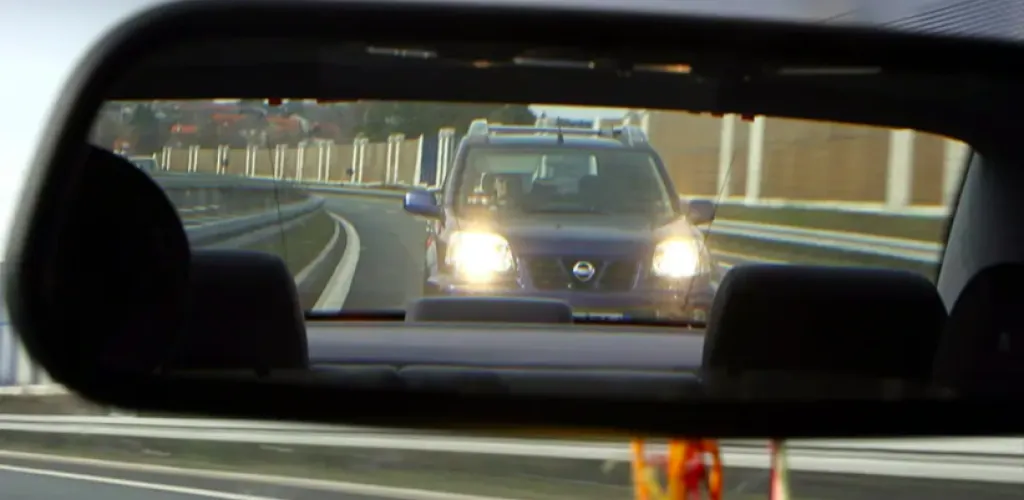
Headlight flashing in traffic has become a common practice on Romania’s roads, but the consequences can be severe—from traffic accidents to hefty fines and license suspension. Romania ranks unfavorably in Europe for road safety, and abusive use of headlights as a pressure or signaling tool is part of the systemic challenges facing our road traffic.
Aggressive behavior in Romanian traffic — a persistent problem
Aggressive driving practices have become a chronic issue in Romania, and using headlights to emit flash signals is one of the most common forms of pressure in traffic. This behavior may signal dissatisfaction, a warning, or an alleged permission, but the consequences can be far more serious than many drivers imagine.
Statistical data on aggressiveness behind the wheel
Based on research conducted by Prof. University Dr. Mihaela Rus and lead psychologist Ionel Simionca from the Association of Psychology and Road Safety, Romanian drivers show a troubling predilection for harassment in traffic and aggressive driving behavior.
A study conducted on a sample of 127 drivers (74.8% men and 25.2% women) reveals the following alarming data:
- 88% of men aged 18-25 are convinced that the risk of an accident is minimal if they own a high-performance car
- 70% of men aged 25-40 share the same erroneous belief
- 65% of men aged 18-40 admit they get angry in congested traffic and do not hesitate to overtake the line of cars
How to respond correctly to aggressive flashings
The official response from the Romanian Police
According to the official response of the Romanian Police for Promotor, the proper behavior in the face of aggressive flashings is as follows:
“On the highway, traffic moves in the first lane, the second is used for overtaking. If you perform a overtaking and another driver presses you with flash signals, stay calm. Do not jerk the car controls, continue your overtaking safely, then return to the first lane. Do not pay attention to the one behind you—focus on the car in front to avoid any danger.”
Note: The main cause of accidents is not excessive speed, but failure to maintain a safe distance from the car ahead.
Practical behavior rules
- Stay calm — don’t let the pressure from behind affect you
- Do not accelerate abruptly — complete the overtaking safely
- Return to the right-hand lane immediately after the overtaking is complete
- Do not retaliate with flashes or gestures — escalating the conflict is dangerous
- Focus on the traffic ahead — not on the rearview mirror
When are flashings permitted by law
Romanian legislation allows the use of flashings only in two specific situations:
Emergency situations
- To alert fellow road users about an imminent danger
- In case of a breakdown or forced stop
Overtaking outside built-up areas
- To warn the oncoming traffic
- According to regulations: “Outside built-up areas, overtaking may be announced with short acoustic and light signals”
- Only if the driver on the left does not understand the overtaking intention, even with signaling active
Warning: If flashings are used abusively and the legal distance is not respected, you can be charged with coercion!
Penalties for aggressive behavior in traffic
Current penalties (as of January 1, 2022)
For aggressive behavior without an accident:
- Fine: 580-725 lei
- License suspension: 30 days
For aggressive behavior with a property damage accident:
- Fine: up to 1,160 lei
- License suspension: 60 days
Penalties apply for:
- Abusive use of the horn or flash signals to clear the way
- Sudden braking aimed at hindering the driver behind
- Very close following (“tailgating”)
- Aggressive or high-risk lane changes
- Dangerous overtaking or overtaking on the shoulder
The Road Code reform project — harsher penalties
New legislative proposals under parliamentary consideration provide:

- Abusive flashings: a fine of 3,000 lei
- Entering oncoming traffic on the highway: license suspension of 4 months
- Repeated aggressive behavior: longer suspensions
According to Bogdan Ghebaur, IGPR spokesperson: “We are talking about very close traffic to other vehicles, the use of lighting systems or the horn in an abusive way, or very rapid and dangerous lane changes.”
Legal precedent — flashings do not have a “clear meaning”
The Brăila Court case
A recent case established an important precedent in Romanian jurisprudence. A driver lost his license for failing to yield, claiming that the other driver flashed his headlights, “indicating that he can proceed through a small understanding.”
Court decision:
“It cannot be stated that performing short light signals, such as a flash, has a clear, predefined meaning; this maneuver should be interpreted according to the concrete situation in which the drivers find themselves.”
Possible interpretations of flashes
A driver may flash for:
- To warn that YOU have the obligation to yield to them
- To warn about a radar-monitored area
- To signal a problem with your vehicle (headlights on during the day, door open, etc.)
- Not necessarily to grant you priority or “green light”
Beware of traffic scams!
The fraudulent practice of “staged accidents”
Auto expert Titi Aur warns about a tactic used by scammers:
“There were some tricksters with cars quite beaten up, who would approach intersections where they have priority and signal you to go. When you passed, they would nudge you. Then they would threaten to go to the police, leave you without a priority, and even make you pay for their car repairs. They asked for sums far higher than the repair cost.”
Locations: fuel station exits, secondary side streets, intersections with limited visibility.
How to protect yourself
- Never rely on others’ signals to break traffic rules
- Document any incident with photos and witnesses
- Call the Police immediately at the accident site
- Do not accept outside-the-procedure deals
Modern technologies for safety
Driver assistance systems
- Adaptive Cruise Control (ACC) — automatically maintains distance
- Lane Departure Warning — alerts for unintentional lane departure
- Blind Spot Monitoring — detects vehicles in the blind spot
- Forward Collision Warning — alerts about collision risk
Useful apps for drivers
- Waze — alerts about radar and traffic conditions
- iOnRoad — monitors driving style
- Speed Camera Detector — alerts about surveillance cameras
Recommendations for defensive driving
On the highway
- Follow the 3-second rule — minimum distance to the vehicle ahead
- Use the right-hand lane for normal driving
- Overtake quickly and return to the right
- Check the blind spot before any maneuver
- Adjust speed to weather conditions
In urban traffic
- Anticipate others’ behavior — many do not follow the rules
- Maintain distance even in slow traffic
- Use signaling in advance
- Avoid blocked intersections — don’t enter if you can’t exit
- Be mindful of cyclists and pedestrians — they are vulnerable
Managing stress behind the wheel
- Plan extra time for trips — haste breeds aggression
- Take regular breaks on long journeys
- Listen to relaxing music — avoid tense news or programs
- Practice deep breathing when frustrated
- Don’t take others’ behavior personally
Road education — the key to success
For beginner drivers
- Defensive driving courses — advanced driving techniques
- Driving simulators — practice dangerous situations
- Lessons with experienced instructors — not just for passing the exam
- Supervised practice on various road types
For experienced drivers
- Update courses — legislation changes constantly
- Training in adverse conditions — driving in rain, snow, fog
- First aid training — essential in case of an accident
- Preventive maintenance — understanding modern vehicle systems
Psychological impact of aggressive behavior
Consequences for aggressors
- Increased stress and fatigue — constant tension wears you down
- Cardiovascular risk — aggression affects the heart
- Deterioration of relationships — behavior spills over to home
- Legal problems — fines, suspensions, lawsuits
Effects on victims
- Anxiety behind the wheel — fear of driving again
- Lower self-confidence — avoiding certain routes
- Post-traumatic effects — after serious accidents
- Financial impact — repairs, fines, higher insurance
European perspective — what other countries do
Successful models
Norway:
- Fines calculated based on the driver’s income
- Advanced monitoring technology
- Mandatory road safety education in schools
Germany:
- Strict license points system
- Highway sections without speed limits, but strict discipline
- Mandatory psychological testing for certain offenses
Netherlands:
- Infrastructure friendly to all road users
- High fines for aggressive behavior
- Very effective awareness campaigns
Conclusion
Aggressive behavior in traffic, including abusive headlight flashing, is a serious problem with multiple consequences: from hefty fines and license suspensions to serious accidents with casualties. The new legislative changes aim to discourage these behaviors with tougher penalties, but real change must come from every driver.
Key message: Road safety is everyone’s responsibility. Instead of meeting traffic provocations with aggression, choose defensive driving, obey the rules, and practice patience. Only a collective change in mindset will reduce the number of accidents and make Romanian roads safer for everyone.
Note: Flash signals do not have a clear legal meaning; do not rely on them for important traffic decisions, and use them only in situations strictly permitted by law. Maintaining distance, obeying speed limits, and practicing prevention remain the most effective ways to avoid road accidents.