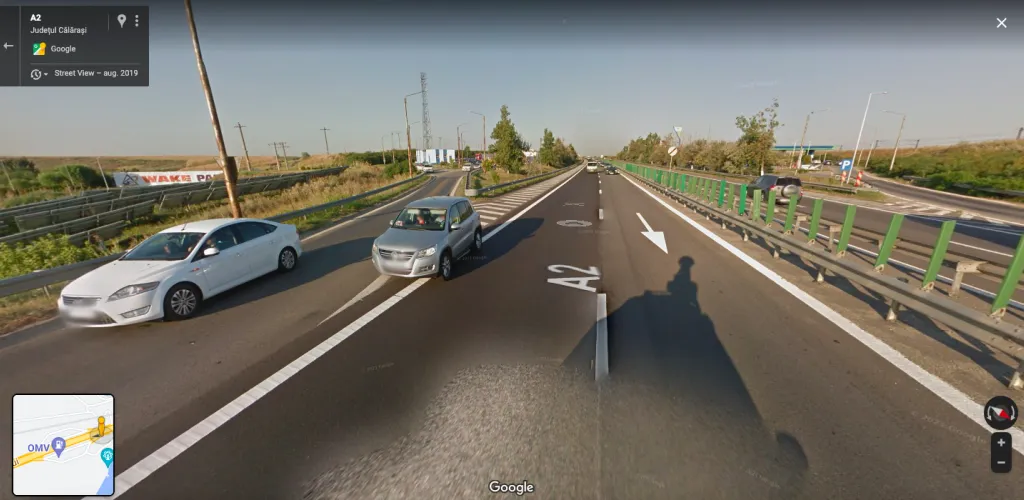
- Acceleration lanes let drivers match highway speed before merging to prevent crashes
- Prepare by checking traffic, signaling early, and gauging highway speeds
- Enter gradually, accelerate along the full lane, and merge when speeds match
- Do not use main lanes to accelerate or end the lane abruptly
Acceleration lanes are one of the crucial elements of highway safety, but they are often used incorrectly, leading to serious crashes. Statistics show that many chain-reaction collisions on highways originate precisely from not complying with the rules for entering traffic through these special lanes.
The main problem arises when drivers do not understand the real purpose of the acceleration lane and use it incorrectly, endangering both their own safety and that of other road users.
Why acceleration lanes are important
The acceleration lane is specially designed to allow vehicles to gradually increase their speed to match the traffic on the highway, before merging into the main flow. This transition zone is essential for maintaining traffic flow and preventing accidents.
Chain-reaction crashes in recent years, involving multiple vehicles, have as their primary trigger the incorrect use of acceleration lanes. Drivers who start from zero speed at the end of the lane and use the main lanes to accelerate create extremely dangerous situations.
How to use the acceleration lane correctly
Preparation for entry
Before entering the acceleration lane, it is essential to:
- Check the traffic behind you and on the right-hand lane
- Signal your intention to enter the highway in advance
- Assess the speed of the vehicles on the first lane of the highway
Correct acceleration technique
The acceleration lane should be used to reach a speed as close as possible to the traffic on the highway. Here are the proper steps:
- Enter the lane gradually, not abruptly
- Accelerate steadily along the full length of the available lane
- Adjust your speed according to the traffic on the first lane
- Merge into traffic only when you have reached a speed close to that of the other vehicles
Safe integration strategies
There are two main scenarios for safe entry:

Scenario 1: entering in front of a vehicle
- Accelerate to a speed 10-15 km/h faster than the vehicle behind which you want to merge in front of
- Ensure you have enough space to merge
- Maintain acceleration until you have fully merged
Scenario 2: waiting to enter
- If traffic is heavy, temporarily reduce speed on the acceleration lane
- Let vehicles pass by you
- Accelerate again to merge behind them
Common mistakes to avoid
Do not use the main lanes for acceleration
The most dangerous mistake is using the first lane of the highway for acceleration. When a vehicle travels at 20-30 km/h in a lane where others are moving at 130-140 km/h, the speed difference creates a major risk of an accident.
Do not drive to the end of the lane without accelerating
Many drivers make the mistake of driving slowly to the end of the acceleration lane and then trying to accelerate abruptly. This technique:

- Reduces the time available to accelerate
- Creates emergency situations
- Forces other drivers to brake sharply
Avoid forced entry into traffic
Never merge onto lanes 2 or 3 at a low speed, hoping others will overtake you. This practice:
- Endangers multiple vehicles
- Can trigger chain-reaction crashes
- Is illegal and may be sanctioned
Important technical aspects
Length of the acceleration lane
Acceleration lanes have different lengths depending on the highway configuration. Use the full available length to reach the optimal speed. A typical lane allows accelerating from 50-60 km/h to 120-130 km/h safely.
Vehicle considerations
The type and power of the vehicle influence the capacity to accelerate:
- Less powerful vehicles require more time to accelerate
- Loaded vehicles need more space
- Weather conditions affect grip and acceleration capability
Tips for special situations
Entering in heavy traffic
When traffic is very congested:
- Be more patient and do not force entry
- Use the full length of the lane to find a gap
- Signal your intention with other drivers
Adverse weather conditions
In rain or snow:
- Reduce your entry speed for safety
- Increase safety distances
- Accelerate more cautiously to avoid skidding
Consequences of incorrect use
Not respecting the rules for the acceleration lane can lead to:
- Severe chain-reaction crashes
- Penalties
- Increased risk for all road users
- Disruption of traffic flow on highways
Correct use of the acceleration lane is the responsibility of every driver and contributes significantly to road safety on Romanian motorways.