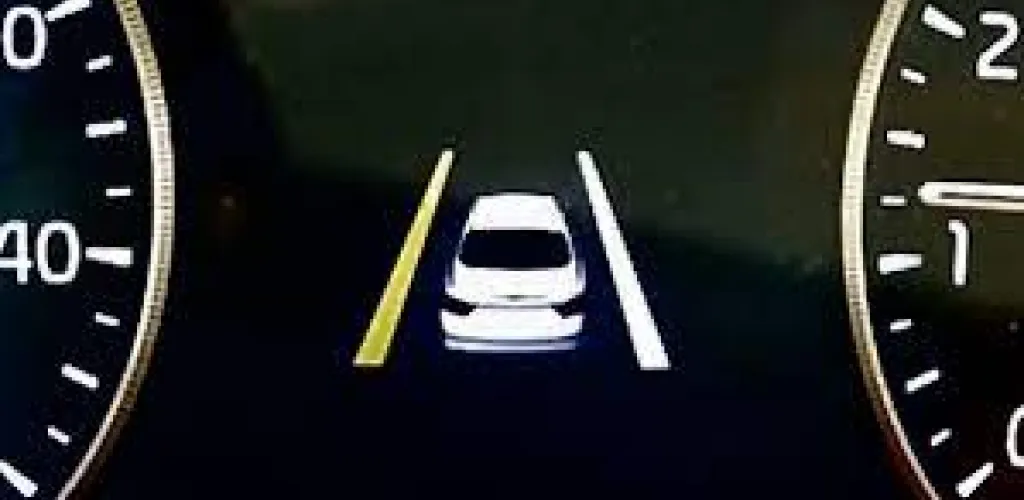
- Lane Keeping Assist actively helps steer or brake to keep the car in its lane.
- It warns first, then may steer or brake if the driver doesn’t respond.
- Limitations include worn or missing markings, poor weather, and debris.
- Driver remains responsible; these are safety aids, not replacements.
Modern cars are equipped with increasingly advanced safety systems designed to provide a comfortable and safe driving experience. Among them, lane keeping assist and lane departure warning are two related technologies with distinct modes of operation. While both aim to keep the vehicle in the correct driving lane, the way they intervene and their level of involvement differ significantly.
These systems enhance safety by monitoring the road and supporting the driver, but they do not replace vigilance. Understanding how they work, their limitations, and how to use them properly is essential for safe driving.
What is Lane Keeping Assist
Lane Keeping Assist (LKA) is an active system that helps the driver keep the vehicle inside the lane. Unlike passive systems that only alert, LKA intervenes directly in the vehicle’s control.
The vehicle is equipped with multiple cameras and sensors continuously oriented toward the road surface, monitoring lane markings. When the system identifies the lane demarcation lines, it helps keep the vehicle between them. Each time the vehicle deviates to one side without the driver signaling, the system displays a notification on the dash that the lane has been left.
In addition to the camera-based processing, the system assumes the vehicle can modify its trajectory. This is achieved either through the steering system or by braking on one side or the other of the car. Systems that use steering are generally more responsive and able to handle more curves than those based on braking alone.
How the system intervenes
Some Lane Keeping Assist systems will first issue a warning when they detect that lane departure is imminent. If the driver does not respond to the warning by steering, the assist system will try to keep the car in its current lane.
Correction methods vary by manufacturer and system. Some systems use steering to accomplish this, while others may use brakes on one side of the vehicle to gently adjust the trajectory. There are also systems that combine both methods for greater effectiveness.
Limitations of Lane Keeping Assist
Although the technology is advanced, the system is not infallible and will not work in all conditions. Several factors can affect its performance:
- Worn or absent road markings: If one of the markings is erased or missing, the car cannot align the vehicle to the lane and won’t alert when it changes direction
- Poor weather conditions: Heavy rain, snow, or fog can reduce camera visibility
- Debris on the road: Dirt, snow, or other substances covering the markings can affect operation
- Temporary works and construction: Temporary markings or changes to the route can confuse the system
- Weak or faded lane markings: Markings that are difficult to see reduce detection efficiency
This means the driver must always remain attentive and in control of the vehicle. The system is designed as an aid, not as a replacement for driver vigilance.
Differences between Lane Keeping Assist and Lane Departure Warning
Lane Keeping Assist systems are typically part of larger active safety suites. They often include other related functions:
- Lane Departure Warning and Lane Keep Assist: Do exactly what their names suggest, helping to prevent the vehicle from leaving the roadway. The operation is performed using the same sensors and controls as the Lane Keeping Assist system.
- Lane Departure Warning: A passive system that only alerts the driver that they are leaving their lane, without correcting the problem.
- Lane Centering Assist: Helps keep the vehicle centered in the lane.
Lane Departure Warning System
Being a passive system, unlike an active one, lane departure warning can be considered the most elementary technology designed to help the driver keep the vehicle in the correct lane. This system only notifies the driver through visual cues, audible alerts, or vibrations in the steering wheel or seat.
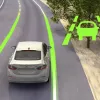
The Lane Departure Warning System is often integrated with LKA, since alerting the driver is the first step in keeping the vehicle in the lane. The essential difference is that the warning does not actively intervene in the vehicle’s operation, leaving the driver fully responsible for correcting the trajectory.
Importance of proper use of these systems
These systems are present on most modern cars and it is essential to use them correctly. Although the vehicle offers the option to disable these systems, it is not advisable to do so.
There are many situations in which such systems can save lives or help us avoid a serious traffic accident. Fatigue at the wheel, moments of inattention, or emergency situations where the driver momentarily looks away are just a few examples where these technologies can make a difference.
Most likely, in the near future, all of these systems will operate fully automatically, integrating into autonomous or semi-autonomous vehicles. Until then, it is important to understand how they work, their limitations, and to use them as safety allies, not as substitutes for our attention at the wheel.
Photo source: