- Left turns account for about 30% of intersection crashes.
- Slow down and check all directions before the turn.
- Signal 25–30 meters ahead to warn others.
- Do not rush; stay near the center line for a narrow turn.
Left turns are among the most complex and potentially dangerous maneuvers in traffic, involved in about 30% of road crashes at intersections. While they may seem like a basic operation for experienced drivers, this maneuver requires heightened attention, anticipation, and strict adherence to traffic rules. In this guide we detail all technical and safety aspects of left turns, and provide useful information about right turns as well.
Left Turn Basics
Slowing Down and Ensuring Safety
In the first place, every time we approach an intersection we should reduce speed and check from all directions. Slower speed offers:
- Extra time to observe and evaluate traffic
- The ability to react quickly to unforeseen situations
- Better control of the vehicle during the turn
- Shorter braking distance in emergencies
The slower your speed, the more you will be able to observe vehicles coming from all directions and pedestrians crossing the street.
Signaling in Time
Generally, any change of direction should be signaled at least 25-30 meters before making the move, so that other road users have a minimum of about 5 seconds to understand the next action. Since a left turn crosses the path of other vehicles, you may signal even earlier to ensure you are safe and that others notice your intention.
- A timely turn signal informs other drivers about our intention
- Prevents sudden stops from vehicles behind us
- Reduces the risk of lateral collisions
- Helps pedestrians anticipate the vehicle’s movement
Proper Lane Positioning
After signaling the direction change and confirming safety, execute the turn while staying as close as possible to the road’s center line (or the left curb on one-way streets), without cutting off vehicles in the opposite lane.
Even if you feel inclined to turn wider, it is important to make the turn as narrow as possible to avoid entering the oncoming traffic lane. A overly wide turn can:
- Put your vehicle in the path of oncoming traffic
- Increase exposure time in the intersection
- Reduce visibility of traffic coming from the right
- Confuse other vehicles waiting to turn
Right Moment for Execution
Do not rush the procedure—perform the turn only when you have ample time and are absolutely sure you can complete the maneuver safely. It is better to wait a few extra seconds than to take an unnecessary risk.

Before entering the intersection, check:
- Traffic from all directions, not just from the right
- The presence of pedestrians at adjacent crosswalks
- The possibility that a vehicle may accelerate to catch the green signal
- The presence of cyclists or motorcyclists who may be harder to notice
- Road condition (wet, icy, potholes)
Right Turn: Rules and Peculiarities
Right turns are easier to perform because, in most cases, we have priority and do not intersect another traffic direction. However, there are several important aspects to consider.
Intermittent Green Arrow Signals
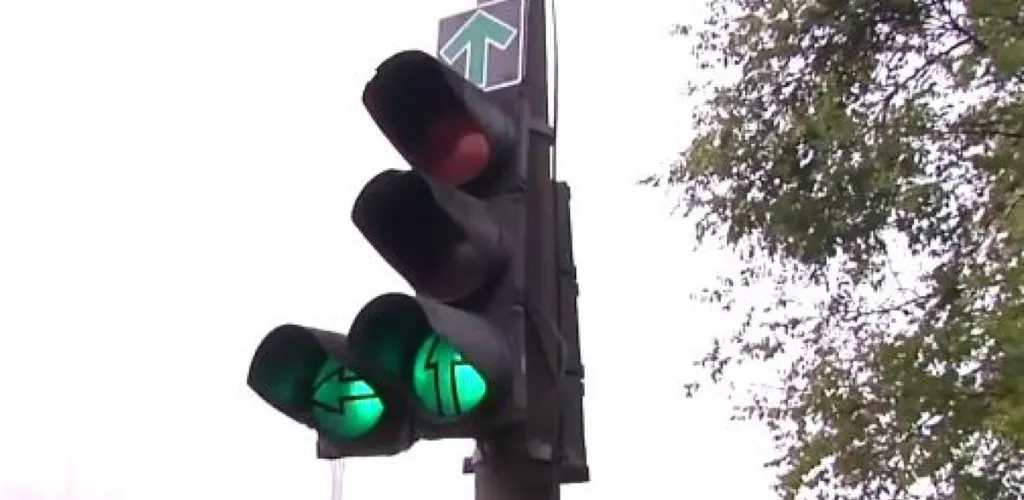
Many traffic lights allow a right turn on a green signal or with a green arrow. When the green arrow is intermittent, you must yield to vehicles already moving on that road or to pedestrians in crosswalks.
Multiple Lanes
If the lane forces you to go in several directions, you are not obligated to turn right on an intermittent green. You may wait for a normal green if you want to continue straight or turn left.
Watch the Blind Spot
When turning right, pay extra attention to cyclists and motorcyclists who may be in the blind spot of side mirrors, especially if you drive a larger vehicle or have limited visibility.
General Tips for Safe Turns
- Slow down and signal properly – reduced speed gives you time to assess the situation
- Signal in a timely manner – give other drivers enough time to react
- Observe traffic signs – follow markings, indicators, and signals
- Respect the right of way – even if you are in a hurry, safety comes first
- Do not force the maneuver – if you are unsure you can complete it safely, wait
- Stay in the correct lane – do not cut the turn or enter the opposite lane
- Check your blind spots – use mirrors and glance over your shoulder when necessary
What to Do in Case of an Accident
- Stop the vehicle immediately and secure the scene
- Check for injuries and call emergency services if needed
- If there are no injuries and the vehicles can be moved, relocate them to a safe place where they won’t obstruct traffic
- Reach an amicable agreement and document the incident with photos
- Notify the police if damages are significant or if there are disagreements
- Contact your insurance company as soon as possible
Remember that a left turn executed correctly and safely is always more important than saving a few seconds of time. Following traffic rules and properly anticipating traffic situations will protect you and other road users.