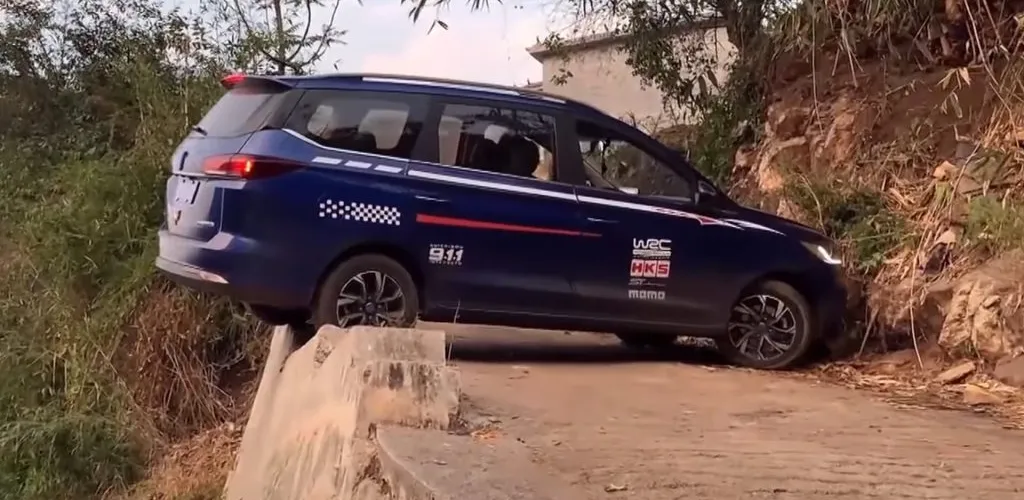
- U-turns prohibited where the road edge may give way.
- U-turns prohibited on bridges due to limited space and safety.
- U-turns prohibited at intersections unless signage permits.
- U-turns prohibited on highways.
Introductory note
Romania’s road traffic legislation is very clear about U-turn maneuvers and the situations in which they are prohibited. Knowing these regulations is important not only for passing the driving test but also for your safety and that of other road users. In this article we will analyze in detail the rules governing U-turns and explain exactly when this maneuver is prohibited by law.
Question in the driving test
A U-turn is prohibited:
- A: on roads with heavy traffic
- B: when there is a risk that the edge of the road will give way, i.e. the road surface does not support the maneuver
- C: on bridges
Correct answers and explanations
Option B: When there is a risk that the road edge will give way
This answer is correct and is based on fundamental road safety principles. When we are on a portion of road where the pavement is not solid, the traffic regulations categorically prohibit performing a U-turn. The reasons are technically evident:
- Vehicle weight: During a U-turn, the car approaches the edge of the road, and if the surface lacks solidity, the ground may give way under the vehicle’s weight
- Weight distribution: When turning sharply, weight transfers to the outer side of the vehicle, increasing the load on the road edge
- Accident risk: A collapsing road can cause the vehicle to overturn or become stuck in a hazardous area
- Weather conditions: Rain, ice, or snow can further affect the solidity of the road edge
Option C: On bridges
This answer is also correct and fits into a broader rule in the road regulations. On bridges, turning around is prohibited because:
- Voluntary stopping is prohibited: On bridges, stopping the vehicle is restricted, and performing a U-turn requires stopping or significant deceleration
- Limited space: Bridges provide limited maneuvering space and reduced carriageway width
- Reduced visibility: On many bridges visibility is limited, making the maneuver dangerous
- Traffic flow: Bridges are often choke points where stopping or sudden deceleration creates danger
Option A: On roads with heavy traffic
This answer is incorrect. Although turning around on a road with heavy traffic can be dangerous and must be done with utmost care, the legislation does not explicitly prohibit this maneuver solely due to traffic volume. The driver must ensure the maneuver can be performed safely, obeying the rule to yield to all vehicles coming from the front or rear, but the act of turning around itself is not prohibited simply because the traffic is heavy.
Other situations in which a U-turn is prohibited
Besides the scenarios mentioned in the question, road regulations also provide other circumstances where a U-turn is prohibited:

At intersections
U-turns are prohibited at intersections, except where there is explicit signage permitting the maneuver. Intersections are complex traffic zones where vehicles come from multiple directions.
On highways and expressways
On these road categories, U-turns are strictly prohibited. The high speeds and special layouts of these roads make the maneuver extremely dangerous.
In tunnels
As with bridges, turning around in tunnels is prohibited for safety reasons and due to the limited space for maneuvering.
In places with reduced visibility
Where visibility is reduced due to the road configuration (curves, tight bends, road profile), turning around is prohibited or must be done with maximum caution.
How to perform a proper U-turn
When performing a U-turn in places where it is allowed, follow these rules:
- Ensure visibility: Check in all directions and use the rearview mirrors
- Signal your intent: Activate your indicators at least 50 meters before the maneuver
- Give priority: All vehicles moving in both directions have priority over you
- Execute quickly: Once you start the maneuver, perform it as smoothly and quickly as possible to avoid blocking traffic
- Respect markings: Do not cross a solid line and obey road signals
- Check again: Before accelerating after the maneuver, ensure the road is clear
Penalties for improper U-turns
Violating the rules regarding U-turns can lead to several penalties:
- Fine with 4 to 6 penalty points (depending on the severity of the offense)
- Possible suspension of the driving license in serious cases
- Involvement in traffic accidents due to non-compliance can also lead to criminal liability
Conclusion
Knowing the situations in which a U-turn is prohibited is not only a requirement for passing the driving exam but an essential road safety measure. Whether it concerns areas where road solidity is weak or bridges where stopping is prohibited, these regulations were created to protect the lives and physical well-being of all road users. Adhering to them shows you are a responsible driver who is aware of traffic hazards.
Before performing any U-turn maneuver, carefully evaluate road conditions, traffic, and road signs. If in doubt, it is always safer to continue along the road until you find a suitable and safe place to turn.