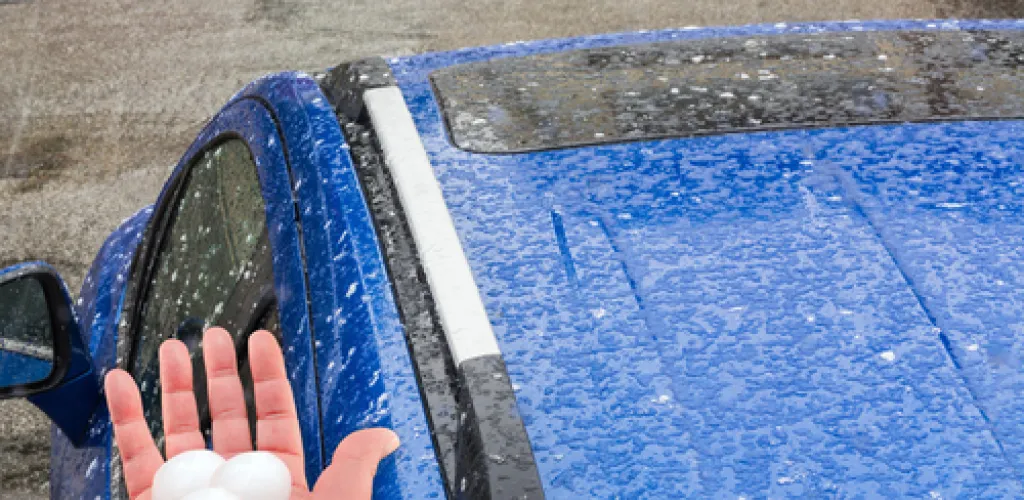
- Park in a garage or underground lot during hail risk for best protection.
- Use specialized hail tarps or elastic covers; secure them to prevent projectiles.
- Improvised options include thick blankets, old mattresses, cardboard layers, rubber mats, bubble wrap.
- Advanced options include airbags protection systems and multi-layer absorbent tarpaulins for hail.
Hail is one of the most dangerous weather phenomena for vehicle safety. In Romania, the frequency of these extreme events has grown considerably in recent years, causing substantial damage even from storms that are less intense, regardless of their short duration.
Beyond the direct impact of hailstones, hail is invariably accompanied by strong winds that can tear branches from trees or turn various objects into dangerous projectiles for the car body. Understanding effective protection methods and properly preparing the vehicle can make the difference between minor damage and substantial financial losses.
Foundational physical protection measures
Parking in sheltered spaces – the first line of defense
This method remains the most effective and safest form of protection against hail:
A personal garage provides complete protection against all extreme weather phenomena. If you have this option, always prioritize interior parking during periods with a high hail risk.
Underground parking represents the ideal alternative for apartment dwellers. It not only protects the car body from hail but also reduces overall wear to exterior components exposed to the elements.
Sheltering under bridges, passages or viaducts can serve as a temporary emergency solution when you are caught on the road by an unexpected storm.
Gas stations with extended canopies offer temporary protection and are easy to identify on frequently traveled routes.

Critical note: Absolutely avoid sheltering under old trees or trees with large canopies, as the strong wind associated with hail can tear off massive branches that become devastating projectiles for the vehicle.
Covering the vehicle with specialized materials
Tarpaulins and professional covers:
- Investing in a high‑quality auto tarp designed specifically for hail protection can save thousands of lei in repairs
- Elastic car covers with an absorbent layer install quickly and distribute impact evenly
- Proper securing is essential - avoid using stones, bricks or other heavy objects that can become projectiles in strong winds
Effective improvised alternatives:
- Thick wool blankets or layered synthetic blankets
- Old mattresses or thick packing materials
- Multiple layers of corrugated cardboard covered with a waterproof film
- Industrial rubber mats, at least 10 mm thick
- Air bubble wrap – surprisingly effective due to its shock absorption capacity
Modern advanced protection systems
Airbag protection systems: This innovative technology uses inflatable airbags with pressure sensors that automatically activate upon hail detection, creating a fully protective barrier around the vehicle.
Multi‑layer absorbent tarpaulins: They contain specialized foam memory layers and composite materials that absorb and disperse hail impact energy across different sizes.
Advanced technical preparation of the vehicle
Optimizing the electrical system
Auto battery maintenance: A battery in optimal condition becomes vital in extreme situations:
- Test resting voltage (minimum 12.4 V with the engine off, ideally 12.6–12.8 V)
- Check electrolyte density with a specialized hydrometer
- Inspect terminals for corrosion and treat with anti-corrosion spray
- Proactively replace the battery after 4–5 years of use or at the first signs of reduced capacity
- Keep professional jump cables (minimum 400 A) in the trunk
Charging system check:
- Test the alternator at different engine speeds (14.2–14.8 V at 2000 rpm)
- Check the tension of the alternator belt
- Verify the operation of the voltage regulator
Optimizing the visibility system
Professional windshield wiper maintenance: The wiping system can make the critical difference between safety and accident during a storm:
- Inspect blades for microcracks, deformation or uneven wear
- Test all operating modes (low, high, intermittent, adjustable pauses)
- Replace blades proactively every 6–12 months or at the first signs of wear
- Check the windshield washer fluid level and concentration (minimum -15°C freezing protection)
- Clean the windshield with specialized solutions to remove oil film
- Check the operation of wiper motors and the washing system
Lighting system optimization:
- Check and adjust headlight aim for maximum visibility in extreme weather conditions
- Test all signaling and hazard lights
- Clean reflectors and lenses for optimal efficiency
Keeping the tires rolling safely
Tire optimization:
- Check pressure according to manufacturer specifications (0.2–0.3 bar higher in extreme conditions)
- Inspect tread depth for uniform wear (minimum 3 mm depth for optimal safety)
- Check sidewalls for cracks, bulges or deformation
- Check balancing and alignment for maximum stability on wet roads
- High‑quality all-season tires offer the best compromise for variable conditions
Preventive repairs and corrective maintenance
The importance of preventive repairs
Ignoring minor damages can lead to serious consequences:
- Hail amplifies existing problems exponentially
- Exposed metal corrodes faster in wet environments
- Insurance can invoke owner negligence to deny claims
- Repair costs rise progressively with delayed intervention
- Damaged paint allows moisture ingress and development of structural rust
Evaluation and remediation procedure:
- Inspect the body weekly for dents, scratches or early corrosion with macro and panoramic photographs
- Treat scratches that penetrate to metal immediately
- Apply primer and touch‑up paint according to original specifications
- Check door, hood and trunk seals for leaks
Optimal financial protection through specialized insurance
CASCO insurance – essential investment
Although it may represent a substantial expense, complete CASCO insurance offers:
Comprehensive protection against natural phenomena:
- Coverage for hail, floods, storms, and lightning
- Protection against falling objects (trees, posts, structures)
- Coverage for damage caused by wildlife
Operational benefits:
- Repairs guaranteed at authorized service centers with genuine parts
- Replacement vehicle during the repair period
- 24/7 roadside assistance in case of breakdown or accident
- Protection against theft, attempted theft and vandalism
Analyzing and optimizing the existing policy
Critical elements to check:
- Full catalog of covered natural phenomena
- Deductible amount and type (flat, percentage or mixed)
- Maximum payout limits per event and per year
- Explicit exclusions in the insurance contract
- Detailed claims reporting and documentation procedure
- Network of authorized service centers and processing time
Weather monitoring and strategic preparation
Monitoring and alert system
Advanced weather tracking technology:
- Install professional weather apps with Doppler radar and personalized push alerts
- Configure ANM alerts for your area
- Use real‑time online weather radars to track storm systems
- Plan road routes to avoid hail‑prone areas
- Monitor medium‑term climate trends for strategic planning
Full emergency kit for the hail season
Essential safety equipment:
- Professional LED flashlight with lithium batteries and extended runtime
- Fully charged mobile phone and high‑capacity power bank
- Potable water reserve (minimum 2 liters) and non‑perishable energy foods
- Fully stocked first‑aid kit with basic medicines
- Emergency thermal blankets and spare clothing
- Professional jump leads and basic tools
- Compact emergency tarp and rapid mounting system
- Reflective triangles and high‑visibility vests
Crisis behavior protocols
On‑road emergency management
Highway safety procedure:
- Avoid stopping on the emergency lane – seek the nearest available exit
- Quickly identify solid shelter – stations with extended canopies, shopping centers, underground parking
- Reduce speed gradually and maintain double the usual following distance
- Activate hazard and position lights for maximum visibility
- Stay in the vehicle with seat belts fastened until the phenomenon ceases
- Communicate your position to family and emergency services if the situation worsens
Domestic crisis management protocol
Action protocol for private property:
- Relocate the vehicle urgently to the safest space available (garage, carport, temporary shelter)
- Implement emergency protection using any readily available materials
- Secure movable items in the yard that could become projectiles (furniture, tools, pots)
- Document in real time all storm phases to support insurance claims
- Monitor vital home systems (electricity, water, gas) for safety
Post‑hail assessment and claims management
Systematic technical inspection
Comprehensive evaluation protocol:
- Bodywork: document all dents, deformations and scratches with macro and panoramic photographs
- Glazing system: check all glass for cracks, even microscopic ones that could evolve
- Lighting systems: test all headlights, taillights and indicators
- Exterior components: inspect mirrors, antennas, trim and aerodynamic elements
- Electronic systems: check ECUs, sensors and driver assistance systems
- Engine compartment: inspect for damage to the hood, radiators or exposed components
Professional documentation for compensation
Optimal documentation procedure:
- Take wide-angle and close-up photos from at least 8 different angles
- Note the date, exact time and GPS coordinates of the event
- Preserve all relevant documents (receipts, invoices, technical reports)
- Contact the insurer within the contractual term (usually 24–48 hours)
- Request a technical assessment from an independent authorized expert
Cost‑benefit analysis of protection investments
Affordable solutions (50–200 lei)
- Standard quality auto tarp with included fasteners
- Professional battery and electrical system check
- Proactive replacement of wipers with superior models
- Basic customized vehicle emergency kit
Mid‑level investments (200–1000 lei)
- Premium auto tarp with UV protection and multi‑layer material
- Specialized car cover with shock‑absorbing insert
- Select CASCO policy with natural phenomena coverage
- Complete meteorological monitoring system
- Comprehensive seasonal technical maintenance
Premium protection systems (over 1000 lei)
- Automatic deployment protection system with integrated sensors
- Full CASCO insurance with minimal deductible and premium service
- Construction of a modular carport or permanent shelter
- Annual professional preventive maintenance program
- Integrated weather monitoring and alert system
Long‑term strategic planning
Adapting to climate change
As extreme weather events intensify, investing in vehicle protection becomes a long‑term economic necessity. Prevention costs are consistently lower than reactive repair costs, and a well‑planned strategy can preserve the vehicle’s value and ensure occupant safety.
Final recommendations to maximize protection
Success in protecting your vehicle from hail depends on a smart combination of physical protection measures, proper technical preparation, and optimal financial coverage. Implementing a comprehensive protection plan tailored to local conditions and budget is the wisest investment to keep the vehicle in optimal condition and avoid unexpected repair costs.
Remember that every minute spent on preventive preparation can save hours of costly remediation and can make the critical difference between recoverable superficial damage and devastating financial losses.