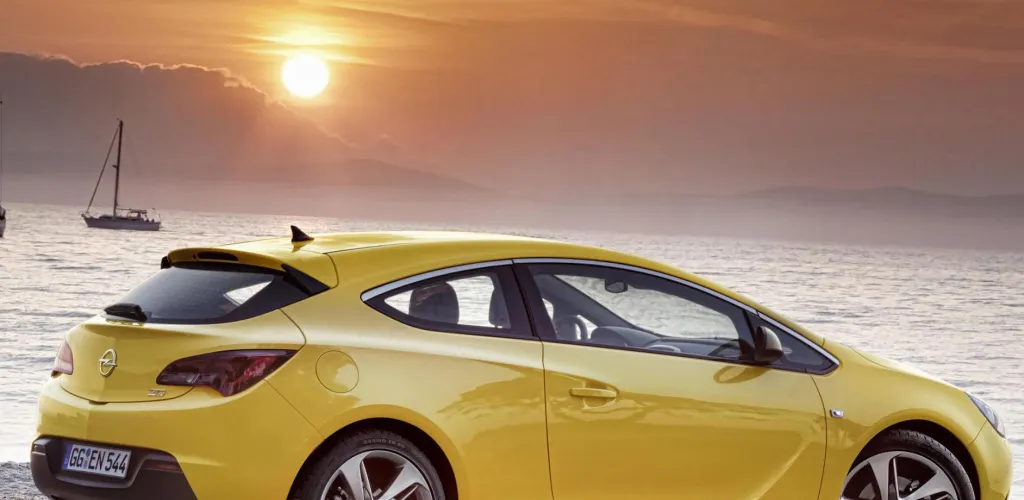
- Astra J introduced Insignia-inspired styling and higher standard equipment.
- Diesel and petrol engines offered, including 1.7 CDTI variants and turbo options.
- Common issues include M32 gearbox bearings, DPF clogging, EGR buildup, handbrake, and suspension wear.
- Wagon version Sports Tourer debuted at Paris Motor Show 2010.
Opel Astra J is the fourth generation of the German compact model, launched in 2009 on GM’s Delta II platform. This generation marked a significant evolution in design and technology for Opel, bringing stylistic cues from the Insignia and modern equipment for the European C-segment.
The car was marketed under various names worldwide: Vauxhall Astra in the United Kingdom, Buick Excelle XT in China, and Holden Astra in Australia and New Zealand (with interruptions). After its debut at the 2009 Frankfurt Motor Show, production began at the Vauxhall Ellesmere Port plant in September 2009.
Overview of the Astra J
The Astra J stood out with its modern styling borrowed from the Insignia and the higher standard equipment offered as standard. Initially named ‘Astra I’, the name was changed to ‘Astra J’ to avoid confusion with the numeral 1. The model finished third in the European Car of the Year award in 2010.
The wagon version, called ‘Sports Tourer’, debuted at the Paris Motor Show in 2010, replacing the traditional name ‘Caravan’ used previously by Opel for wagon variants.
Owner experiences
Reasons for choosing a 1.7 CDTI (125 HP):
Pop Ionuț: “Opel Astra, a model with tradition for the Opel brand. It is recognized over the years as an affordable car both to purchase and to maintain. It was a factor when I decided to buy it.”
Gabriel Alexandru: “Power, features, newer, German-made; I had heard good opinions, I liked how it looks and as a first car I was excited—big mistake.”

For the 1.7 CDTI (110 HP):
Mureșan Marius: “Initially I only knew that I liked the look, especially the interior. After a test drive I didn’t hesitate.”
Ghergu Mihai: “I chose this car for the up-to-date equipment, the rather nice look of the car, being a hatchback and the year of manufacture good.”
Common Astra J problems
M32 6-speed manual transmission
The 6-speed M32 manual gearbox presents recurring problems with bearings, especially on diesel engines. This is a known European-wide issue for this gearbox.
Diesel Particulate Filter (DPF)
Diesel engines suffer from DPF clogging, especially with heavy urban driving. Incomplete regeneration leads to clogging and the need for replacement.
EGR Valve
The EGR system presents carbon particle clogging, affecting engine operation and emissions.
Handbrake
The handbrake mechanism can show adjustment issues and cable wear.
Suspensions
Shock absorbers and suspension components may show premature wear, especially on high-mileage cars.
Available engine range
Gasoline engines
- 1.4 VVT: 100 CP, 130 Nm – base naturally aspirated engine
- 1.4 Turbo VVT: 138 CP, 200 Nm – compact turbo variant
- 1.6 VVT: 113 CP, 135 Nm – mid-range naturally aspirated
- 1.6 Turbo VVT: 178 CP, 230 Nm – balanced performance
- 1.6 Turbo SIDI: 197 CP, 280 Nm – direct injection
- 1.8 VVT: 138 CP, 175 Nm – larger naturally aspirated engine
- 2.0 Turbo: 276 CP, 400 Nm – OPC performance version
Diesel engines
- 1.3 CDTI ecoFLEX: 94 CP, 190 Nm – the most economical
- 1.6 CDTI ecoFLEX: 134 CP, 320 Nm – power/consumption balance
- 1.7 CDTI ecoFLEX: 128 CP, 300 Nm – popular diesel engine
- 2.0 CDTI: 163 CP, 350 Nm – generous power and torque
- 2.0 CDTI BiTurbo: 192 CP, 400 Nm – high-performance bi-turbo variant
Driving behavior and fuel economy
Driving experience
Pop Ionuț: “In the city, no problem at all. It adapts to all conditions. On long highway drives, flawless: very good value for money.”
Gabriel Alexandru: “Very good in my somewhat sportier style, it is comfortable and pleasant on the road. On long trips excellent, especially because it has 6 gears and cruise control.”
Melcescu Valentin: “In the city it’s fine; although it’s a long car, it’s quite manageable and offers good visibility. Perfect, the 6-speed gearbox is very good for long trips.”
Real-world fuel economy
For 1.7 CDTI (125 HP):
- Pop Ionuț: “8 L/100km in the city and 6 L/100km on the extra-urban roads.”
- Gabriel Alexandru: “6.6-6.7 L/100km in Bucharest, 5.4 L/100km mixed, 4.3-4.5 L/100km on a longer highway route.”
For 1.7 CDTI (110 HP):
- Ghergu Mihai: “With DPF and EGR disabled and Stage 1: 8.5 L/100km in the city and 6 L/100km outside. Normal to sporty driving.”
- Mureșan Marius: “6 L/100km with normal driving (neither economy nor sporty).”
For 2.0 CDTI (160 HP):
- Diaconu Dragoș: “About 7 L/100km, regardless of driving style, the consumption remains the same.”
Reliability and issues encountered
Experiences with 1.7 CDTI (125 HP)
Pop Ionuț: “I consider it reliable. I did have one major problem, but since the car was used, I found it normal and somewhat expected. The head gasket burned, but I fixed the issue without severely affecting the engine.”
Gabriel Alexandru: “M32 6-speed manual gearbox is a common problem for this engine; bearings wear. The fuel pump pressure regulator is also a common issue. I also changed consumables such as the clutch, dampers, radiator, radiator cooling fan, etc., but the major damages were the clutch and the gearbox.”
Experiences with 1.7 CDTI (110 HP)
Mureșan Marius: “I haven’t had any problems with it. I’d like to tell you more, but I have nothing to report; honestly I wouldn’t want problems.”
Melcescu Valentin: “Constant problems: fuel-pressure regulator, clogged particulate filter, burnt cooling fan, burnt servo pump, and all kinds of issues.”
Experiences with 2.0 CDTI (160 HP) Automatic
Luiceanu Mihai: “Two weeks after purchase I went to an Opel service to do the timing belt. I also replaced the oil pump O-ring and, during that service, checked the crankshaft and bearings. Verdict: bent crankshaft, worn bearings, worn crankshaft, head gasket degraded, intake gallery with issues.”
Used market prices
In the Romanian market, an Opel Astra J is available at the following indicative prices:
- Astra J 1.4, 2011, 150,000 km: approximately €5,500
- Astra J 1.7, 2012, 170,000 km: approximately €5,000
Prices vary depending on mechanical condition, service history, and available equipment.
Buying tips
Recommendations from owners
Pop Ionuț: “I advise testing it beforehand and researching common problems that can arise. Many people buy cars with issues and then blame the marque for reliability. In short, pay attention to the gearbox and its bearings. DPF if you drive urban.”
Soroiu Ionuț: “Do your homework before making a purchase; be very careful with the small details that always say a lot about how the car was used when the car is second-hand. In general you must be careful about all aspects: engine condition, exterior condition, etc.”
Diaconu Dragoș: “It is a very reliable car, quite powerful and comfortable. Be careful about accidents or hidden damages. If you find a bomb of a car at a ridiculously low price, you should think twice before buying.”
Essential checks when buying
- Test the M32 gearbox – check all gears work and absence of noises
- DPF condition – verify that regular regenerations have been performed
- EGR operation – check for clogging or operating issues
- Service history – review periodic maintenance records
- Full test drive – in city and on a fast road
Opel Astra J remains a viable option in the compact segment, provided you carefully select a well-maintained example and properly maintain components known to be problematic.
Photo source: pinterest.com