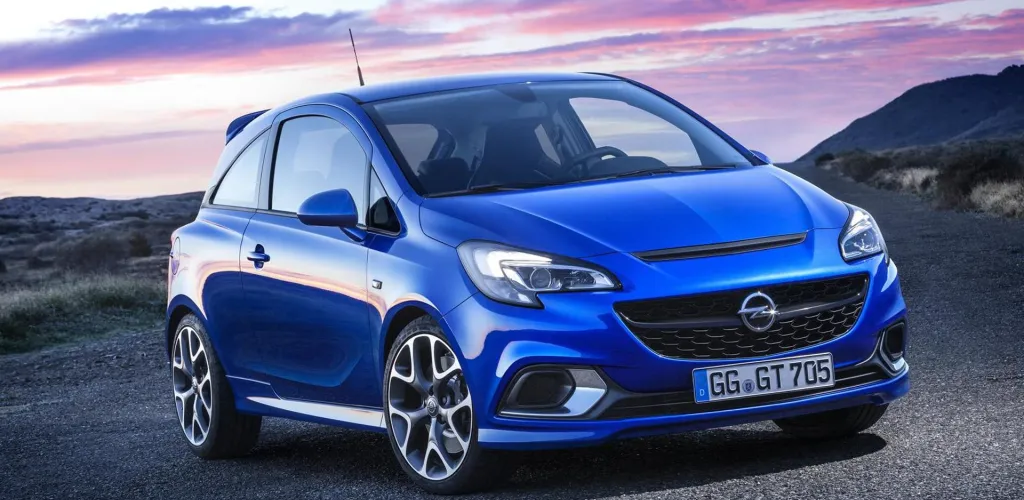
- Opel Corsa D (2006–2014) offered petrol and diesel engines, up to 189 hp OPC.
- UK buyers got Vauxhall badges; it finished second for European Car of the Year 2006.
- Enhanced SCCS platform improved build quality and design versus previous generation.
- 1.3 CDTI 75hp diesel update in 2007 cut CO2 to 119 g/km.
The Opel Corsa D represents the fourth generation of the popular supermini produced by the German automaker between 2006 and 2014. Developed on an enhanced version of the SCCS platform, co-developed by General Motors/Opel and Fiat, the Corsa D finished second in the European Car of the Year 2006 awards, surpassed only by the Ford S-Max.
Available in three- and five-door versions, the Corsa D was also sold under the Vauxhall badge in the United Kingdom. The range included both petrol and diesel engines, with power outputs from 59 hp to 192 hp for the sporty OPC/VXR version.
Model history and development
The Corsa D was officially launched in May 2006, marking a significant evolution over the previous generation. The design was completely refreshed, and build quality improved substantially. An interesting detail is that during development, a designer managed to hide a shark-shaped graphic on the glovebox hinge, following his son’s suggestion. This graphic remained on all production models and has become a tradition for other Opel models.
The 1.3 CDTI engine with 75 hp received a major update in mid-2007, reducing CO2 emissions to just 119 g/km, making it eligible for various European reduction schemes.
Available engines
The Opel Corsa D lineup included a variety of powertrains for different needs:
Gasoline engines:
- 1.0 I3 Z10XEP: 59 hp and 88 Nm – base engine for urban use
- 1.2 I4 Z12XEP: 79 hp and 110 Nm – optimal compromise between economy and performance
- 1.4 I4 Z14XEP: 89 hp and 125 Nm – the most balanced engine in the range
- 1.6T I4 Z16LEL: 148 hp and 210 Nm – turbo version for higher performance
- 1.6T OPC/VXR I4 Z16LER: 189 hp and 230 Nm – maximum performance version
Diesel engines:
- 1.3 CDTI I4 Z13DTJ: 74 hp and 170 Nm – ideal for fuel economy
- 1.3 CDTI I4 Z13DTH: 89 hp and 200 Nm – more torque for relaxed driving
- 1.7 CDTI I4 Z17DTR: 123 hp and 280 Nm – the strongest diesel in the range
Owner opinions – reasons for purchase
Owners of the Corsa D have varied motivations for choosing this model. For the sporty OPC version, the distinctive look plays a significant role:
Zsolt Nagy, OPC owner, explains: “I liked the sporty appearance of the car and that you don’t see it every street corner, but probably due to reliability they are so rare.”

Clinci Alexandru chose the OPC after comparing it with other sports models: “I had a Corsa C with a 1.2 and wanted a more powerful car. I was looking at a Mitsubishi Lancer 1.8/140hp. Then one day a Corsa OPC overtook me. I started researching to compare what I wanted with what I had seen. The power difference was substantial in favor of the Opel, and it was cheaper than the Lancer.”
For the economical versions, efficiency is the priority:
Morar Camelia, owner of a 1.3 CDTI: “At that moment it was what I could afford financially and what I needed, because I work very much in the city.”
Common problems of the Opel Corsa D
From owners’ experience and technical analysis, the most frequent issues appear in:
Gearbox (manual and automatic)
The six-speed manual gearbox can develop noises caused by worn bearings. The issue can be anticipated by regularly changing the gearbox oil. The automatic gearbox also presents reliability problems over the long term.
Suspension system
Suspensions require replacement at 2-3 year intervals, representing one of the more common problems. Fortunately, repair costs are not excessive, and aftermarket replacement parts seem to last longer than the original ones.
Camshaft
The engines can develop camshaft problems, especially at high mileage and with neglected maintenance.
Electronic control unit (ECU)
Problems with the ECU can arise, affecting optimal engine operation and auxiliary systems.
Driving experience and fuel consumption
In the city
Most owners appreciate the urban handling of the Corsa D. Cosmin Ripan (1.3 CDTI 90 hp) confirms: “In the city, very good. I’m not disappointed. For short distances it’s perfect.”
Morar Camelia (1.3 CDTI 75 hp) adds: “In the city, the car is very easy and comfortable to drive. It’s perfect for city use.”
On long trips
Over long distances, experience varies by engine and suspension setup. Cosmin Ripan notes: “On long trips the seats aren’t very comfortable. The lack of a middle armrest is noticeable.”
For the OPC version, Zsolt Nagy observes: “On long journeys nothing can overtake you; if the road is good you won’t have problems, but being low and with 225/35 R18 tires you must choose the route carefully.”
Real fuel consumption
Fuel consumption varies significantly depending on the engine and driving style:
1.3 CDTI 90 hp (Cosmin Ripan):
- City (heavy traffic): up to 8.8 L/100 km
- Highway (calm driving): 4.3 L/100 km
1.6 OPC 192 hp (Zsolt Nagy):
- City (Brașov): 15-17 L/100 km
- Outside city: 8-9 L/100 km
1.3 CDTI 75 hp (Morar Camelia):
- General consumption: “very low compared with other cars with the same engine”
Reliability – real experiences
Diesel versions (1.3 CDTI)
Cosmin Ripan (90 hp) offers a realistic perspective: “I tend to believe any car is reliable if you take care of it and maintain it properly. I’ve had this Opel since 2013, and despite the accidents with the previous owner, it still runs today without major issues. But I must note that the parts investment has been substantial. Car cost: 3700 euros. Spent only on parts, without oil and filters, around 3400 euros so far!”
Morar Camelia (75 hp) had a quieter experience: “Not many major problems. There were some issues with the brake discs which sounded very loud, but overall the car behaved normally. I invested about 500 lei for the disc replacement.”
OPC version
Clinci Alexandru presents the reality of a sporty car: “In two years of ownership I’ve had no major problems. It’s fairly reliable for how much it’s been used. Problems appeared when I bought it. I bought it from a dealer-seller… The AC compressor didn’t work, a Freon line was cracked and poorly soldered, wiring near the dashboard melted, and the climate fan acted up.”
Zsolt Nagy offers a more critical view: “Not reliable at all; it spends more time in the workshop than being driven. The climate compressor is a factory defect, as is the hood, which rusts without a drain. The M32 gearbox is a very troublesome unit, with major clutch and gearbox interventions required monthly.”
Used market prices
In the Romanian market, prices for Opel Corsa D vary by year, engine, and mileage:
- Opel Corsa 1.4, 2014, 63,000 km: approximately €4,500
- Opel Corsa 1.3 CDTI, 2009, 274,000 km: approximately €2,990
OPC variants are rarer and command premium prices, reflecting the sporty character and relative rarity.
Buying tips
Essential technical checks
Cosmin Ripan recommends: “Check the model on forums to see what problems occur, what maintenance costs are, etc. Inspect carefully the sills and the sealant at the joints. If possible, have the geometry checked to ensure the car hasn’t suffered a serious accident. Move the radiator to verify whether the mounting has been damaged or broken.”
For the OPC version
Clinci Alexandru cautions: “Watch out if it has semi-automatic climate control and it doesn’t work. If so, don’t buy, or negotiate—the seller price should drop by at least €1,000. In my case the repair cost €1,350. Check the joints, as a sports car tends to fail sooner.”
General considerations
Morar Camelia suggests: “If you want such a car, especially for city use, it’s perfect. Pay attention to features, engine, fuel, year of manufacture, and mileage. If you buy from a dealership, staff will likely advise you.”