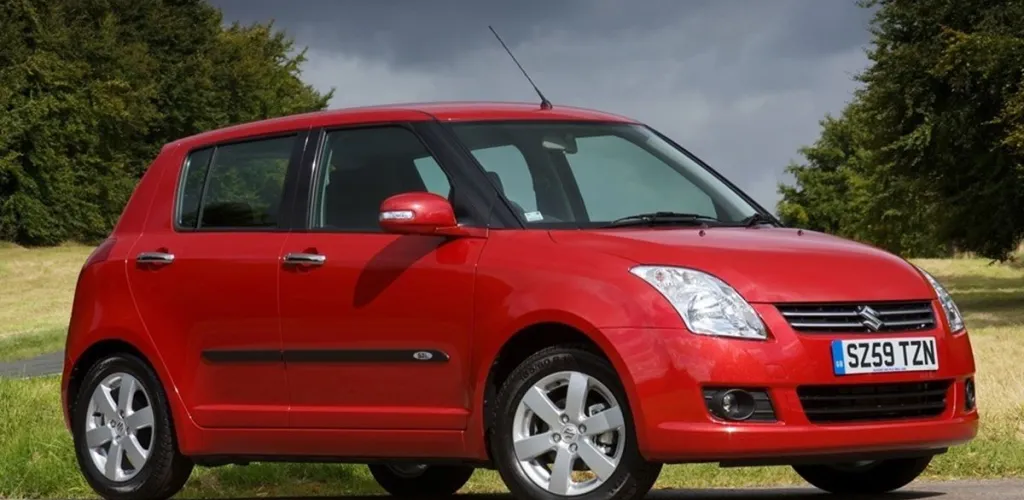
- Second-gen Swift (2005-2010) became independent, sold worldwide under various names.
- Low maintenance costs; parts cheaper than Dacia and Alfa Romeo.
- Common issues include clutch slipping, gearbox trouble, power-windows faults, and handbrake wear.
- On-road, quick steering with adequate grip; FWD vs AWD differences are minor.
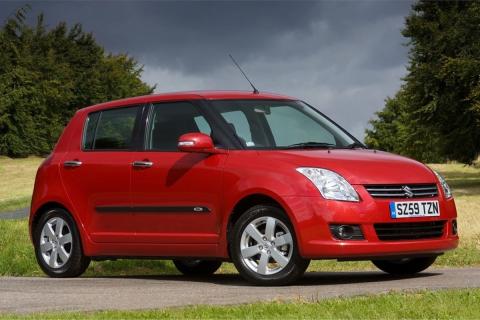
The second-generation Suzuki Swift represents a popular choice in the subcompact segment, classified in the B-segment (supermini) on the European market. This generation, launched in 2005, marked a significant evolution over the first Swift, becoming an independent model after the Swift badge had previously been used on the Suzuki Cultus since 1983.
The model was sold successfully worldwide under various names — Suzuki Swift, Chevrolet Sprint, Geo Metro, Pontiac Firefly, or Holden Barina — and used the renowned Suzuki G family of engines. The European version enjoyed real success, exceeding sales expectations in most countries.
Experience of Suzuki Swift II owners
Based on owner reviews on the DailyDriven platform, we can outline a realistic picture of this car. Ioan, one of the owners who left a review on our site, appreciates the model for practicality: “I chose this model because it is all I need right now when it’s just me with my girlfriend. For 2-3 people the car is far more than roomy enough and the automatic gearbox is all you need to ensure comfort in day-to-day traffic.”
Maintenance costs and parts
A major advantage of the Swift is its low maintenance cost. As Ioan notes: “Parts are very competitively priced and, to my delight, are even cheaper than at our domestic brand (Dacia). Maintenance is quite affordable considering I moved from an Alfa Romeo 156, which had very expensive consumables and servicing. I consider the prices to be more than reasonable.”
Common problems Suzuki Swift II
From owner feedback and reliability statistics, the following frequent issues have been identified:
- Power windows – faults in the window motors and mechanisms
- Clutch slipping – the most common problem, worsened in cold weather
- [gearbox] – problems when shifting gears
- Handbrake – adjustments and premature wear
- Suspension – especially the rear torsion beam
Clutch – the main issue
The most widespread problem on the Swift II is clutch slipping, which manifests especially in cold weather. This issue can indicate deeper wear within the clutch kit. Symptoms include:
- Difficulty shifting into first gear
- Slipping during acceleration
- Distinct smell of a burnt clutch
- Clutch pedal with altered travel
If the problem is severe, the vehicle will require a full clutch replacement, a costly repair that should be avoided when purchasing a used car.
Problems with the gearbox
The manual gearbox can exhibit issues when engaging gears, manifested by:

- Difficulty engaging certain gears
- Unusual noises during operation
- Gear ‘jumps’
The cost of a major gearbox repair can be substantial, so a thorough pre-purchase inspection is essential.
On-road behavior and comfort
The Swift II offers quick, well-calibrated steering, with sufficient grip for agile urban maneuvers. Differences between front-wheel-drive and all-wheel-drive versions are minor in everyday use.
However, comfort is not the model’s strong suit. On roads with bumps, the suspension transmits many road irregularities into the cabin. At higher speeds, handling improves, but highway stability remains below that of some rivals in the same class.
Available powertrains
The global launch in 2005, supported by a marketing campaign featuring footballer Cristiano Ronaldo, was a real success. In Japan, sales figures were twice as high as estimated.
Gasoline engines
The Swift was available with the following options:
- 1.2-liter engine – 91 PS (67 kW), available only with CVT transmission and front-wheel drive [CVT]
- 1.3-liter engine – 91 PS (67 kW), with options of manual, automatic, or all-wheel drive
- 1.5-liter engine – 102-110 PS (75-81 kW), also available with all-wheel drive
In Europe, the model was offered with 1.3- and 1.5-liter gasoline engines, plus a Fiat-supplied 1.3-liter DDiS diesel engine. Body configurations included 3- or 5-door hatchbacks.
Swift Sport (RS416; 2005-2012)
The Sport version, launched in October 2005 in Japan (Swift RS) and in September 2006 in Europe (Swift Sport), represents the range’s pinnacle. Technical features include:
- Enhanced M16A engine: 1.6 liters, 4 cylinders DOHC VVT
- Power: 125 HP (92 kW) and torque of 148 Nm
- Compression ratio: 11.1:1
- Increased length: 3,765 mm (+70 mm compared to the standard Swift)
Special equipment includes:
- Sport-tuned suspension
- Disc brakes on 16-17 inch wheels
- Red sport seats (Recaro option)
- Twin exhaust outlets
- Electronic stability control (ESC)
- 5-speed manual transmission

Reliability and specific issues
The 1.3- and 1.5-liter gasoline engines use a chain-driven timing system, derived from Toyota Yaris technology. This design provides greater durability than belt-driven timing.
Frequently reported issues
Dashboard noises: 2005-2006 models showed issues with noises from behind the dashboard, not affecting safety but reducing cabin comfort.
Premature rear-tire wear: A more serious issue related to improper rear suspension welding. Symptoms include:
- Uneven rear tire wear
- Instability in corners
- Suspension noises
The fix involves replacing the rear torsion beam, a costly repair that should be checked on any used Swift.
Used-market prices
Based on the Romanian used-car market analysis, prices for the Suzuki Swift II (2005-2010) fall within the following ranges:
- General range: 2,000 – 3,500 EUR
- Concrete example: Swift 2007, 1.3 petrol, 4x4, 90 HP – between 2,700 and 3,390 EUR
Factors that influence price:
- Mileage
- Overall mechanical condition
- Maintenance history
- Presence of all-wheel drive
- Year of manufacture
Conclusion
The second generation Suzuki Swift remains a viable option for those seeking an economical and reliable urban car. Despite the identified issues — especially those related to the clutch and gearbox — the model offers a competitive price-to-value ratio, low maintenance costs, and a well-developed service network.
Before purchase, a thorough technical inspection is essential, with emphasis on the clutch system, gearbox, and rear suspension. With proper maintenance and periodic checks, the Swift II can deliver many years of faithful service in urban traffic.