- Change cooling liquid every 4–5 years or 80,000 km; check level and pH.
- Optimize AC: test pressures, replace cabin filter, clean condenser; run weekly to lubricate seals.
- Replace winter tires with summer tires; heat speeds wear and reduces braking.
Although winter is often considered the most demanding season for vehicles, summer brings equally serious challenges to your car. Extreme temperatures, intense UV radiation, and harsh driving conditions can dramatically affect the performance and longevity of your vehicle. Excessive heat can cause engine overheating, paint damage, degradation of plastic components, and accelerated tire wear.
A well-structured maintenance plan can prevent costly problems and ensure the vehicle runs optimally throughout the hot season. Below you’ll find a comprehensive technical guide with professional recommendations to ensure that both you and your vehicle have a safe and trouble-free summer.
Essential technical checks for summer prep
Cooling system: top priority
The cooling system is the most critical component in the hot months. Many modern vehicles are marketed with [coolant] in a way that can be misleading. The technical reality is more complex.
Modern antifreeze breaks down over time through natural chemical processes:
- It loses anti-corrosion and lubricating properties
- It becomes more acidic, attacking metal components
- It raises the freezing point and reduces heat transfer efficiency
- It accumulates impurities that can clog radiators and thermostats
Some major manufacturers (BMW, Mercedes-Benz) have reconsidered the concept of a “life-long” fluid, now recommending change at 100,000 km or 10 years.
Verification protocol:
- Check the level in the expansion tank with the engine cold
- Inspect color and consistency (should not be cloudy or rusty)
- Test concentration with a refractometer (50:50 antifreeze:water)
- Check pH (should be between 7.5 and 11)
Technical recommendation: Change the cooling liquid every 4-5 years or 80,000 km for optimal performance.

Air conditioning optimization
The air conditioning system becomes vital on hot days, but many vehicles suffer from efficiency problems due to neglected maintenance.
Essential technical checks:
- System pressure testing: Low side should be between 1.4-2.1 bar, high side between 15-25 bar (depends on ambient temperature)
- Replacing the cabin filter: A clogged filter reduces efficiency by up to 40% and overburdens the compressor
- Cleaning the condenser: A dirty condenser can reduce heat exchange efficiency by 30%
- System check: Detect refrigerant leaks of R134a or R1234yf
Technical tip: Run the AC weekly even in winter to keep the system lubricated and to prevent gasket drying.
Transition from winter tires to summer tires
Switching to summer tires is not only about performance but also safety. Winter tires are formulated with compounds that remain flexible at sub-7°C temperatures.

Why not to use them in summer:
- The soft compound overheats, accelerating wear
- Stopping distance increases by 10-20% on hot asphalt
- Handling degrades due to excessive tread deformation
- Fuel consumption increases by 3-5%
Tire verification protocol:
- Pressure: Check weekly with a gauge on cold tires. Pressure rises by ~0.1 bar for every 10°C temperature increase
- Tread depth: Legal minimum 1.6 mm, recommended at least 3 mm for optimal wet grip
- Even wear: Inspect for signs of misalignment or suspension problems
- Tire age: Replace tires older than 6 years regardless of wear
Alarm statistics: Studies show that 65% of vehicles run with incorrect tire pressure, causing:
- 4-10% higher fuel consumption
- 25% premature wear
- Responsibility for 5% of serious accidents
Checking the lubrication system
At high temperatures, engine oil becomes critical for protecting internal components. Excessive heat can cause:
- Oil thinning (loss of viscosity)
- Accelerated oxidation and deposit formation
- Degradation of anti-wear and detergents additives
Key checks:
- Oil level: Check with the engine off for at least 5 minutes
- Oil quality: Should not be black, metallic, or contain particulates
- Correct viscosity: Use the manufacturer-recommended grade (e.g., 5W-30, 0W-20)
- Change interval: Follow the recommended intervals, but consider more frequent changes in extreme conditions
Strategies to protect against extreme heat
Interior protection with specialized equipment
The interior of a vehicle can reach temperatures above 70°C on hot days, damaging materials and making the cabin unbearable.
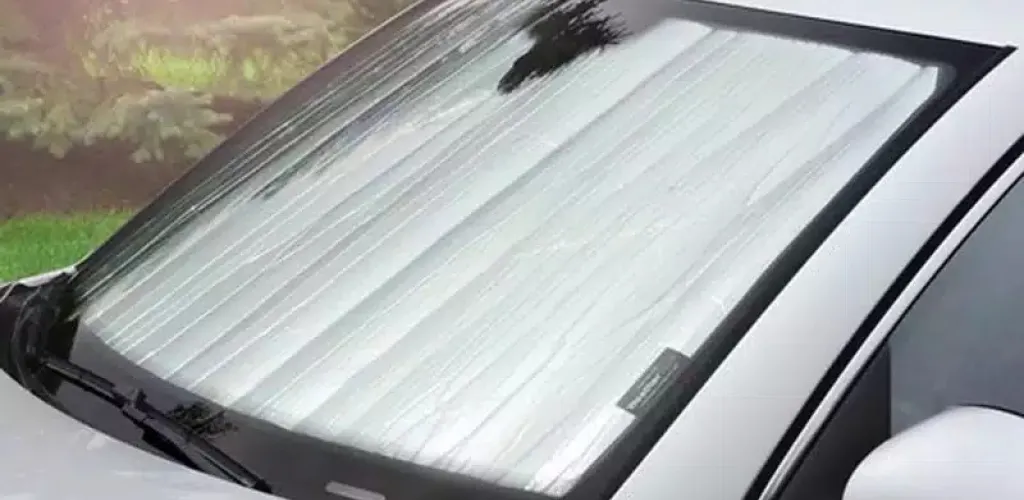
Reflective sunshade: The most effective passive solution
- Reduces interior temperature by 15-20°C
- Protects the dashboard and plastic components from UV cracking
- Prevents upholstery fading
- The investment pays back through reduced AC usage
Window films: Permanent solution
- Blocks up to 99% of UV rays
- Reduces heat by 35-50%
- Improves privacy and security
- Note: ensure compliance with transparency laws (front windows should have at least 70% visibility)
Controlled natural ventilation
Leaving the windows slightly ajar (2-3 cm) can reduce the temperature by 5-10°C via natural convection. This method:
- Removes accumulated hot air
- Reduces cabin pressure
- Prevents condensation
- Warning: Do this only in safe areas to prevent intrusions
Paint protection: waxing and specialized maintenance
Vehicle paint suffers major summer assaults:
- UV radiation degrades pigments
- Heat accelerates oxidation
- Dust particles bake onto the surface
- Tree resin can cause permanent stains
Protection protocol:
- Professional wash: Every 2 weeks with neutral pH products
- Decontamination: Use a clay bar to remove contaminants
- UV wax protection: Every 3 months with quality products
- Ceramic coating: Premium solution with 2-5 years durability
Technical tip: Wash the car early in the morning or in the evening to avoid rapid drying and water spots.
Advanced windshield treatments
Applying a professional hydrophobic treatment to the windshield provides multiple benefits:
- 40% better visibility in rain
- Self-cleaning at speeds above 50 km/h
- Reduces wiper usage
- Protection against insect splatter and resin
Recommended products: Rain-X, Gtechniq G1, Chemical Guys Hydroslick
Real-time monitoring of critical parameters
Early overheating detection
Many modern vehicles have replaced the temperature gauge with a simple warning light, which jeopardizes preventive maintenance.
Early signs of overheating:
- Radiator fans running constantly
- Sweet odor (coolant) in the cabin
- White steam at the exhaust
- Reduced engine performance
- AC blows warm air
Emergency protocol:
- Stop the engine immediately
- Do not open the radiator cap until it has cooled (risk of severe burns)
- Check the coolant level in the expansion tank
- Look for visible leaks
- Contact a specialized service
Monitoring auxiliary systems
Wipers: Check operation and blade condition
- Replace at the first signs of wear
- Regularly clean the windshield to prevent premature wear
- Check the windshield washer fluid level (summer product recommended)
Electrical system: The battery suffers in heat
- Check terminals for corrosion
- Test voltage under load (minimum 12.4V with the engine off)
- Clean terminals with baking soda
Major mistakes to avoid in summer
Incorrect use of the air conditioning system
Although it may seem counterintuitive, heavy use of the AC in extreme conditions (above 45°C) can be problematic:
Technical risks:
- Engine overloading (AC can consume up to 10% of power)
- Overheating of the cooling system
- Dramatic increases in fuel consumption (up to 25%)
- Premature wear of the compressor
Optimal strategy:
- Pre-cool the vehicle in the shade with the AC on recirculation
- Alternate between AC and natural ventilation
- Use the ECO function if available
- Park in the shade whenever possible
Risks of season-inappropriate tires
Using winter tires in summer is one of the most dangerous mistakes:
Technical consequences:
- Tread temperature can exceed 80°C
- Exponential wear (a tire can be ruined in 1,000 km)
- Risk of blowout at high speeds
- Poor grip on dry and wet asphalt
- Stopping distance can increase by up to 30%
Dangers of a nearly empty fuel tank
The fuel pump in the tank cools itself by immersion in fuel. When the level is low:
- The pump overheats and its lifespan shortens
- Particles from the tank bottom are drawn in
- The fuel injection system can be contaminated
- Cost of a new pump: 800-2000 RON plus labor
Golden rule: Do not let the tank drop below 1/4 of capacity.
Health and safety risks
Food in the vehicle:
- Bacteria multiply exponentially at high temperatures
- Carbonated drinks can explode (pressure rises with temperature)
- Chocolate and melted products create persistent mess
- Odors linger in upholstery for months
Plastic bottles:
- Bisphenol A (BPA) and phthalates migrate into liquids at high temperatures
- These substances are endocrine disruptors
- Long-term effects: hormonal issues, increased cancer risk
- Solution: Stainless steel or borosilicate glass bottles
Fire risk from careless parking
The exhaust system can reach temperatures above 500°C. Flammable materials (dry grass, leaves, paper) can ignite by contact or proximity.
High-risk zones:
- Parking on grass in dry periods
- Near dry vegetation
- On snow/ice contaminated with fuel
- Near plastic or rubber materials
Summer maintenance plan
Monthly
- Check tire pressures
- Check fluid levels
- Visually inspect for leaks
- Test the AC operation
Biweekly
- Wash and wax the vehicle
- Check tire tread depth
- Clean air filters
Before long trips
- Full service inspection
- Check cooling system
- Check tires and alignment
- Refill AC if necessary
Proper summer vehicle care requires a technically informed approach and consistent preventive measures. The investment in proper maintenance translates into substantial long-term savings, increased safety, and preserved vehicle value. By following these technical protocols, you’ll protect your investment and enjoy a safe and comfortable driving experience throughout the hot season.