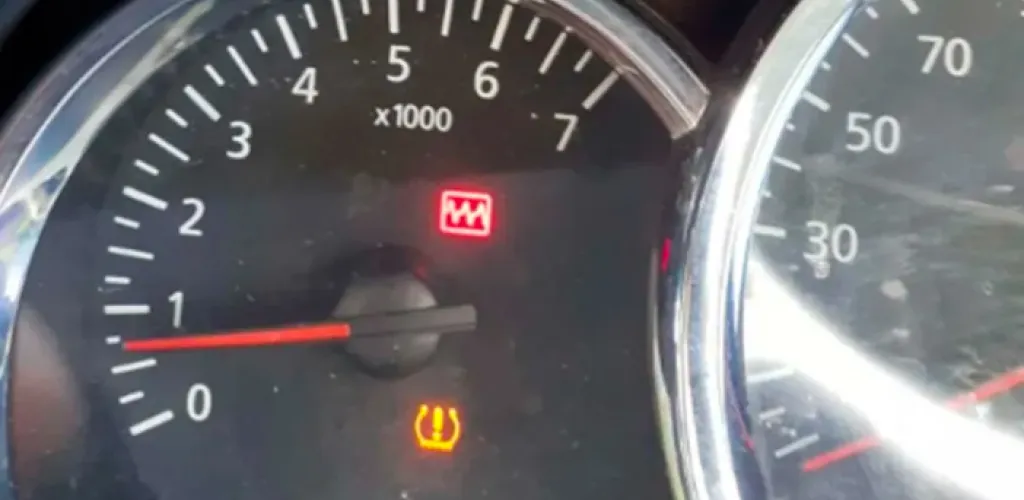
- The zig-zag indicator is Dacia’s Check Engine light for injection and engine faults
- It covers fuel-injection, engine components, emissions, ECU, not ESP/ASR
- Red means stop engine and urgently service; orange means urgent inspection but drive
- Common causes: rail sensor, injectors, HP pump, fuel filter, turbo, EGR, sensors, DPF, catalytic converter
If you own a Dacia Logan, Sandero, Duster or other models in the Dacia/Renault range, you’ve probably noticed on the dash a light shaped like a rectangle with a zig-zag line. This symbol is a crucial multifunction indicator that signals problems in the injection system and engine components.
Many drivers with experience know that ignoring this light can lead to repair costs ranging from a few hundred RON for faulty sensors to thousands of RON for replacing the injection system or the turbocharger. Therefore, understanding the meaning and the correct actions is essential for any Dacia owner.
What the zig-zag indicator means on Dacia
The zig-zag indicator is the equivalent of the “Check Engine” light used by other brands, and it is specific to Dacia and Renault vehicles. This indicator primarily monitors:
- Fuel injection system (injectors, fuel pump, pressure sensors)
- Engine components (turbocharger, EGR valve, engine sensors)
- Emissions control systems (DPF filter, catalytic converter)
- Engine control unit (ECU) and electrical connections
Important: The zig-zag indicator is NOT dedicated to traction or stability systems (ESP/ASR). These systems have their own indicators on the Dacia dashboard.
How the monitoring system works
When you turn the ignition on, the zig-zag indicator lights up along with the other dash lights for a short self-test and should go out after the engine starts. If it stays on or comes on while driving, it means the ECU has detected a problem that requires immediate attention.
Meaning of the indicator colors
The indicator can appear in two distinct colors, each signaling a different level of urgency:
- 🔴 RED – Indicates a serious fault that requires the engine to be stopped immediately. Do not restart the engine and contact an authorized service urgently
- 🟠 ORANGE/YELLOW – Signals a problem that needs urgent inspection but allows driving with caution to the nearest service
Main causes of the zig-zag indicator coming on
Diesel injection system issues
On modern Dacia diesel engines (1.5 dCi), the common-rail system operates at very high pressures, between 1000-2000 bar. Main faults include:
- Fuel rail pressure sensor – can give erroneous readings or fail completely
- Worn or clogged injectors – lose seal or get clogged with deposits
- High-pressure pump – issues at the control stage or with the regulating valves
- Fuel filter – clogging can cause pressure drops
Essential engine components
- Turbocharger: turbine failures, pressure sensor faults or actuator problems
- EGR valve: blocked by soot or malfunctioning stepper motor
- Engine sensors: coolant temperature sensor, intake manifold pressure sensor, mass air flow (MAF) sensor
- Crank/cam position sensors – essential for injection timing
Modern emissions systems
- Diesel Particulate Filter (DPF): blocked by soot or differential pressure too high
- Catalytic converter: thermally damaged or degraded due to low-quality fuel
- Oxygen sensors: worn sensing elements giving erroneous air-fuel readings
- AdBlue system (on some models) – low level or poor solution quality
Electrical and engine management issues
- Corroded connections at sensors, common in humidity-exposed connectors
- ECU faults – rare but possible after electrical surges
- Damaged wiring of sensors, worn from vibration or rodent bites
- Electrical installation problems – bad ground, intermittent contacts
Simple maintenance issues
- Low engine oil level – can affect lubrication of the turbine
- Poor-quality fuel – can foul injectors and filters
- Clogged air filter – reduces air intake and affects combustion
- Weak battery – can cause communication errors between modules
Steps to take when the zig-zag indicator appears
Immediate onboard reaction for Dacia
-
Identify the color of the indicator:
- Red → Stop the engine immediately and park safely
- Orange → You can drive cautiously to a service, avoiding hard accelerations
-
Preliminary quick checks:
- Check the engine oil level with the engine off for at least 5 minutes
- See if other warnings appear (temperature, oil pressure, battery)
- Observe engine behavior (reduced power, unusual noises, excessive smoke)
Procedure at an authorized service center
-
OBD-II computer diagnosis:
- Connect the diagnostic tool to the cabin OBD port
- Read fault codes (DTC) stored in the ECU
- Analyze real-time parameters to validate the diagnosis
-
Interpreting common codes:
- P02xx – injection system issues (injectors, fuel pressure)
- P1453 – excessive differential pressure at the DPF
- P0235 – turbocharger boost pressure sensor fault
- P0401 – insufficient EGR flow
-
Repairing the identified issue:
- Replacing defective components with original or equivalent parts
- Cleaning air, fuel filters, and DPF filters
- Forced regeneration of the DPF at specified parameters
- Updating the ECU software with the latest version available
-
Final testing and validation:
- Permanently clearing fault codes from memory
- Test drive under varying conditions to confirm repair
- Ensure the light does not come back after full operating cycles
Affected Dacia models for the zig-zag indicator
The zig-zag indicator appears on the following Dacia and Renault models that share the same electronic architecture:
- Dacia Logan (all generations from 2004 to present, including the MCV version)
- Dacia Sandero (including Sandero Stepway from 2008 to present)
- Dacia Duster (first and second generations, from 2010 to present)
- Dacia Lodgy and Dokker (commercial and passenger models)
- Renault models on the same platform (Clio, Megane, Scenic with similar engines)
Case study: practical remedy on a Duster
Situation: A 2015 Dacia Duster 1.5 dCi with the orange zig-zag indicator and reduced power above 2,500 rpm.
Symptoms:
- Power loss during acceleration
- Black smoke on hard accelerations
- Fuel consumption up by about 1 L/100 km
Steps taken:
- Initial check: oil level OK, fuel from a known station
- Restart test: indicator persists after 3 start-stop cycles
- Drive to service: limited to under 2,000 rpm, no hard accelerations
- OBD diagnosis: code P1453 – excessive DPF differential pressure
- Further investigation: DPF differential pressure sensor reads 85 mbar (normal under 25 mbar)
- Applied solution:
- Forced regeneration of the DPF at 600°C for 20 minutes
- Replacement of the differential pressure sensor
- Checking and cleaning the pressure piping
- Result: the indicator goes out, engine power fully restored, fuel economy back to normal
Repair cost: 280 RON (sensor + labor), far cheaper than DPF replacement (1,500–2,000 RON).
Consequences of ignoring the zig-zag indicator
Continuing to use a Dacia with the zig-zag light on can lead to:
Short-term costly faults
- Injectors damaged – replacement cost: 800–1,200 RON each
- Turbocharger damage – replacement cost: 1,500–2,500 RON
- DPF completely blocked – replacement cost: 1,500–2,000 RON
- High-pressure pump fault – repair cost: 1,000–1,800 RON
Long-term issues
- Engine damage through piston seizure or premature wear
- Increased fuel consumption by 15–25%
- Higher emissions and potential MOT problems
- Lower resale value of the vehicle
Preventive measures to avoid problems
To prevent the zig-zag indicator from lighting up on a Dacia:
Regular maintenance
- Service at intervals per the technical manual (15,000 km or 12 months)
- Quality engine oil 5W-30 or 5W-40 for diesel, changed at up to 15,000 km
- Fuel filter replaced at 30,000 km or if starting problems occur
- Air filter checked at 15,000 km, replaced at 30,000 km
Driving habits
- Periodic highway driving for 20–30 minutes to enable natural DPF regeneration
- Avoid city-only driving – diesel engines need proper warm-up
- Do not shut off the engine immediately after driving – let it idle for 1–2 minutes
- Quality fuel from reputable stations
Periodic checks
- Oil level check monthly and top up if needed
- Watch for early signs – changes in engine behavior
- Annual checks at an authorized service for reading the fault memory
Conclusion
The zig-zag indicator is not just a light on the Dacia dashboard — it is the car’s electronic system communicating serious issues with the injection system and the engine. Respond promptly to the vehicle’s signals and do not delay a service visit. Quick intervention can prevent costly repairs and extend the engine’s life by tens of thousands of kilometers.
Keep in mind the basic rule: red means stop immediately and do not restart the engine, orange means drive with caution to a service to avoid stressing the engine. In either case, never ignore the indicator — your vehicle is trying to tell you about a problem that can become very expensive if neglected.