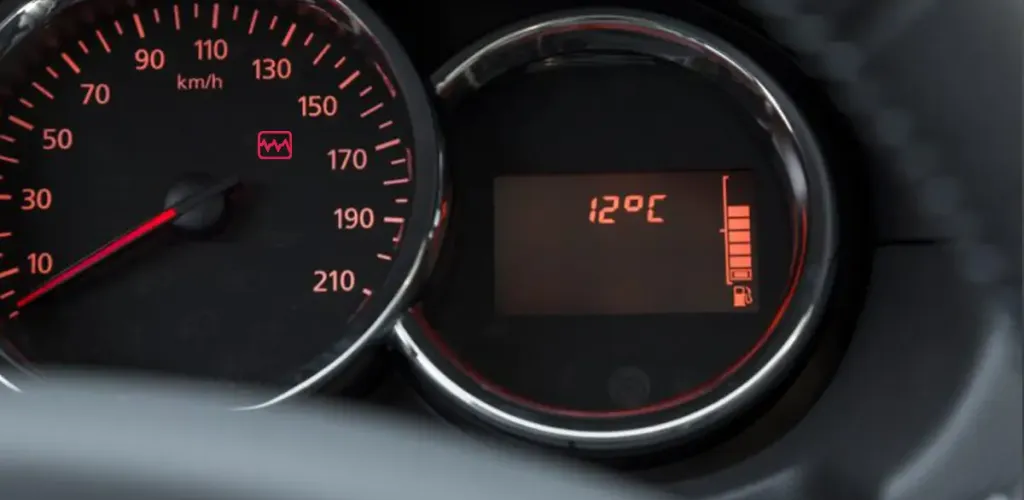

- The zig-zag in a rectangle signals injection/engine faults, not ESP/ASR issues.
- It’s usually orange; red requires immediate stop and service.
- Causes include injection-system faults, fuel-supply sensors, injectors, or pump.
- Diesel-related issues like turbo, EGR, DPF, or low oil level can trigger.
On Dacia models (and some Renaults from the same group), a dashboard indicator sometimes appears in the form of a rectangle with a zig-zag line inside. This is a multi-functional warning light – usually orange (yellow) or red – that signals problems with engine components, particularly the injection system. According to Dacia manuals, the lighting of this indicator signifies an error in the injection system. Typically, the “zig-zag” indicator lights up when starting the ignition and disappears as soon as the engine starts, but if it stays on while driving, immediate measures need to be taken (especially if it’s red).
What the System Monitors (“zig-zag” vs ESP/ASR)
The zig-zag shaped indicator is not directly dedicated to traction or stability systems (such as ESP/ASR). In Dacia/Renault cars, electronic trajectory maintenance assistance has its own indicator (usually a car with wavy lines underneath). The zig-zag symbol in a rectangle is typically used for engine systems (injection/anti-pollution). Therefore, if you see this warning light on, the problem is most likely related to the engine and injection system, not to wheel slippage.
Possible Problems Indicated
The “zig-zag” indicator usually signals malfunctions in the injection system or engine-related components. Potential problems include:
- Injection system error: (e.g., faulty fuel rail pressure sensor, injector defect, malfunctioning injection pump). This is the most common cause of the indicator lighting up.
- Problems with essential diesel engine components: turbocharger malfunctions, EGR valve issues, or other elements affecting injection. Often, a turbine error or common pressure sensor issue can light up this indicator.
- Anti-pollution systems and DPF: in diesel engines with a particulate filter (DPF), its defects (such as excessive pressure at DPF) can generate injection codes. Also, low engine oil level can be indicated by the same warning light.
- Electrical/ECU failures: faulty connections, problems with the electronic control unit (ECU), or motor sensor errors can cause the indicator to light up. If other warning lights or auditory signals also appear, it signifies an important engine problem.
Note: The indicator does not directly indicate traction or stability issues. If the wheels lose traction, vehicles equipped with ESP/ASR will light up other specific indicators (usually separate icons). The zig-zag symbol in a rectangle is mainly reserved for signaling engine dysfunctions.
Steps to Take When the “zig-zag” Indicator Appears
- Check the indicator color: If the symbol is red, immediately stop the engine and the car. A red light (accompanied by a sound signal) indicates urgency – do not restart the engine and call an authorized service. If it’s orange/yellow, the problem is less severe but needs attention.
- Response to yellow indicator: An orange/yellow color allows safe short-term travel. Drive carefully (without high revs) to the nearest authorized service. According to the Dacia manual, a yellow indicator means you should get the vehicle checked as soon as possible.
- Computerized diagnosis: At the service, mechanics will connect an OBD diagnostic device to the car’s diagnostic port. It will read stored fault codes (e.g., injection or sensor codes) and identify the exact problematic component. Without this analysis, the precise cause cannot be known.
- Problem resolution: Depending on the error code, parts like injection sensors, injectors, turbocharger, pressure sensors (injection rail), or DPF system components will be checked/replaced. For example, a low engine oil level can be simply remedied by topping up. If necessary, the EGR valve can be cleaned, or the particulate filter regenerated/replaced. Prompt repair prevents serious damage.
- Do not ignore the signal: Prolonged driving with the indicator on can lead to costly engine failures. Even if the car seems to run well, ignoring the warning is dangerous. Follow the “stop at service” recommendations and do not start the engine if the indicator is red.
Brands and Models Where This Indicator Appears
The rectangle-zig-zag symbol is specific to Dacia vehicles (models like Logan, Sandero, Duster – including MCV or Stepway variants – as well as Lodgy, Dokker etc.). In these cars, the indicator effectively replaces the classic “check engine” function, serving as a warning for the injection system. For instance, many Logan, Sandero, or Duster owners have noticed this indicator appearing when there’s an injection or engine subsystem problem.
In contrast, other brands like Volkswagen, Mercedes, BMW etc., do not use this symbol. They use different indicators (commonly a car with wavy lines) for traction control or stability issues. At VW/Audi/Mercedes, engine problems are usually signaled by the “Check Engine” warning light (engine icon) or other specific indicators, not a zig-zag in a rectangle.
Example of Resolution
Suppose an orange “zig-zag” symbol appears on a Duster diesel, along with a noticeable drop in power. The recommended procedure is: (1) check oil level, use good fuel (to avoid simple defects), (2) stop and restart the engine – if it persists, (3) go to a Dacia service, connect a tester, and read the codes. If the scanner shows, for example, a code P1453 (DPF pressure) or P02xx (injector), the mechanic will act accordingly (e.g., repair/replace the pressure sensor, clean the DPF or injectors). This systematic approach (scanning + repairing parts) usually resolves the issue.