- AC refrigerant pressure sensors monitor low and high side pressures for safety
- High‑pressure sensor prevents dangerous overpressure and stops the compressor when blocked
- Low‑pressure sensor protects the compressor from oil loss and damage
- Defective sensors cause rapid compressor cycling and poor cooling; costs vary by vehicle
An air conditioning refrigerant pressure sensor is a vital component for the proper operation of the car’s AC system. This small but crucial part monitors the refrigerant pressure and ensures the entire system runs within safe parameters. When the sensor fails, it can cause serious problems, from insufficient cooling to a complete shutdown of the system.
Undoubtedly one of the most important features of a car is the air conditioning system, which during hot summer days is a necessity. For various reasons, over time the car’s AC system may start to misbehave, since most AC system components of the car can deteriorate. This situation is not pleasant for car owners who will have to spend more or less money to fix the issue depending on the make and model.
What is the refrigerant pressure sensor?
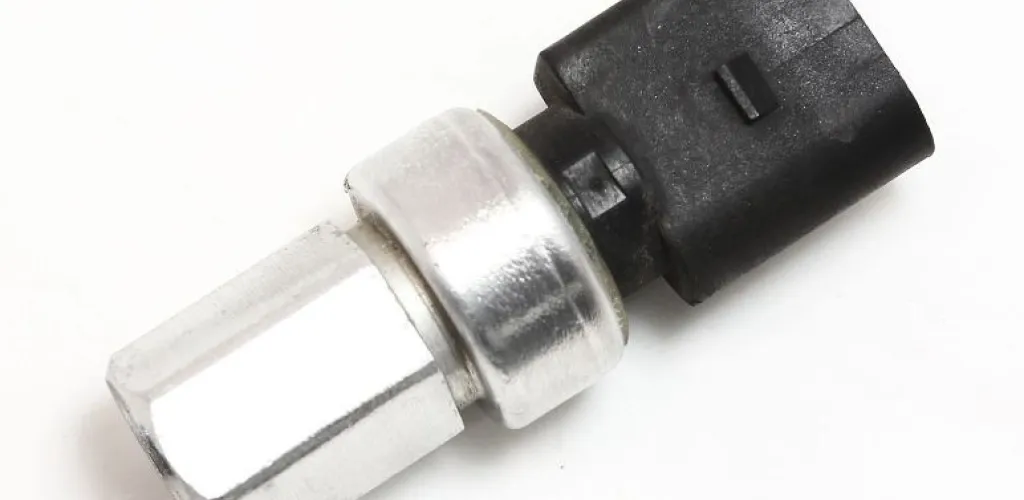
This pressure sensor for the refrigerant is very important as it monitors the refrigerant pressure on both the low and high sides of the AC system. Often there can be two refrigerant pressure switches.
High‑pressure sensor
The high‑pressure sensor must ensure that there is no blockage in the system that would lead to an excessively high pressure, which can cause an explosion in the vehicle. If the pressure is too high, the refrigerant switch will ensure that the control unit stops the air without the need to stop the air conditioning compressor.
Low‑pressure sensor
The low‑pressure sensor has a particularly important role as it ensures that the pressure is not too low in the system. If the compressor pumps refrigerant but not at the correct pressure, oil may be lost, and the compressor can be damaged by the loss of oil, resulting in huge repair costs.

Thus, both sensors act as safety sensors, and their role is to stop the AC system if it is not functioning perfectly.
Symptoms of a defective AC pressure sensor
When an AC pressure sensor is not functioning as it should, there are various symptoms that can help you diagnose the problem. Some symptoms may be more common than others.
If the refrigerant system pressure is too low, error codes may be produced, making the problem easy and quick to diagnose.

1. The AC compressor starts and stops quickly
This is one of the most common symptoms of defective pressure sensors. These fluctuations can be seen at engine speed, or you may feel the fluctuations.
Rapid cycling of the compressor (start/stop repeatedly) indicates that the sensor is sending inconsistent signals to the control unit. This phenomenon can lead to premature compressor wear and higher fuel consumption.
2. The AC system does not cool properly
When one of the AC system components wears, it may send a message to the control unit to stop the system. If the pressure is not correct, the car’s air conditioning system will not be able to start the compressor to produce enough air to reach the cabin properly.
When the car’s air conditioning system is not functioning perfectly, you may notice that it takes longer for the cabin to cool down.

3. The AC compressor does not start at all
When you switch the on/off switch of the car’s AC compressor, there may be a simple interruption that affects the air conditioning system.

As for the AC compressor, its role is to act as the refrigerant driver through the system. If the operation of the AC compressor is not correct, the car’s AC system cannot be used, so you will not get cold air.
4. Error codes in the car’s system
Defective sensors can generate specific error codes that can be detected with a diagnostic scanner. These include:
- Low refrigerant pressure code
- High refrigerant pressure code
- Open circuit pressure sensor code
Locating and replacing the AC pressure sensor
Replacing the refrigerant pressure sensor is certainly different from car to car, so you need to know if you are changing only the high‑pressure sensor or also the low‑pressure sensor. Regardless of the solution you choose, pressure sensors are located under the front part (in the engine bay), on the AC condenser at the front of the car.
Identifying the type of sensor
Low‑pressure lines are smaller than high‑pressure lines, so if you intend to replace the high‑pressure sensor, you should check the small hoses under the hood to see if you can spot the sensor.
If you want to replace this low‑pressure sensor, then all you need to do is follow the larger hoses, and you will locate the sensor.
When we discuss the high‑pressure sensor, it is usually mounted on the condenser, so you may need to remove some components or even the condenser itself.
Step-by-step replacement process
1. Preparation for work
When performing such a task, disconnect the negative battery cable to avoid risks such as electric shock.

Important: Before starting work, make sure the AC system is turned off for at least 30 minutes to allow the pressure to drop.
2. Removing the faulty sensor
To remove this component, you will need a wrench to unscrew and remove the sensor. Other sensors left in place can become blocked, so lines or the condenser could be interrupted.
A sensor should not be overtightened, and if necessary, using penetrating oils such as WD-40 or 5-56 can be extremely beneficial.
3. Installing the new sensor
After removing the old sensor and installing the new one, you will need the same wrench to tighten it to resolve the issue.
Note: Always use an appropriate torque to avoid damaging the threads or surrounding components.
4. Testing the system
After replacement, it is essential to:
- Reconnect the battery
- Start the engine and the AC system
- Check proper operation
- Monitor the pressures with a specialized manometer
AC pressure sensor replacement cost
This certainly depends a lot on the car. The sensor itself is not very expensive for an average car, but when we talk about premium or luxury models, this part can have steep prices.
Factors influencing the cost:
Vehicle type:
- City cars: 50–150 RON (part)
- Premium cars: 200–500 RON (part)
- Luxury vehicles: 300–800 RON (part)
Labor service:
- Easy access: 50–100 RON
- Difficult access (removal of components): 150–300 RON
Additional costs:
- Full system check: 50–100 RON
- Refrigerant recharge (if needed): 100–200 RON
- Computerized diagnostic: 50–150 RON
Preventing pressure sensor failures
To avoid issues with AC pressure sensors, follow these recommendations:
- Regular maintenance: Check the AC system annually
- Consistent use: Run the AC at least once a week, even in winter
- Refrigerant check: Monitor the level and quality of the refrigerant
- Condenser cleaning: Remove debris from the condenser
- Cabin filter replacement: Change the cabin filter according to the maintenance schedule
By following these preventive measures, you will extend the life of the pressure sensors and avoid unexpected repair costs.