- Fuel pressure sensor monitors high-pressure rail, signals ECU to restore pressure via control valve
- Proper pressure ensures atomization, correct air-fuel mixture, efficient combustion, and lower emissions
- Failure causes: high temperatures, vibrations, fuel contamination, and normal wear
- Symptoms include fuel delivery issues, hard starting, power loss, engine stutter, check engine light
The fuel pressure sensor plays a crucial role in the optimal operation of modern engines, being responsible for monitoring and regulating pressure in the fuel supply. While it may seem like a minor component, a failure can cause major performance issues and significantly affect the vehicle’s behavior.
This sensor is considered one of the weak links in the fuel delivery system, being particularly sensitive to high temperatures in the engine bay. Understanding how it works and recognizing failure symptoms can save auto owners from costly repairs and inconvenient downtime.
Fuel pressure sensor operation
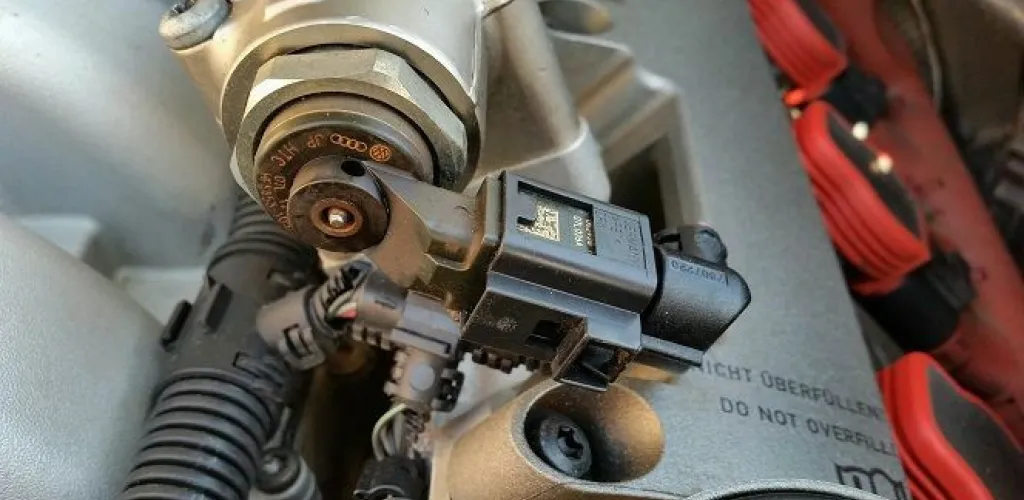
The fuel pressure sensor continuously monitors the pressure in the high-pressure rail, sending real-time information to the engine control unit (ECU). This high-pressure rail has the role of preparing the fuel and keeping it at the optimal pressure required for injectors.
When the pressure in the rail drops below normal parameters, the sensor immediately sends the signal to the ECU, which activates the high-pressure pump to restore the correct pressure. This regulation is achieved through a fuel control valve, which meters the amount of fuel sent to the rail.

Importance of correct pressure in the fuel system
The fuel pressure must be maintained within certain limits to ensure:
- Optimal atomization of the fuel through the injectors
- Correct air-fuel mixture
- Complete and efficient combustion in the combustion chamber
- Reduction of pollutant emissions
- Optimum engine performance
Without adequate pressure, the engine cannot operate at its designed parameters, leading to performance and consumption issues.
Why does the fuel pressure sensor fail?
The fuel pressure sensor is recognized as a weak link in the fuel delivery system, being vulnerable to several factors:
High temperatures
The main cause of failure is exposure to high temperatures in the engine compartment. The sensor’s electronic components are sensitive to heat, and prolonged exposure can damage internal circuits.

Engine vibrations
Constant vibrations can affect the sensor’s internal connections and cause cracks in sensitive components.
Fuel contamination
Impurities in the fuel can affect the sensor membrane and cause incorrect pressure readings.
Normal wear
Like any electronic component, the sensor has a limited lifespan and can fail over time.
Symptoms of a faulty fuel pressure sensor
Early recognition of symptoms can prevent more serious problems:
Fuel delivery and acceleration problems
- Loss of fuel supply during driving
- Difficulties starting the engine, especially when cold
- Power loss during acceleration
- Engine runs in a ‘stutter’ or irregular operation
- Significant loss of engine power

Electronic signals
- Check engine light on the dashboard
- Specific error codes detectable with a diagnostic tester
- Limp mode operation
Diagnosing the fault
Electronic testing
To confirm the sensor fault, a professional diagnostic tool is required. Specific error codes will indicate:
- P0190 - Fuel pressure sensor circuit
- P0191 - Fuel pressure sensor - range/performance
- P0192 - Fuel pressure sensor - input low
- P0193 - Fuel pressure sensor - input high
Physical testing
An experienced mechanic can also verify:
- Electrical connectivity of the sensor
- Actual system pressure with a manometer
- Physical condition of the sensor and its connections
Replacing the fuel pressure sensor
FAQ about replacement
A common question is whether the high-pressure rail must be replaced along with the sensor. The answer is no — only the faulty sensor is replaced, making the repair much more economical.
Replacement process
Replacing the sensor is a relatively simple operation:
- Identify the sensor location on the fuel rail
- Disconnect the battery for safety
- Disconnect the sensor’s electrical connector
- Remove the sensor with an appropriate wrench
- Install the new sensor with the specified torque
- Reconnect the electrical connection and check the wiring
- Clear the error codes from the ECU memory
Time required: less than 15 minutes for an experienced mechanic.
Maintenance recommendations for the system
To prevent premature failures:
- Use quality fuel from trusted stations
- Replace the fuel filter at the recommended intervals
- Avoid frequently keeping the tank near empty
- Periodically check the fuel delivery system
Costs and recommendations
The cost of a fuel pressure sensor varies by vehicle make and model, usually between 150-500 RON for an original part. Labor for replacement is minimal due to accessibility and simplicity.
It is recommended to use original or high-quality equivalent parts to avoid repeated failures and to ensure optimal long-term operation.
Photo source: cartreatments.com, audiworld.com