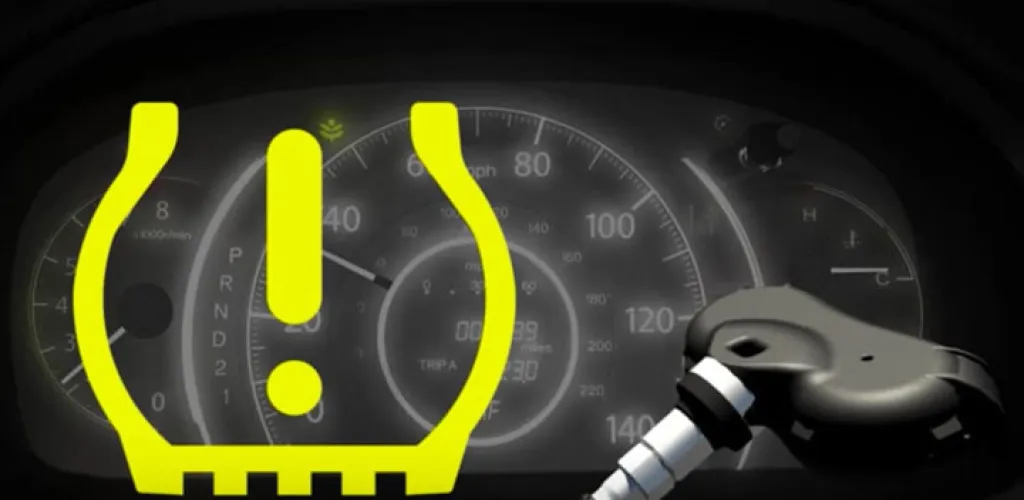
- TPMS warns of low tire pressure to boost safety and reliability
- Indirect method uses ABS speeds, cheaper but less accurate and requires recalibration after tire changes
- Direct method uses battery-powered sensors with RF transmission for precise, real-time per-wheel readings
- Direct sensors need battery replacement every 5–10 years, increasing maintenance
The Tire Pressure Monitoring System (TPMS) has evolved from a luxury feature on premium vehicles to a standard safety component on most modern cars. This intelligent sensor alerts you early to low tire pressure, giving you time to reach a service center before the situation becomes dangerous.
In this article, we explain how TPMS works, the differences between indirect and direct methods, and why it matters for your safety and driving reliability.
How the Tire Pressure Monitoring System Works
There are two main methods by which tire pressure can be monitored: indirect and direct systems, each with its own advantages and drawbacks.
Indirect Method — Using ABS Sensors
The indirect method uses an ingenious approach based on physics. A tire with low pressure spins at a different speed than a normally inflated tire due to the smaller diameter. This difference in rotational speed is detected by the ABS sensor and compared across all wheels.
When the system detects that a tire is rotating differently from the others, the warning light for tire pressure lights up on the dashboard. This method is cheaper to implement but also less precise than the direct alternative.
Advantages of the indirect method:
- Lower costs of implementation and maintenance
- Does not require batteries or in-wheel components
- Simple integration with existing ABS systems
Disadvantages of the indirect method:

- Lower accuracy
- Cannot detect a uniform drop in pressure across all wheels
- Requires recalibration after changing tires
Direct Method — Dedicated Sensors in Each Wheel
Direct monitoring systems are significantly more precise and easier to use. A specialized sensor is mounted inside each tire cavity to measure the tire air pressure exactly.

RF Transmission
How do these sensors transmit the measured values without any wires entering the tire cavity? The solution is radio-frequency transmission: each sensor transmits the information to a central receiver via radio waves.
These sensors do not compare values with each other; they monitor each tire individually to detect a possible pressure drop. This individual approach is crucial—if it relied on comparisons and all four tires aired down uniformly, the system might fail to detect the problem.
Thresholds and calibration

Each vehicle has specific lower pressure limits; when the pressure in a tire falls below this threshold, the driver is immediately informed which wheel is affected.
Advantages and Disadvantages of the Direct System
Advantages of the direct system:
- Maximum accuracy in pressure measurement
- Immediate detection of problems on any wheel
- Real-time information about the status of each tire
- No recalibration after changing tires
Disadvantages of the direct system:
- Higher purchase and maintenance costs
- Sensors are battery-powered and can run down over time (typically after 5–10 years)
- Replacing faulty sensors can be expensive
- Risk of sensor damage during tire mounting/dismounting
Why TPMS Is Important
The Tire Pressure Monitoring System is not just a convenience; it is an essential safety measure. Incorrect tire pressure can lead to:
- Premature and uneven tire wear
- Increased fuel consumption up to 3–5%
- Risk of tire blowout at high speeds
- Unpredictable vehicle behavior in curves or during braking
- Longer braking distances and compromised safety
TPMS Maintenance
To keep the system in optimal working condition:
- Check tire pressure manually on a regular basis, even if you have TPMS
- Inform the tire shop that you have TPMS sensors before any intervention
- Replace sensors when they fail – the investment is worth the safety it offers
- Recalibrate the system after changing tires (only for indirect systems)
Although the direct system is clearly superior in terms of precision and functionality, maintenance costs can be higher. However, the safety benefits and the prevention of serious issues make the investment fully justified for any responsible driver.