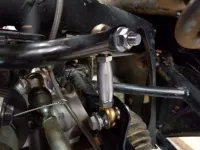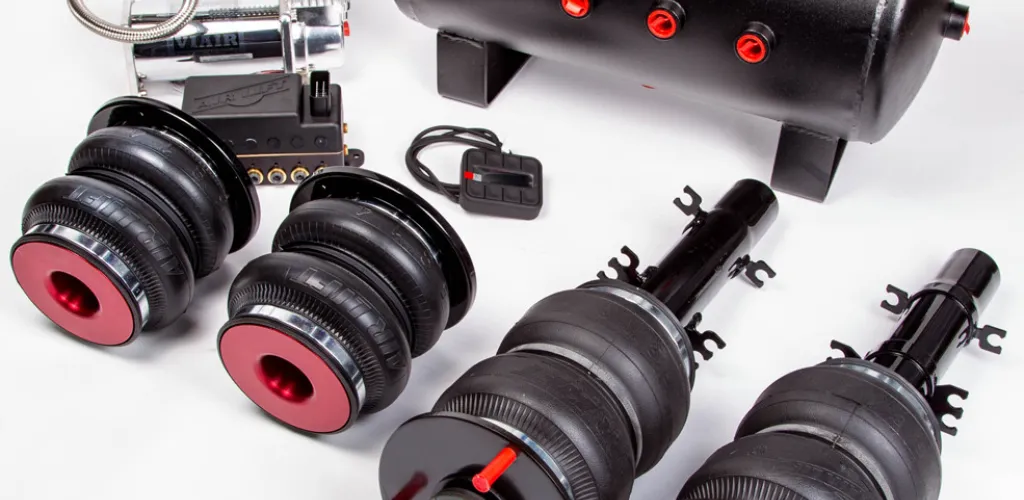
- Air suspensions replace metal springs with adjustable pneumatic air bags.
- They improve comfort, performance, and versatility with adjustable ride height.
- Operation relies on changing air pressure and volume in the bags.
- Components include an electric air compressor and an air dryer.
Air suspensions represent a major technological advancement in the automotive industry, delivering a higher level of comfort and adaptability compared with traditional metal spring systems. This technology, initially used in heavy commercial vehicles, has become increasingly popular in passenger cars, performance models, and premium SUVs.
Mechanically, air suspensions replace metal springs with flexible pneumatic bladders that can be electronically adjusted based on road conditions, payload, and the driver’s preferences. This flexibility provides significant advantages in terms of comfort, performance, and versatility.
What air suspensions are and how they work
Suspension systems are an integral part of a car. The most commonly used type is metal-spring suspension. It consists of shock absorbers and springs, whose function is to regulate wheel oscillation and vibrations, compensate for road irregularities, and also handle the extra weight.
This is the traditional suspension system. Unfortunately, it was designed with a fairly fixed set of scenarios in mind. Therefore, technology had to advance to create air suspensions.
In the simplest terms, air suspensions replace metal springs with air springs. These are durable air bags made of rubber and plastic, which are inflated to a certain pressure and height to mimic metal springs.
Air springs provide adjustable suspension by adding air when the car is loaded, and deflating them when the car travels without additional weight.
Principle of operation
From a physical standpoint, compressed air in the pneumatic bladders changes its pressure and volume in response to the forces applied. When the vehicle encounters a pothole, the air bag compresses, and the internal pressure increases, providing progressive resistance. This principle allows a much finer and more controllable response than metal springs, which have a fixed spring rate.
Components of the air suspension system
Early air suspension versions were fairly simple. The air bags replaced the metal springs and were inflated to the correct pressure and height with the help of a compressor via a valve. Over time, thanks to advances in technology, more components have been added, varying from manufacturer to manufacturer, though very little.
Air compressor
Most current air suspension systems are equipped with an air compressor. It is an electric pump whose job is to feed the bags with air through a network of compressed air hoses. Typically, the compressor is mounted to the vehicle’s chassis or in the trunk. The compressor draws air from the outside into the pump, compresses it, and then moves it into the bags.

Air dryer
Air from the outside is, in many situations, full of moisture, and moisture can negatively affect a closed system. Therefore, most air compressors have an attached dryer. Using a desiccant substance, the dryer absorbs moisture from the air before it is pumped into the system.
Air tank and control system
Simpler systems rely only on the compressor to maintain the proper pressure level. More advanced systems are also equipped with an air reservoir to maintain pressure and to smooth transitions between different pressure levels.
Compressors come in many varieties: they can be manual or automatic, may be driver-controlled or automatically controlled by an electronic system, or even a combination of the two.

Electronic control unit (ECU)
Electronic systems are controlled by an electronic control unit whose software can be simple or complex, depending on the manufacturer. The unit receives valuable information from sensors and controls the compressor accordingly.
These sensors monitor:
- vehicle height at each corner
- pressure in the air bags
- acceleration and vehicle speed
- steering wheel angle
- system temperature
Installation guide for air suspensions
It is recommended that air suspension installation be carried out by a qualified mechanic, given the system’s complexity and the need for precise adjustments. Still, here are the general installation steps for a complete understanding of the process.
Tools required
You will need the following tools: a basic tool set, a ratchet, the air suspension kit, eye protection, and a professional hydraulic jack.
Installation steps
Step 1: Vehicle preparation With the help of a jack, lift the car and place it on stable supports, then remove the wheels. It is essential to ensure the vehicle is fully stable before continuing.
Step 2: Removing the existing suspension Remove the metal springs and control arms. This step requires special attention to components that will be reused, such as the shock absorbers (if compatible with the new system).
Step 3: Installing the compressor If the system you want to install includes a compressor, the most common location is in the spare wheel space. Remove the spare wheel and interior panels to make room for the compressor.
Step 4: Mounting the air bags Install the air bags in the front and rear, ensuring they are correctly aligned and fixed according to the manufacturer’s specifications.
Step 5: The compressed air system Install the air compressor and air reservoir in the spare wheel space, ensuring there is enough space for ventilation and maintenance access.
Step 6: Electrical and pneumatic connections Connect the compressor to the air system and to power, using wires and cables. In general, the wires are routed through a relay and a fuse, then connected to the battery. Each corner of the vehicle will need its own air line that reaches the compressor.
Step 7: Final checks Check all components and ensure they are securely fixed. Most air suspension systems require several trials and checks before use. Test the system for leaks and proper operation.
Advantages of air suspensions
Superior ride comfort
Air suspensions increase ride comfort, improve handling, and offer a higher degree of adaptability to varying road conditions. They provide greater safety and comfort for the driver, significantly reducing noise, vibrations, and roughness that can cause fatigue and discomfort.
Protection of vehicle components
Equipping a car with air suspensions also has a positive effect on other vehicle components, reducing wear due to vibrations. The steering, transmission, and even the body benefit from reduced mechanical stress.
Improved energy efficiency
Air suspensions can improve fuel efficiency, especially in large vehicles. Some systems can optimize the vehicle’s height during travel based on load, reducing aerodynamic drag.
Adaptable load handling
Loaded vehicles maintain an optimal ground clearance, as the pneumatic system automatically compensates for additional weight. This improves stability and safety under varying load conditions.
Enhanced cornering performance
Because suspensions adapt better to the road surface, higher speeds can be achieved in bends, reducing time spent behind the wheel on winding roads. The system can adjust stiffness in real time for optimal performance.
Increased towing capacity
Air suspensions can noticeably improve towing capacity. Drivers can raise stiffness for towing while improving passenger comfort.
Longer tire life
Another benefit of air suspensions is longer tire life. Better suspension management means fewer vibrations for tires, allowing them to wear more evenly and last longer.

Disadvantages and limitations of the system
Leakage issues
One of the main drawbacks of air suspensions is leaks, a common issue across all brands. A system will stop functioning when it can no longer retain air. Leaks can occur at the air bags, hoses, or fittings.
High initial and maintenance costs
Unlike conventional suspensions, air suspensions are more expensive to purchase and maintain. They are usually an optional feature on new cars, with only a few vehicle types—such as SUVs and luxury cars—coming with air suspensions as standard.
Installation complexity
Installation can be a downside as well. Depending on complexity, installing a system can take a long time and require many professional tools. It is recommended that installation be performed by professional mechanics with experience in this field.
Electronic vulnerability
Modern air suspension systems rely heavily on electronic components that can be affected by moisture, extreme temperatures, or electromagnetic interference. A failure of the ECU can compromise the entire system.
Dependence on electrical power
Unlike traditional suspensions that operate purely mechanically, pneumatic systems require electrical power for the compressor and control systems. An issue with the alternator or battery can affect suspension operation.
Costs and economic considerations
Initial investment
The cost of a quality air suspension system can vary from 2,000 to 10,000 euros, depending on complexity and vehicle model. Systems for premium vehicles are significantly more expensive than those for conventional cars.
Maintenance costs
Annual maintenance of air suspensions can range from 300 to 800 euros, including:
- Checking and replacing the dryer filter
- Pressure and seal checks
- Sensor calibration
- Replacing worn components
Component lifespan
The air bladders have an average lifespan of 80,000–120,000 km, while the compressor can operate for 150,000–200,000 km with proper maintenance.
Recommendations for choosing the right system
For Luxury Vehicles
For premium cars, advanced electronic control systems are recommended, capable of automatically adjusting parameters based on driving style and road conditions.
For Commercial Vehicles
Trucks and vans benefit most from air suspensions due to large load variations and the need to maintain stability in all conditions.
For Tuning Enthusiasts
Manual or semi-automatic systems offer the precise control enthusiasts seek, allowing exact adjustments for different situations.
Air suspensions are a mature technology that offers real advantages in terms of comfort, performance, and versatility. However, the complexity and costs associated with this option make it particularly suitable for premium, commercial, or enthusiasts willing to invest in advanced technology.
The decision to opt for air suspensions should consider specific needs, available budget, and the willingness to perform the specialized maintenance required. For users who prioritize comfort and adaptability, the investment can be fully justified.