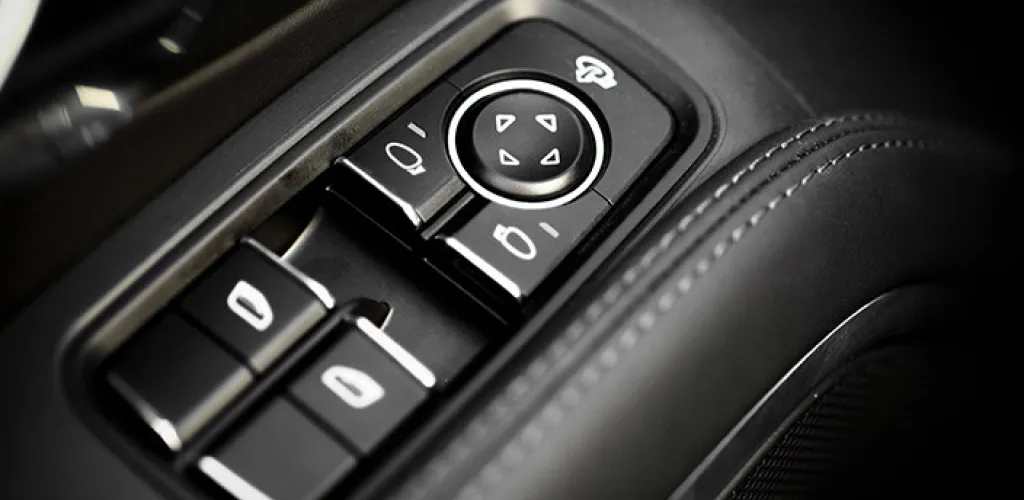
- Electric regulators use a motor and cable drive; most modern cars use them.
- Actuation button does not respond, indicating possible regulator failure.
- Window stalls mid-travel or drops inside the door.
- Unusual noises indicate wear; wear increases with use, climate, lubrication.
An electric window regulator is a crucial component that enables convenient operation of the vehicle’s windows. Most modern cars are equipped with this system, which replaces the old manual cranks and provides easy control with the press of a button. However, like any mechanical part, the regulator can wear over time, leading to various operating issues.
Nevertheless, as with any mechanical part, the regulator can deteriorate over time, causing a range of performance problems.
Principle of operation of the electric window regulator
Each electric window-equipped door houses an electric motor connected to the glass via the regulator. When the driver or passenger presses the button to raise or lower the window, the motor activates and, via the regulator, drives the window’s movement.
There are two main types of regulators:
Mechanical regulators (with crank): These have a scissors-like construction, with two metal arms that intersect. Rotating the crank drives the arms, which in turn move the window. They are heavy due to sturdy metal components.
Electric regulators: Use a cable connected to a drive mechanism, being lighter and more compact than mechanical variants. Most modern vehicles with electric windows use this cable-based system.
Symptoms of a defective regulator
Identifying problems with the electric window regulator early can prevent more serious failures and extra repair costs.

1. Actuation button does not respond
The most obvious symptom is the lack of reaction when pressing the control button. If the window does not rise or descend at all, there is a high probability that the regulator is defective. This is one of the causes of power windows not functioning and requires immediate diagnostic.

2. The window remains stuck
Another sign of regulator failure is the window getting stuck during movement. The glass may stop abruptly midway through its travel, whether while rising or lowering. This phenomenon usually indicates a problem with the drive mechanism or with the regulator cable.
3. Unusual noises during operation
A few abnormal sounds may appear, such as:
- Metallic grinding
- Rattling
- Intermittent clunking
- Friction noise
These noises indicate wear of regulator components and may suggest the system is close to failure.
4. The window drops inside the door
In extreme cases, when the regulator is completely damaged, the glass can drop into the door panel. This is rare and usually occurs after accidents or severe door damage. It is a situation that requires immediate intervention, as the vehicle becomes vulnerable to theft and weather exposure.
Factors that accelerate regulator wear
Diverse factors can contribute to premature regulator wear:
- Frequent use: Repeated activation of the windows accelerates wear
- Climate conditions: Humidity and extreme temperatures can affect components
- Lack of maintenance: Absence of lubricant on the guide rails
- Forcing the system: Forcing the window to rise when it is blocked by ice or dirt
Costs and replacement process
Defective electric window regulators are a relatively common issue, especially on older vehicles or those used heavily. The lifespan of a regulator depends on usage frequency and operating conditions.
Cost estimation
Replacing an electric window regulator varies depending on:
- The make and model of the vehicle
- The type of regulator (cable-driven or rack-and-pinion)
- The quality of the replacement part (original or aftermarket)
- The cost of labor
Generally, the price of a part ranges between 300 and 500 lei, with installation cost extra. For premium vehicles or rarer models, costs can be significantly higher.
Maintenance recommendations
To extend the regulator’s life:
- Avoid forcing the window when it is blocked
- Clean the guide rails periodically
- Lubricate the joints once a year
- Check operation regularly to detect early problems
Replacing the regulator is an operation that requires removing the door trim and accessing the internal mechanism, and is recommended to be performed by a qualified automotive technician.
Photo sources: ianningsonline.com, searcyautoglass.com, shutterstock.com