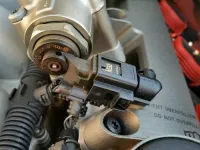
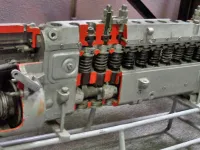
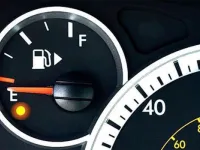
- P0004 indicates excessively high fuel pressure from the regulator in diesel or direct-injection engines
- Symptoms include hard starts, engine won’t start, MIL on, or limp mode
- The PCM logs voltage and pressure mismatches, triggering the code
- Electrical faults—wiring, corrosion, moisture, or shorts—are most common
The P0004 fault code signals a critical issue in the fuel supply system, referring to an excessively high pressure detected by the fuel pressure regulator. This OBD-II code primarily affects diesel engines with a common rail system and gasoline engines with direct injection, potentially causing hard starts or even the impossibility to start the engine.
Although not a common code in practice, P0004 can appear on various brands such as Ford, Dodge, Vauxhall, Volkswagen, Mazda, and others, requiring a methodical diagnostic approach to identify the exact cause.
Functioning of the fuel control system
Main components:
- High-pressure pump - maintains constant pressure in the fuel rail
- Fuel regulator - controls the fuel pressure by communicating with the PCM
- Fuel rail - distributes fuel to injectors at the optimal pressure
- Injectors - introduce measured fuel into the engine cylinders
- Pressure sensor - monitors system pressure in real time
The fuel regulator operates as an electrically controlled solenoid managed by the engine control module (PCM/ECU). Under normal conditions, the PCM sends specific voltage signals to the regulator to maintain optimal fuel-system pressure.
Conditions for activating the P0004 code
The P0004 code automatically triggers when the PCM detects the following abnormal conditions:
- Input voltage exceeds the battery voltage by at least 10%
- Continuous abnormal voltage readings over a determined period (usually 2-3 consecutive cycles)
- Discrepancies between commanded and actual pressure
- Automatic activation of the check engine light on the instrument cluster
The OBD-II system will automatically store the code in the PCM memory, along with freeze-frame data recording the exact conditions at the time of the fault.
Typical symptoms of the P0004 error
Immediate and obvious symptoms:
Starting problems:
- The engine does not start at all or starts with great difficulty
- Prolonged start time, especially when cold
- Intermittent starting - sometimes starts, sometimes not
On-board indicators:
- Check engine light remains on
- Warning messages on the multifunction display
- Activation of limp mode
Symptoms of degraded operation:
- Severe reduced performance - significant power loss
- RPM limited to 3000-4000 rpm
- Unstable idle or engine stalling at idle
- Increased fuel consumption by 20-30%
- Excessive vibrations, especially at idle
- Abnormal exhaust smoke (especially diesel)
Principal causes and fault localization
Electrical causes (80% of cases):
Wiring problems:
- Broken or damaged wires due to wear
- Corroded contacts in electrical connectors
- Moisture ingress into junction boxes
- Wires chewed by rodents (common in vehicles stored outdoors)
Electrical faults:
- Short circuits to ground or to positive
- Incorrect supply voltage (below 11V or above 15V)
- Increased resistance in circuits due to corrosion
Mechanical causes (15% of cases):
Defective components:
- Fuel-regulator solenoid stuck
- Fuel pressure sensor with false readings
- Mechanically worn fuel volume regulator
- Damaged diaphragm or internal springs in the regulator
Complex causes (5% of cases):
- Faulty PCM/ECU with erroneous voltage readings
- High-pressure pump regulation issues
- Partially blocked fuel rail
- Electromagnetic interference from other systems
Detailed diagnostic procedure
Step 1: Preliminary visual inspection
Wiring check:
- Inspect the entire wiring path from the PCM to the regulator
- Look for visible damage: cuts, burns, corrosion
- Check wiring securement - loose wires can deteriorate
- Inspect connectors for signs of overheating or charring
Mechanical components check:
- Inspect the fuel regulator for leaks
- Ensure the regulator is firmly mounted on the fuel rail
- Check the physical integrity of the fuel rail
Step 2: Advanced electronic diagnosis
Full scan:
- Use a professional OBD-II scanner (not basic code readers)
- Record all stored codes, not just P0004
- Analyze freeze-frame data for the exact moment of occurrence
- Check related codes: P0001, P0002, P0003
Real-time monitoring:
- View real-time parameters: fuel pressure, regulator voltage
- Perform controlled acceleration tests to observe system behavior
Step 3: Precise electrical testing
Voltage measurement:
- Measure the regulator supply voltage (should be approx. 12V)
- Check the PCM signal voltage (usually 0.5-4.5V variable)
- Test the reference voltage (exactly 5V constant)
Resistance testing:
- Disconnect the regulator from the PCM for safety
- Measure the solenoid resistance (usually 10-50 ohms)
- Check continuity on all circuit wires
Short-circuit testing:
- Use the voltage-drop method to locate faults
- Check insulation of wires against ground and against positive
Step 4: Functional testing and repair validation
Testing procedure:
- Clear all error codes from the PCM memory
- Start the engine and let idle for 5-10 minutes
- Perform a drive test under varied conditions (city, highway)
- Rescan to verify code does not reappear
Repair strategies and technical solutions
Electrical repairs:
For wiring problems:
- Replace the entire faulty harness, not just the visibly damaged portion
- Use wires of the same specification (gauge and insulation)
- Protect connections with anti-condensation spray or special sealant
- Ensure proper mounting to avoid vibrations
For corroded connectors:
- Dismantle the connector and clean it with contact spray
- Replace damaged retention clips
- Apply dielectric grease to contacts for long-term protection
Mechanical repairs:
Fuel regulator replacement:
- Use only OEM or manufacturer-approved equivalents
- Check operating pressure as specified in the technical data sheet
- Test the new regulator before closing the hood
Warning safety considerations:
- Never apply battery voltage directly to the regulator
- Depressurize the fuel system before any intervention
- Use fire protection equipment
- Work in a ventilated area away from heat sources
Procedures for complex cases:
In case of PCM failure:
- Replacing the PCM should be the last option considered
- Requires reprogramming and synchronization with the vehicle
- Costs are substantial (1500-3000 RON)
Common diagnostic errors and how to avoid them
Common service mistakes:
Superficial diagnosis:
- Replacing the regulator without testing the circuits first
- Using cheap code scanners that do not provide complete data
- Ignoring wiring checks
Incorrect procedures:
- Testing the regulator with inappropriate methods
- Replacing components in the wrong order
- Skipping validation tests after repair
How to approach diagnostics correctly:
- Always start with wiring and connector testing
- Use calibrated and reliable measuring equipment
- Document all measurements for future reference
- Always verify with a second scanner if results seem doubtful
Handling intermittent issues
The P0004 code can appear intermittently, complicating diagnostics:
Monitoring strategies:
- Use scanners with long-term logging capability
- Instruct the owner to note occurrence conditions (temperature, driving type)
- Perform tests under varied conditions: cold engine, warm engine, different loads
Intermittent-specific tests:
- Test by vibrating wiring to detect loose contacts
- Simulate extreme temperature conditions
- Perform long-term tests with continuous monitoring
Preventing recurrence
Preventive maintenance:
- Periodic connector checks (every 20,000 km)
- Cleaning the fuel system with specialized additives
- Replacing the fuel filter as per service schedule
- Protecting wiring from wear factors
Owner tips:
- Avoid parking in areas with high humidity
- Use higher-quality fuel
- Do not ignore minor symptoms that can worsen
Estimated costs and repair time
Estimated costs (2024):
- Complete diagnostics: 150-300 RON
- Fuel regulator: 300-800 RON (depends on the car make)
- Regulator replacement labor: 200-400 RON
- Wiring repair: 100-300 RON
- New PCM (if needed): 1500-3000 RON
Time required:
- Diagnostics: 1-2 hours
- Regulator replacement: 1-3 hours
- Wiring repair: 2-4 hours (depends on complexity)
The P0004 fault code requires a systematic approach and stepwise testing of each component. While it may seem complex, following a methodical diagnostic procedure will identify the exact cause and avoid unnecessary costs from replacing non-defective parts. In more complex cases, contact a specialized service with experience in injection systems for the best outcome.