- Brent at $102.73 and WTI at $99.13 as prices fall
- Norway’s oil strike cuts output by about 89,000 bpd
- Saudi Arabia raises August crude prices for Asia amid tight markets
- G7 considers Russian oil-price caps that could limit supply
Global oil prices have fallen by about $10 per barrel since July 5, amid fears of a potential global recession. This decline comes as fuel demand weakens and some deliveries are suspended, aggravated by a strike by workers in Norway’s oil and gas sector.
Global oil price movements
Brent crude, the main global benchmark, fell by $10.77 (-9.5%), settling at $102.73 per barrel as of 18:43 local time in Romania. This drop marks a significant shift in the dynamics of the global energy market.
On the American market, West Texas Intermediate (WTI) crude fell by about $9.30 (-8.6%), settling at $99.13 per barrel at Friday’s close. It is worth noting that on Monday, July 4, WTI trades were suspended due to the U.S. public holiday.
Factors influencing the price of oil
Fear of an economic recession
According to Robert Yawger, energy futures director at Mizuho New York, “The market is tightening, but prices are still falling, and the only way to explain it is fear of recession for every risk asset.”
Futures contracts fell in tandem with stock indices, signaling weaker oil demand. Investors are concerned about a possible recession as international central banks take drastic measures to curb inflation.
European and Asian impact
In Europe, economic activity slowed noticeably last month, with indicators signaling a possible downturn in the current quarter. Consumers reduced spending in the face of rising costs.
South Korea is already feeling inflationary pressures, which in June reached the highest level in the last 24 months. Officials are concerned about a slowdown in economic growth and weaker oil demand.

Norwegian strike
The strike by workers in Norway’s oil sector will reduce output by 89,000 barrels per day, of which natural gas output accounts for 27,500 barrels of oil equivalent per day, according to producer Equinor.
Strategies of major producers
Saudi Arabia and the Asian market
Saudi Arabia, the world’s largest oil exporter, raised prices for crude destined for Asian customers in August to record levels, benefiting from tight supply and strong demand.
Russia’s warning
Former Russian president Dmitry Medvedev warned that a potential Japanese proposal to cap Russian oil prices at 50% of current levels could reduce the amount of crude available on the market, driving prices up to $300-$400 per barrel.
At the G7 meeting, leaders agreed to explore the feasibility of temporary caps on import prices for Russian fossil fuels, including oil, to limit resources used to fund the war in Ukraine.

Energy market outlook
Bank of England warnings
The Bank of England says global economic prospects have “deteriorated significantly” due to sharp rises in commodity prices, which feed inflation and risk slowing the global economy.
The eurozone PMI in June reached its lowest reading in 16 months, with the euro area growing only 0.2% in the second quarter.
Citigroup forecasts
Analysts at Citigroup estimate that the price per barrel could fall sharply to $65 by year-end and to $45 by the end of 2023 if recession affects oil demand. Historical data suggest that oil demand turns negative only in the most severe global recessions, but oil prices fall in all recessions.
Romania situation and the energy minister’s statements
Expectations for price declines
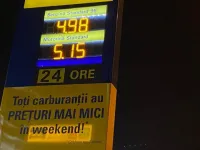
The international barrel price drop should also affect Romania. Energy Minister Virgil Popescu said that major fuel chains are obliged to reduce fuel prices urgently in the current context.
When asked about maintaining high pump prices despite the drop in barrel value, Virgil Popescu explained: “It’s a very legitimate question, and there should be a downward adjustment in gasoline prices after this price drop; I mainly expect that. Why gasoline, mainly, because Romania produces more gasoline from crude than it can consume and we are gasoline exporters; the barrel price has fallen, so there should follow a decrease in gasoline prices; diesel should also follow there, but there we buy only half of the amount Romania consumes, because diesel production is smaller than consumption, and the diesel price has not fallen by as much, but it has fallen there as well.”
Romanian fuel market specifics
Romania faces a specific situation on the fuel market:
- Gasoline: Romania produces more gasoline than it consumes domestically and is a net exporter
- Diesel: Our country imports about half of the diesel required
- This balance difference affects how international prices reflect at the pump
Appeal to distribution networks
The minister added that in the coming period we should see a downward adjustment in fuel prices: “The ordinance was not mandatory; it was voluntary; those who wanted to participate did so from the outset and accepted this price drop. I believe we will also see in the coming period a downward correction in fuel prices. We’ll see in the days ahead, because we must see in the immediate days that something good happens with the gasoline price and then with the diesel price, or perhaps at the same time with the gasoline price. That would be normal, that would be fair, that is how the major gas stations networks should treat Romanians. When the cost of purchase falls, lower the price, just as when you justified the rise in the barrel price, the diesel price rose, you raised the price.”
Conclusions
The $10 drop in the oil price per barrel represents a significant development in the global energy market, driven by fears of a possible recession. While there is pressure for these reductions to be reflected in pump prices in Romania, it remains to be seen how quickly and to what extent fuel distributors will adjust prices for end consumers. Romania’s particular position as a gasoline exporter and diesel importer means the impact will differ for the two types of fuel.