- Government taxes, subsidies, and regulations largely drive rising consumer prices in Romania.
- Housing: high demand, limited supply, and permit delays push prices up.
- Fuels: taxes, excises, and exchange-rate dynamics create a price rise cycle.
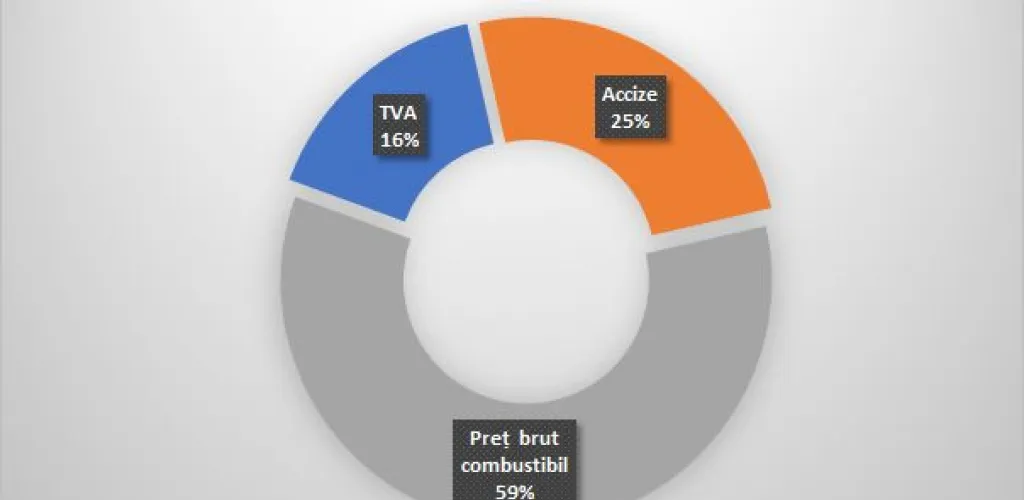
- Without VAT and excise, petrol would cost about 4 lei per litre.
An academic study in Romania questions the impact of fiscal policy on consumer prices, arguing that government interventions through taxes, subsidies, and regulations have contributed to rising living costs. The report, conducted by three university professors from Bucharest and Cluj, outlines several remedial proposals aimed at easing high price levels across housing, fuels, and energy sectors.
Results of Government Actions in the Period Ahead
According to ziare.com, the study’s main conclusion is: “the galloping rise of consumer prices recently is largely caused by government intervention through taxes, subsidies and regulations.” The general view is that price-level interventions will lead to long-term adverse consequences.
In baza opiniei celor trei cercetatori, oficialitatile de la nivel inalt din Romania au actionat eronat in trei domenii: locuinte, carburanti si energie. These three areas have suffered the most from these cost increases, with a direct impact on the standard of living.
Regarding housing, the researchers demonstrated that although our country leads European rankings in the number of homeowners, demand exceeds supply, resulting in higher prices.
Thus, according to the three professors, the proposed increase in supply “meets with problems generated by the state”; they identify either the difficulty of obtaining construction permits (24 procedures spanning on average 260 days, the price being 2% of construction costs) or issues related to the complexity of connecting to electricity.
According to the study, “at the same time, the average wage in construction represents 94% of the average wage in the economy, and the authorities found a pseudo-solution: exempting workers in this sector from paying the 3.5% contribution to the second pillar of the pension system, based on capitalization in individual accounts. In other words, developers were helped to reduce the gross wage paid to employees without reducing their net wage, but at the expense of their future pension.”
What has led to problems related to fuels?
According to ziare.com, the second domain attracting government criticism is fuels. Regarding this, university professor Radu Nechita of Babeș-Bolyai University in Cluj-Napoca states that the formula for calculating fuel excise, together with the exchange rate, generates price increases, turning into a “vicious circle” that contributes even more to the rising prices of goods and services and to the loss of purchasing power for Romanians.
The study also highlights that “the taxes and excises applied to the production, distribution and sale of fuels in Romania are responsible for a significant part of the price paid by final consumers. The excise on petrol is 2,458.10 lei/ton (1.89 lei/litre), and the excise on diesel is 2,052.89 lei/ton (1.73 lei/litre). On 25 April 2022, a litre of petrol cost on average 7.84 lei at the pump, and diesel 8.72 lei.”
Without VAT and without excise, a litre of petrol would have cost 4.7 lei, and diesel 5.6 lei. It follows that no less than 39% of the amounts paid for petrol, and 36% for diesel, go to the state budget in the form of VAT and excises.
Energy-related problems
According to the three specialists, the cap-and-compensation law falls into the category of “wrong policies.” Thus, “the overall situation, marked by the Covid-19 pandemic, gas shortages intensified by Gazprom since mid-2021, and Russia’s invasion of Ukraine in February 2022, invoked by Romanian authorities, should not be used as a pretext to hide wrong actions by the government.”
Referring to Christian Nasulea, a Professor of Economics at the Faculty of History, University of Bucharest, he says, “Given the significant involvement of the Romanian government in the energy sector, both through hostile fiscal policy and through ownership of substantial stakes in energy companies, this is probably the sector through which the Romanian State has the greatest impact on rising living costs.”

Proposals to remedy the adverse effects caused by high prices on Romania’s market
According to ziare.com, the study proposes a series of five items to be implemented promptly, including the simplification of taxation, preservation of incentives for SMEs, reducing government spending, lowering the fuel excise and the energy tax, and reducing non-fiscal burdens.
The specialists argue that “the introduction of a progressive income tax scheme would complicate things further and very likely reduce net income from income taxation.”
Moreover, they advocate that “it would be a significant improvement over simply complying with Article 4 of the Fiscal Code, which states that any changes come into effect on January 1 and remain unchanged for the year.”
The National Institute of Statistics provides concrete figures showing that the largest share of a Romanian household’s average costs, 32.3%, is food and non-alcoholic beverages, followed by housing costs at 16.3%.
Looking ahead, any further price increases in food or fuels and energy are expected to have adverse effects on living standards: “The high rate of home ownership will shield many very low-income Romanians from extreme poverty, but they will face significant difficulties in purchasing even the bare necessities.”
Photo source: https://www.nwradu.ro/