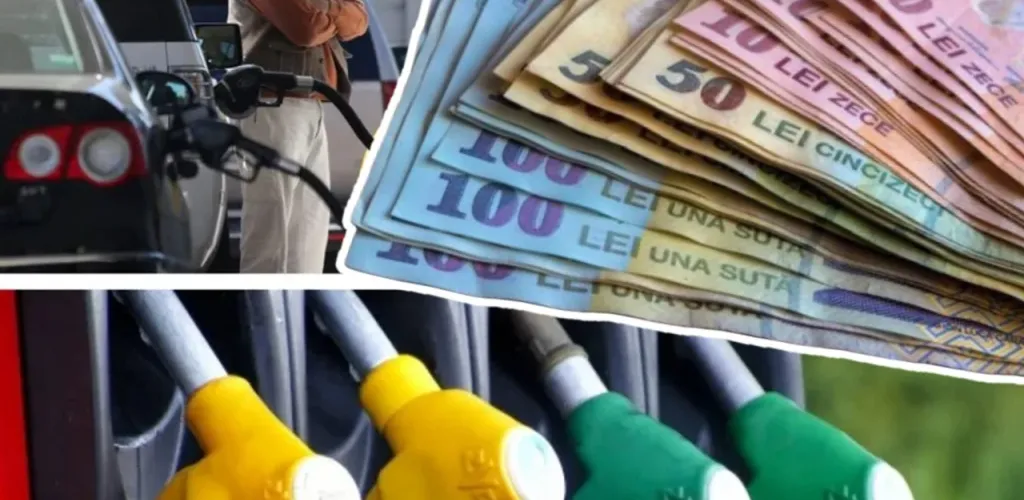
- Fuel price caps risk long-term economic burden, as Hungary’s experience shows
- Reducing taxes lowers prices but worsens budget deficit and borrowing costs
- Forcing below-cost sales risks cutting imports and chaos in fuel market
- Subsidies like 50 bani per liter are not sustainable; adapt to new price reality
Fuel price caps may seem like the simple solution many Romanians hope for to reduce the rising costs of transport. But the reality is far more complex, and the Hungarian example shows that such measures can have effects opposite to those intended. Theodor Stolojan, former PNL leader and former prime minister of Romania, warns about the long-term consequences of a decision like this.
What Hungary’s experience with fuel price caps shows
Six months after Hungary implemented price caps on fuels, the effects have not matched expectations. The measure, which seemed a quick fix to support the population, has turned into an economic burden. Even the Hungarian oil company MOL signaled difficulties in maintaining this policy over the long term.
In Romania, where the prices of most goods and services depend directly on the cost of fuel, the pressure for similar measures is enormous. Yet Romanian authorities do not have many viable options to solve the problem.
Mechanisms by which the state can intervene in fuel prices
Theodor Stolojan identifies two main avenues through which the Government could influence pump prices:
1. Reducing taxes: excises and VAT
Lowering excises and VAT would lead to lower consumer prices, but at a significant cost. This measure directly reduces state budget revenues, at a time when Romania already faces a large budget deficit and borrowing at high interest rates.
2. Reducing the producer’s selling price
This option is even more problematic. Romania imports about three-quarters of its oil and petroleum products. If the state forced producers and importers to sell below cost, they could cut or even halt imports. No private company can be compelled to sell at a loss, and the consequences would be total chaos in the fuel market.
Why long-term subsidies are not the solution
“I wouldn’t have granted it at all,” Stolojan says categorically about the compensation of 50 bani per liter implemented in Romania. “You cannot subsidize the entire economy, the entire population. And it is not good.”

The former prime minister’s central argument is that we are not facing a temporary rise in prices. Two years ago, a barrel of oil cost 44-45 dollars. Today, the price hovers around 100 dollars. This is the new economic reality, one that Romania cannot ignore and cannot isolate itself from.
Adapting the economy to the new price reality
Instead of subsidies that mask the problem, the Romanian economy must adjust to this new reality. What does this mean in practice?
Transition to renewable energy
“If you look even in villages, you can see people starting to put solar panels on their homes. Perfect. That is the right measure,” observes Stolojan. Rather than subsidizing fossil fuels, the state should use EU funds to fully finance the installation of photovoltaic panels for every household that wants them. This is a correct measure that aligns with the general trend toward a green economy.
Investments in energy efficiency
In the long term, Romania must invest in:
- More efficient heating systems
- Thermal insulation of buildings
- Electric public transport
- Infrastructure for electric vehicles
- Fuel-saving technologies in industry
Electoral context and political pressures
Stolojan does not hesitate to label similar measures in other countries as electoral maneuvers. “You’ve seen what Viktor Orbán did in Hungary. He capped it because he had elections, he stuck with the cap. Now MOL is saying, ‘Brothers, we cannot go on with this cap.’”
As Romania nears the electoral period, the temptation to promise quick solutions grows. Yet political responsibility should prevail over short-term electoral gains.
The difference between Romania and other European countries
Romania’s situation differs from Hungary’s in several key aspects:
Budget deficit: Romania already runs a large deficit and must reduce it. There is no room for massive subsidies.
Borrowing costs: Not being in the euro area, Romania borrows at much higher interest rates on both external and internal markets. Croatia has joined the euro area, Bulgaria is preparing, but Romania lags behind due to political instability.
Import dependence: With 75% of its oil and petroleum product needs imported, Romania is highly vulnerable to fluctuations in the international market.
What happens when the price of crude falls
An interesting point highlighted by Stolojan is the market behavior when the barrel price falls: “Now the price of the barrel has fallen, normally we should see a drop at the pump, but we don’t, because companies do the math: it fell, but it will rise again. So why bother?” This dynamic shows that the market does not always reflect price changes in real time, and artificial price caps do not solve structural problems.
Conclusion: Economic realism versus political populism
Although the social desire for quick measures is understandable, economic analysis shows that price caps on fuel are not a sustainable solution. Instead of masking the problem with temporary subsidies, Romania should invest in:
- The transition to renewable energy sources
- Increased energy efficiency
- Reducing dependence on imported fossil fuels
- Political stability for eurozone accession
In the long run, these investments will offer far greater energy security than any temporary price cap. The Hungarian lesson should be clear: election promises based on artificial price caps create more problems than they solve.
-200x150.webp)