- Since 2015, 2,925 vehicles registered via forgery; 11,000 forged documents in Bucharest-Ilfov.
- Eight indicted; ten doctors investigated; false medical certificates cost 50-100 RON.
- Pricing: 100-150 euros per forged doc; up to 1,000 euros with intermediaries.
- Foreign licenses used to evade checks; Florinel Coman cited as example.
Romania is facing a grave road-safety problem and has long been among Europe’s leaders in fatal accidents. Recently, investigators uncovered a complex network that forged auto documents over several years, involving not only the forgers themselves but also doctors who issued fictitious medical certificates, underscoring the scale of corruption in Romania’s automotive system.
According to investigations, the network operating since 2015 managed to register 2,925 vehicles through forgery in just six years, including luxury cars stolen from the European Union. The phenomenon is not limited to this network; similar cases have been identified in other counties across the country.
The scale of the forgery phenomenon
The case handled by the Prosecutor’s Office attached to Buftea Court led to the indictment of 8 people accused of forgery, while the investigation continues for the ten doctors involved. According to a police officer who worked on the case: “Last summer, when we started working on the case, I did not anticipate the scale of the phenomenon. We’re talking about 11,000 forged documents. And that’s just in the Bucharest-Ilfov area. And I doubt I am the only one on the market.”
Among those indicted are Dinu I. (47) and Adrian V., accused of handling the forgery of documents. They obtained provisional vehicle-registration authorizations from authorities, using forged documents. Their mode of operation was sophisticated, able to pass unnoticed for years.
Pricing scheme for false documents
The tariff system was well organized and varied depending on the number of intermediaries involved:
- Base price: 100-150 euros per forged document (directly from the forger)
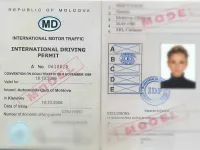
- Final price with intermediaries: up to 1,000 euros for a fake driving license or fast-track registration
- False medical certificates: 50-100 RON per document
The forger earned from volume, while intermediaries earned “per item”. The latter faced higher risks, needing to find clients and place the counterfeit licenses. The documents were not necessarily “issued” by Romanian authorities but also by other EU member states.
Driving licenses from abroad – the preferred method
A representative case is that of a father and son who, stopped repeatedly, presented forged driving licenses issued by authorities in Ireland, Italy, and Spain, none of which they were legally entitled to hold.
Forgers prefer to counterfeit foreign documents for several reasons:
- They are much harder for field police to verify at routine checks
- Verifying them requires time and special procedures
- The chances of immediate discovery are lower
A recent and highly publicized example is the case of footballer Florinel Coman from FCSB, caught on the highway driving with a forged Ukrainian license, though he did not know the Ukrainian language.
Involvement of doctors in the scheme
The fakes did not relate only to illegal registrations or fake driving licenses. The scheme also involved two private clinics where intermediaries recommended the issuance of medical certificates in the absence of the drivers.
Fictitious medical procedure
Ten doctors were detained and placed under judicial control, being investigated for suspicions that they issued medical certificates necessary for exchanging a driving license without ever meeting the drivers. They did not determine with precision that the drivers were healthy and fit to drive.
Investigators suspect that the ten doctors issued hundreds of such documents, turning the mandatory medical examination into a mere paid formality.
Alarming statistical context in Romania
These illegal practices unfold in a country that holds a negative record in the European Union. In 2020, Romania ranked first in Europe for road accidents resulting in deaths and injuries:
- 85 victims per million inhabitants in Romania
- 42 victims per million inhabitants – EU average
- Romania records double the European average
The Suceava case – the 2020 precedent
In November 2020, prosecutors from the DNA uncovered the “auto-permit factory” in Suceava, a move with striking results:
Confiscations made:
- Over €1.2 million
- 790,000 RON
- $12,000
- £1,500 in cash
- 37 luxury watches
- 21 bracelets, 18 chains and 4 gold pendants
- 8 luxury cars
The money came from bribes paid to obtain driving permits and from illegal vehicle registrations.
Auto sector experts’ opinion
Constantin “Titi” Aur, the renowned rally driver and defensive driving expert, expressed shock at these findings. He argues that the main cause of serious accidents in Romania is the lack of awareness and driver education.
“Most serious accidents are caused by people who went through a legal driving school. Of course, there is also a share of accidents caused by those who fraudulently obtain a driving license. Who are these people? Illiterates and crooks who don’t give a damn about the school,” explains the expert.
Proposals for tougher sanctions
Titi Aur believes those who engage in such fraud should be charged with murder with premeditation or attempted murder, given the real social danger: “It’s criminal to release onto the streets people without auto exams. Repeatedly, I hope the number stays as small as possible. Reducing serious accidents can only be achieved through proper road education.”
Impact on road safety
These forgery networks have a direct impact on road safety. People who obtain driving licenses by illegal means:
- Lack the theoretical knowledge needed for safe driving
- Have not completed the mandatory practical training
- Have not been properly medically evaluated
- Represent a real danger to other road users
The combination of inadequate driver preparation and Romania’s overall deficient road-education landscape helps keep our country at the top of Europe’s negative statistics for fatal road accidents. The discovery of these complex forgery networks demonstrates the urgency of reforms in the driver-permit system and stronger controls in this critical public-safety domain.