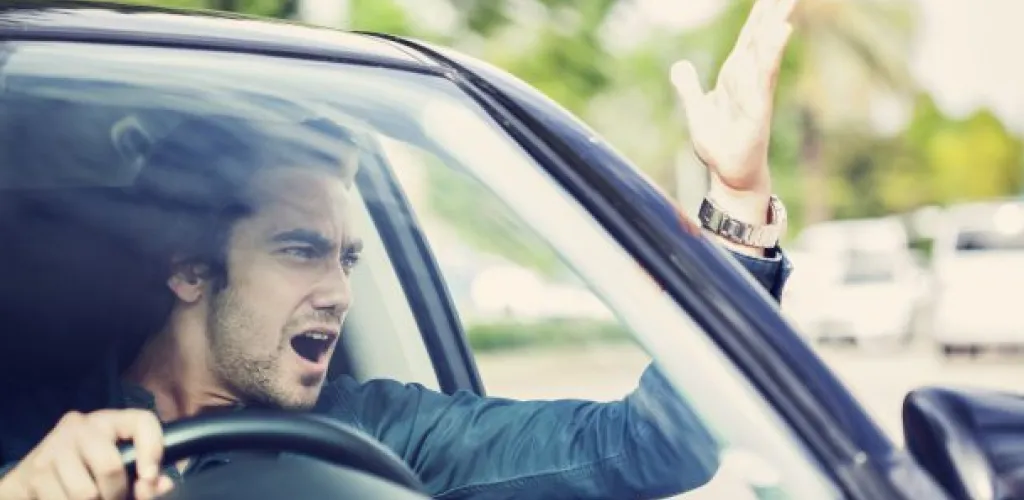
- Expensive-car owners display more aggression behind the wheel, especially toward learner or cheap cars.
- 1968 study found drivers honk more behind older, cheaper cars than luxury ones.
- Social status cues shape reactions; higher-status drivers are more retaliatory toward beginners.
- Learner-driver stickers increase aggression toward beginners; higher-status drivers feel less blamed.
Driver behavior on the road is strongly shaped by perceived social status, with field studies showing that owners of expensive vehicles tend to display more aggression behind the wheel, especially when interacting with cheaper cars or those driven by learner drivers.
Early findings from 1968
In 1968, psychologists Anthony Doob and APS Fellow Alan E. Gross made a remarkable observation: drivers honked far more when stuck behind an older, cheaper car than when the vehicle in front was a luxury car. Since then, multiple studies have confirmed that owners of expensive cars are significantly more likely to behave uncivilly and aggressively behind the wheel. A simple everyday observation confirms this trend—how many luxury cars have you seen parked in spaces reserved for people with disabilities?
Social status and driving behavior
In a more recent study, researchers Amanda N. Stephens of Monash University and John A. Groeger of the University of Hull identified new evidence confirming that social status plays a crucial role in accelerating the urge to adopt confrontational behaviors toward other drivers. Beyond socioeconomic class, which can be estimated from the make and model of the car, drivers interpret other signals to determine the social hierarchy behind the wheel.
Perception of driving skill as a status indicator
One such signal is the perception of the driver’s proficiency. In many countries, learner drivers display special stickers that announce to other road users their lack of experience. Contrary to the expectation that other drivers would be more patient and understanding, Stephens and Groeger found exactly the opposite: drivers are much more likely to react aggressively toward beginner drivers.
“It seems that drivers with a higher social status are more likely to be forgiven when displaying indiscreet behavior with no clear cause,” Stephens and Groeger write. “In contrast, drivers learning to drive are blamed much more readily for situations and circumstances outside their control.”
“In provocation-driven anger situations, higher-status drivers have allowed themselves to approach more dangerously and aggressively the slower cars ahead, and this behavior was exacerbated in all situations where the front car was a learner’s car,” the researchers explain.
Methodology of the experiments
In two distinct experiments, the researchers asked participants to drive through a residential neighborhood following a few basic rules. During the drive, anger toward other drivers surfaced when the car used in the experiment blocked others’ progression. Sometimes the front car drove annoyingly slowly, preventing those behind from overtaking. Other times, there was a justified reason for the front car to slow down, such as the presence of an accident.
One experiment used a cheap, rundown car, while another used a new ambulance. During the drive, participants were asked to rate their current level of anger on a scale from 1 to 5. The driver’s aggressiveness was measured by increases in speed and by tailgating—driving very close to the car in front, a highly dangerous practice.
Results of the studies
In both experiments, drivers reported feeling more anger after following the old, rundown vehicle. Participants came very close to both cars marked with learner/novice signs and the cheap car, but kept a noticeably greater distance from the ambulance.
Measurable physiological responses
Participants demonstrated stronger anger and even measurable physiological arousal—the heart rate was monitored throughout the experiment—when the car ahead, causing the slow progress, appeared to be owned by a person of a lower social status than theirs. This physiological response confirms that the effect is not just subjective perception but real biological responses to stress-inducing traffic situations.
Conclusions
“The data from both experiments provide evidence that, although current traffic circumstances can suffice to provoke anger, the particularities of the drivers causing the delays are just as important, if not more so, than what actually happened and caused slower driving,” the researchers conclude.
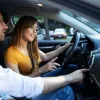
These findings suggest that biases related to social status significantly influence driving behavior, leading to different treatment of drivers based on the vehicle they drive or their driving experience. Understanding these psychological mechanisms could contribute to developing more effective road safety education strategies and reducing aggression on the road.
References
Doob, A. N. and Gross, A. E. (1968). The frustrator’s status as an inhibitor of honking responses. The Journal of Social Psychology, 76(2), 213-218.
Stephens, A. N. and Groeger, J. A. (2014). Following slower drivers: the lead driver’s status moderates anger and behavioral responses of the driver and exonerates guilt. Transportation Research Part F: Traffic Psychology and Behaviour, 22, 140-149. doi: 10.1016/j.trf.2013.11.005
Photo source: https://www.psychologicalscience.org/