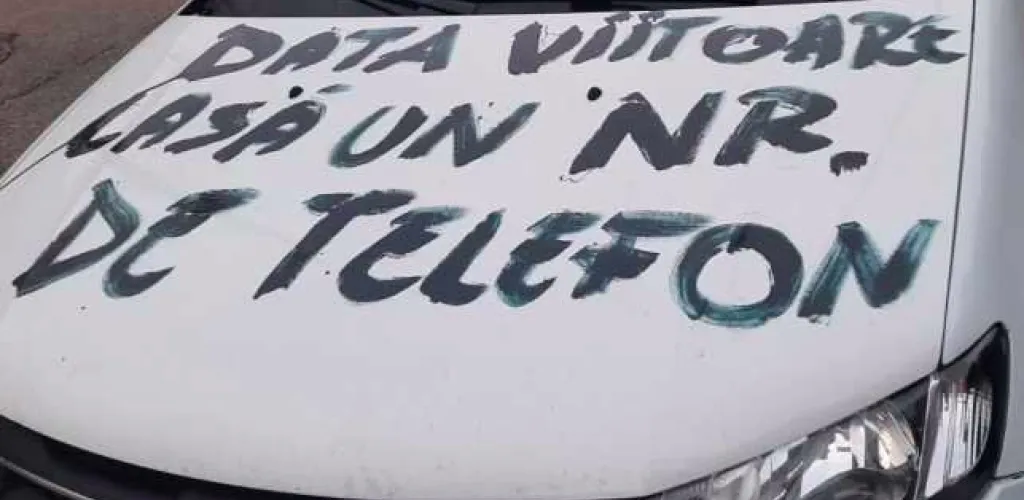
- Destruction or vandalism can apply for even minor damages.
- Penalties range from 3 months to 2 years in prison or fines.
- Two legal avenues: police action or direct owner contact.
- Violence is never the solution due to legal consequences.
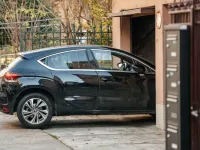
Often in Romania, acute parking shortages in large cities and university hubs create daily tense situations. With an unfavorable ratio between cars and available spots, many drivers struggle to find a parking space on returning from work. Those who hold a municipal, paid parking space are often unpleasantly surprised to find it occupied by a stranger’s car, sometimes with no contact number left on the windshield for outreach.
While frustration is understandable, resorting to violence against the vehicle occupying your space is a moral and legal misstep. Scratches to the paint, a broken wiper blade, or damage to the side mirror can instantly transform you from victim into offender.
Legal consequences of car vandalism
Regardless of the frustration after a long day of work, turning to violence against the vehicle that occupies your spot is a major mistake, both morally and legally. A scratch to the bodywork, a broken wiper, or damage to the rear‑view mirror can instantly turn you into an offender.
Under the Penal Code, such acts can be classified as the offense of destruction, or in more serious cases, vandalism. The penalty provided by law ranges from 3 months to 2 years in prison or a monetary fine. Although in many situations the court will opt for a fine, the existence of a criminal record can lead to the application of imprisonment.
What counts as destruction?
Destruction does not necessarily require major or spectacular damage. A simple scratch to the paint, however superficial, can be enough to incriminate this offense. You do not have to overturn the car or break the windows to be charged — even minor damages can carry serious legal consequences.
The prospect of potential court cases, possible criminal charges, and related fines should be enough to make you rethink before grabbing the key and scratching the car that occupies your space.
Legal alternatives to solve the problem
There are two legal avenues when someone abusively occupies your parking space:

1. Contacting the local police
Contacting the local police should be the first option. They have the competence to determine the contravention and apply sanctions. However, experience shows that the effectiveness of this method is debatable. Often, local police claim they lack the necessary powers to intervene or that the issue is not within their responsibility.
Even if the police intervene and establish the violation, the result can be limited:
- At the first offense, the offender will receive a warning
- For repeated offenses, fines are applied
- Important: The car will not be towed, so the space will not be freed immediately
2. Direct approach or waiting
The second option involves:
- Trying to contact the owner (if there is a phone number)
- Asking neighbors or guards if they know who owns the vehicle
- Waiting for the driver to return and discussing the issue civilly
- Finding a temporary alternative parking
Why violence is never the solution
Beyond legal consequences, there are several reasons why aggression toward the vehicle that occupies your space is a bad idea:

Escalation of conflict
Deteriorating the other person’s property can lead to a spiral of retaliation and a toxic neighborly relationship over the long term.
Financial responsibility
Beyond the criminal fine, you may be required to cover repair costs, which can be substantial, especially for premium vehicles.
Criminal record
A criminal conviction, even if suspended, will remain on your record and can affect your professional life or travel to certain countries.
Video evidence
In the era of surveillance cameras and dash cams, the chances of getting caught are very high. Many people have onboard cameras recording continuously, even when the car is parked.
Long-term solutions
To avoid such stressful situations in the future:
- Document abusive occupancies of your space (photos with date and time)
- Build a file to submit to the city hall or local police
- Consider installing clear signage or a physical barrier (with the necessary approvals)
- Join homeowners associations to push for solutions at the community level
- Consider renting a space in a private parking facility where access is restricted
Conclusion
Although the situation of someone abusively occupying your parking space is highly frustrating and we understand this sentiment, resorting to violence or vandalism is not a viable solution. Legal consequences are real and can significantly impact your life.
Patience, civil communication, and respecting legal avenues are always the preferred options, even if they seem less satisfying in the moment. After all, a scratched car will not solve the parking shortage, but it will seriously complicate your life.
Sourse photo: zcj.ro