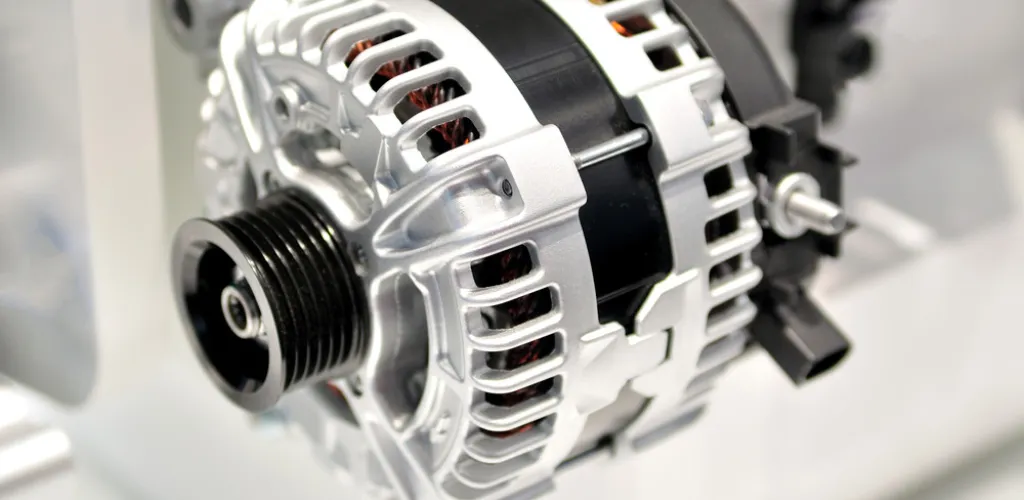
- Normal wear causes voltage drop and overheating after 5–7 years.
- ECU problems disrupt regulation or stop charging.
- Wiring damage includes corrosion, breaks, melted insulation, and loose connections.
- Battery misdiagnosis occurs; a newer battery can hide alternator faults.
Electrical problems in a car can be extremely frustrating, especially when you’re not sure which component is at fault. Many issues stem from a failing alternator, a crucial part that provides electrical power to the entire vehicle system.
The alternator plays a vital role in the car’s proper operation. This component is responsible for generating the electrical energy needed to power all electrical systems and to charge the battery. The operating principle is based on converting the mechanical energy from the engine’s motion into electrical energy through a system of windings and magnets.
When the alternator loses its ability to function, the entire electrical system becomes dependent on the battery. Unfortunately, the battery cannot sustain the vehicle’s electrical load for long—usually only a few minutes of operation. For this reason, a well-functioning alternator is an absolute requirement for any modern car.
Most drivers, when faced with electrical issues, immediately suspect the battery as the main culprit. However, if the battery is relatively new and the problems persist, the alternator is likely to be at fault. Below are the most common causes of alternator failure.
Normal wear of the alternator
The lifespan of an alternator normally sits between 5 and 7 years or roughly 100,000–150,000 kilometers, depending on usage conditions. This component contains moving parts that wear over time—especially the bearings and the carbon brush that contact the slip rings.
Signs of natural wear include:
- Gradual drop in the voltage generated
- Unusual noises from the alternator area
- Excessive vibrations
- Overheating during operation
For comparison, the battery life is shorter, typically 2–5 years, which can complicate diagnostics.
Problems with the Electronic Control Unit (ECU)
Modern cars are equipped with sophisticated computer systems that manage almost every aspect of the vehicle’s operation. The ECU (Electronic Control Unit) monitors and controls the alternator’s operation via an integrated electronic regulator.
Common ECU problems include:
- Software errors that affect alternator control
- Hardware failures in control circuits
- Electromagnetic interference
- Data corruption in the ECU memory
When the ECU malfunctions, it can completely stop the alternator or cause incorrect charging voltage regulation, even if the alternator itself is in perfect working order.
Damage to the wiring
The wiring system that connects the alternator to the rest of the electrical circuit is complex and vulnerable to damage. The alternator requires several electrical connections to operate optimally:
Main cables
- Power cable to the battery (the thickest, usually 4–6 mm²)
- Excitation cable for the field coil
- Signal wires to the ECU
- Ground connection
Common causes of damage:
- Contact corrosion due to moisture
- Wire breaks from vibration
- Insulation melting due to overheating
- Mechanical damage to the cables
- Loosened connections over time
Checking the wiring requires a visual inspection of all connections and continuity checks with a multimeter.
Fuses and relays defects
Many modern vehicles use fuses and relays to protect the alternator circuit from overloads and short circuits. These protective components are designed to sacrifice themselves to protect more expensive components.
Fuses for the alternator:
- Main power fuses (30–100 A)
- Fuses for the excitation circuit (10–15 A)
- Fuses for ECU signaling (5–10 A)
Causes of fuse failure:
- Temporary overloads in the system
- Short circuits in wiring
- Internal failures of the alternator
- Problems with the voltage regulator
Checking fuses is a simple procedure that can be performed with a fuse tester or by visual inspection.
Drive belt and pulley failure
The alternator is mechanically driven by the engine via a belt and pulley system. This mechanical connection is essential for converting mechanical energy into electrical energy.
Critical components:
- Drive belt (serpentine belt or alternator belt)
- Alternator pulleys
- Engine pulleys
- Belt tensioner
Common problems:
- Belt breakage due to wear or overload
- Belt slipping due to insufficient tension
- Pulley bearing wear
- Pulley bearing damage
A faulty belt or worn pulley will prevent the alternator from reaching the rotational speed required to generate the correct voltage.
Replacement and repair costs
When the alternator has major faults, vehicle owners have several options, each with different pros and costs.
New alternator
Cost: 500–2,500 lei (depending on make and model) Advantages:
- Full warranty (1–2 years)
- Optimal performance
- Maximum reliability
- Guaranteed compatibility
Used alternator
Cost: 250–1,500 lei Advantages:
- Lower cost
- Immediate availability for older models Disadvantages:
- Limited warranty
- Unknown history
- Potential future issues
Reconditioned alternator
Cost: 300–800 lei Advantages:
- Moderate cost
- Keeps the original unit
- Performance close to new
Additional costs
- Replacement labor: 100–300 lei
- New belt: 50–200 lei
- Electrical system check: 50–150 lei
Diagnosis and prevention
To avoid high replacement costs, it is essential to recognize early signs of an alternator losing efficiency:
Alarm signs:
- Headlights dim during driving
- Battery frequently discharges
- Unusual noises from the alternator area
- Smell of burnt rubber (belt slipping)
- Charging voltage below 13.5 V or above 15 V
Preventive measures:
- Periodic check of the drive belt
- Cleaning electrical connections
- Avoid overloading the electrical system
- Regular maintenance according to the manufacturer’s schedule
Proper preventive maintenance can significantly extend the life of the alternator and prevent costly failures.