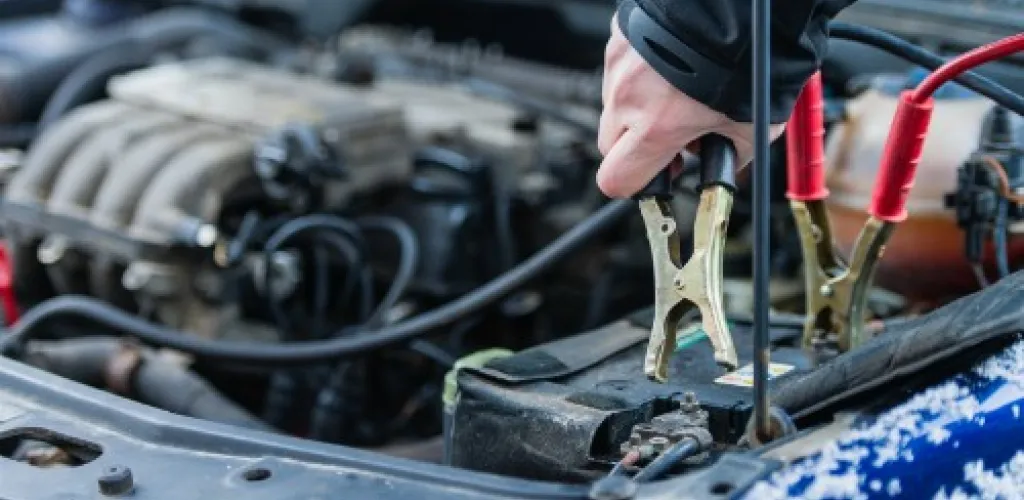
- Dead battery is the most common starting issue, especially in cold.
- Symptoms of a dead battery: total silence, slow starter, flickering dash.
- Alternator faults cause charging issues; dim lights and a warning light indicate failure.
- Battery life is about 3-5 years; cold reduces capacity.
On a cold winter morning, rushing to leave for work, there is nothing more frustrating than discovering that your car won’t start. You freeze as you defrost the windows, step into the cabin hoping everything will be fine, but when you turn the key nothing happens. It’s a situation almost every driver has faced at least once.
The root problem is simple: without electricity, the engine cannot turn over. The car’s electrical system relies on three main components: the battery, the alternator, and the starter motor. When the car won’t start, the issue is usually one of these parts. Let’s see how you can quickly identify which one is causing the trouble and what solutions you have at hand.
Dead battery — the most common cause
The car battery is the heart of the electrical system and, in most cases of hard starting, it is at fault. A standard battery has a life of about 3-5 years, depending on quality and usage conditions. The cold temperatures during winter significantly reduce battery capacity, and a battery that would normally last a few more months can fail abruptly at the first serious cold snap.
Specific symptoms of a dead battery
- Total silence - when you turn the key, you hear absolutely nothing, not even a cranking attempt
- Starter spins slowly - you hear the starter trying to turn the engine, but the sound is weak and intermittent
- Unusual noises - ticking, popping, or metallic sounds when you try to start
- Dashboard behaves oddly - all warning lights come on for a few seconds, then go out or flicker continuously
- Requires jump-starts - you managed to start the car with help from other drivers or by push-starting, but the problem recurs on the next attempt to start

Why the battery discharges
The main causes of battery discharge are:
- Age-related wear - an older battery (4-5+ years) gradually loses capacity
- Low temperatures - at -10°C, a battery can lose up to 30% of its capacity
- Forgotten electrical consumers - headlights, radio, heated seats left on with the engine off
- Frequent short trips - the alternator doesn’t have time to fully recharge the battery
- Problems with the alternator that no longer charge the battery properly
Faulty alternator — the long-term source of the problem
The alternator is responsible for supplying electrical power to all systems while the car is running and for recharging the battery. It is driven by the accessory belt and has an expected life of about 8-12 years or 150,000-200,000 km, depending on usage conditions.
Symptoms of a faulty alternator
- Noises at startup or while driving - squealing, whining, or metallic sounds coming from the alternator area
- Dim lights - headlights are weaker than usual, dashboard instruments have reduced brightness
- Battery warning light on - a battery symbol appears on the dash indicating charging issues
- Burning smell - a seized alternator can generate excessive heat, and the belt may rub and burn
- Engine stalls while driving - when the battery fully discharges due to a faulty alternator, the engine can no longer run
- Battery discharges quickly - even with a new battery, it goes flat within a few days
How to test the alternator
With the engine running, the voltage at the battery terminals should be between 13.8V and 14.4V. If the value is below 13V, the alternator is not charging the battery properly. You can also notice if the lights dim when you accelerate or when you switch on electrical consumers.
Starter motor fault — a rarer issue
Although not the main topic, Starter motor can also be the cause. Symptoms include:
- A click sound when you try to start, but the starter does not spin
- The starter spins very fast but does not engage the engine
- Loud metallic noises when starting
How to determine which part is faulty
The simple jump-start test
- Try to start with jump leads from another car
- If it starts immediately – the problem is the battery
- If it does not start even with jump leads – the problem may be the starter motor or other components
- If it starts with jump leads but stops when you disconnect them – the alternator is not charging
The alternator test after starting
If you managed to start the car:
- Let the engine run for a few minutes at idle
- Slightly accelerate – if the headlights brighten, the alternator is functioning
- Stop the engine and try to restart after 10-15 minutes
- If it won’t start again, the alternator is not charging the battery
Solutions and costs
For a faulty battery
- Replacement cost: 200-600 RON, depending on capacity and brand
- Temporary solution: charging with a car charger (6-12 hours)
- Prevention: check voltage monthly, clean terminals, avoid complete discharge
For a faulty alternator
- Repair cost: 300-800 RON (rebuild)
- Replacement cost: 600-1500 RON (new alternator)
- Check: test at a specialized service (50-100 RON)
Preventing problems
To avoid these unpleasant situations:
- Regularly check the battery voltage (12.6V with the engine off)
- Clean the battery terminals and apply dielectric grease
- Avoid very short trips in winter
- Do not leave electrical devices on with the engine off
- Check the accessory belt for wear or cracks
- Test the charging system annually at a service
Remember that accurate diagnosis is essential to avoid spending money on parts that don’t need replacement. If you’re not sure about the cause of the problem, it is recommended to consult a professional automotive electrician for a full electrical system check.